7 Credit Card Mistakes That Are Silently Killing Your Wealth – And How to Fix Them (2026 Deep Dive)
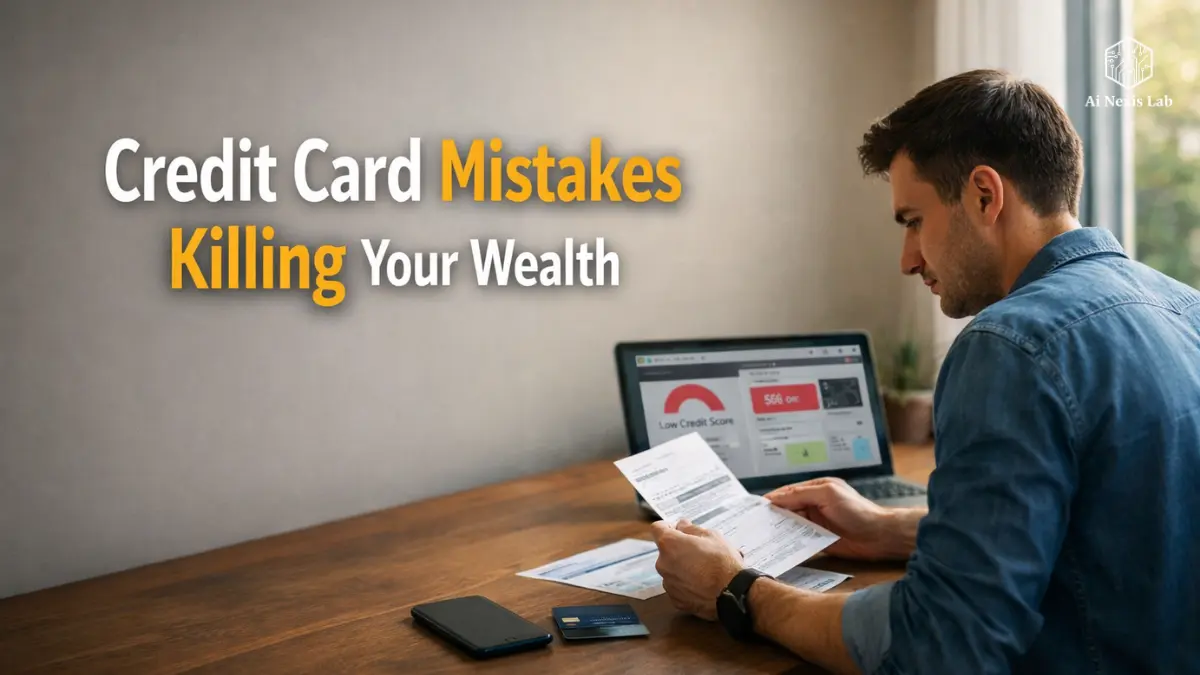
Credit card mistakes cost thousands yearly. Discover 7 shocking traps draining your wealth and learn proven strategies to fix them fast and boost credit score.
Table of Contents
Introduction: The Slow Financial Leak That Most People Ignore
Most people don’t go bankrupt overnight. There is no dramatic moment where everything falls apart.
It’s slower than that – and more dangerous.
It’s a series of small decisions that seem harmless:
- Paying the minimum “just this month”
- Running the balance because “cash flow is tight”
- Ignoring the statement because “I’ll check later”
Then one day, your credit score drops, your balance freezes, and your money seems to be going nowhere.
Here’s an uncomfortable truth:
Credit cards don’t make people poor. Misusing them does.
In 2026, the statistics are even more alarming than ever:
- U.S. Credit card debt: ~$6,800
- Average APR: ~22%–24%
- Average annual interest paid: $1,400+
- FICO weight of payment history: 35%
That means if you’re carrying a balance, you’re not just “using credit” – you’re paying a premium subscription to stay in debt.
This guide is not meant to inspire you. It’s here to improve you.
We’re breaking down:
- The 7 Biggest Credit Card Mistakes
- The Real Math Behind Them
- And Specific Systems to Fix Them Immediately
Mistake #1 – Keeping a Balance That’s Normal
The Lie You’ve Been Sold
Somewhere along the way, people started to believe this:
“Everyone carries a balance. That’s how credit works.”
That is not reality. That’s conditioning.
It is not normal to have a balance. It is expensive.
What It Really Costs You
Let’s cut out the excuses and do the math:
- Balance: $3,000
- APR: 22%
- Minimum payment: ~$75
You’re not “paying it off slowly”.
You are entering a 15-year repayment cycle.
- Total interest paid: ~$4,800
- Total cost: ~$7,800
You paid more in interest than you did on the original purchase.
Why Does This Happen?
People carry balances because:
- They overestimate future income
- They underestimate interest
- They treat credit as a buffer rather than a tool
The Fix (No Excuses)
- Set AutoPay to full statement balance
- If you can’t do that → you’re overspending, period
There’s no better strategy than avoiding interest altogether.
Long-Term Impact
$1,400/year invested at 7% over 20 years in deferred interest:
→ ~$57,000
Here’s the difference:
Being financially “fine”
Or having real assets

Mistake #2 – Paying Only The Minimum Each Month
Why Minimum Payments Exist
Minimum payments are not designed to help you.
It is designed to:
- Keep you compliant
- Keep you in debt
- Maximize the lender’s profit
What Your Payment Is Actually Doing
Example:
- Balance: $5,000
- APR: 20%
- Minimum payment: $100
Breakdown:
- ~$83 → interest
- ~$17 → actual debt
That’s 83% wasted effort.
The Trap Cycle
Here’s how people get stuck:
- Balances go up
- Minimums go up
- You feel “responsible” for paying it
- Debt barely moves
You’re not managing debt – you’re feeding it.
Improvements That Really Work
Pay your minimum, at least 2-3 times
Use the Avalanche Method:
- Highest APR first
- Then increase payments going forward
This isn’t an opinion – it’s math.
The Hard Truth
If you’re only paying the minimum, you’re not in control.
Mistake #3 – Maxing Out Your Credit Limit
Why This Makes It Hard
Your Credit Utilization = 30% of Your FICO Score
But Most People Get It Wrong.
They think:
“As long as I’m under 30%, I’m good.”
That’s average thinking.
What High Performers Really Do
People with 800+ scores:
- Typically stay below 10%
- Often below 7%
Hidden Penalties
Even if your total utilization is low:
→ One maxed out card can crush your score
Example:
- Total credit: $15,000
- One card maxes out at $2,000
Even if overall looks good:
→ Score can drop 50-80 points
Why It Matters
That drop affects:
- Mortgage rates
- Car loans
- Insurance premiums
One mistake → thousands lost.
Improve
- Keep your utilization below 10%
- Pay before the statement closing date
- Request limit increases (without spending more)
Reality Check
If your card is maxed out:
→ You don’t have a credit problem
→ You have a spending problem
Mistake #4 – Ignoring Your Monthly Statement
This Is Quiet – But Dangerous
Most people:
- Check the balance
- Ignore everything else
It’s lazy – and it costs money.
What You’re Missing
Your statement shows:
1. Fraud
Small charges = testing your card
2. Subscription leaks
$9.99 here → $14.99 there → adds up quickly
3. APR changes
Rates can change with notice
4. Annual fees
Get a sneak peek once a year
5. Rewards expiration
People lose hundreds this way
10-Minute Rule
Once a month:
- Check every charge over $20
- Google anything unfamiliar
- Flag it immediately
Important Deadlines
You have 60 days to dispute errors.
Then:
→ Your protections are significantly weakened
Improve
- Schedule a monthly audit
- Treat yourself like you’re checking your bank account
Hard Truth
If you don’t review your statements:
→ You’re blindly giving away money
Mistake #5 – Applying For Too Many Cards Too Quickly
Misleading Strategy
You’ve seen this online:
“Open a card, get a bonus, win.”
Sounds smart.
Most people run it badly.
What Really Happens
Each application:
- 5-10 points drop in score
- Reduces average account age
- Risk signal to lenders
Stack 4-5 applications:
→ You look desperate
Real Cost Example
You earn:
- $800 in rewards
But lose:
- Better loan rates
- Higher lease costs
Net result:
You lose money
Improve
- Space applications 6+ months apart
- Pause 12 months before a big loan
Reality Check
If you’re chasing bonuses while carrying debt:
→ You’re playing the wrong game
Mistake #6 – Miss a Payment (Even By One Day)
This Is The Most Damaging Mistake
Payment history = 35% of your score
Nothing else comes close.
What Does One Missed Payment Do
- Score reduction: 90-110 points
- Stays on report: 7 years
It’s cruel.
Myth
People think:
“There is a grace period.”
Yes – but there was a misunderstanding.
- 1 day late → Fee
- 30 days late → Reported
Real Risk
A missed payment can:
- Trigger penalty APR
- Cancele promo rate
- Lower your limit
Then:
→ Utilization goes up
→ Score goes down more
Improve
- Set up autopay at least (at least)
- Never rely on memory
If You Mess Up
- Pay immediately
- Call the issuer
- Ask for a fee waiver
Works more often than you think.
Reality Check
Paying bills is not a money issue.
It’s a system failure.
Mistake #7 – Using a Credit Card For a Cash Advance
This Is The Worst Option Available
Cash advances are:
- High interest
- Instant interest
- Additional fees
What Makes Them Cruel
- APR: 25–30%
- No grace period
- Fees: ~3–5%
Interest starts immediately.
Real Example
- Loan: $500
- Fees: $15
- Interest (3 months): ~$35
Total: ~$550
That’s crazy.
Update
Before using a cash advance, try:
- Credit union loan
- Personal loan
- Emergency fund
Critical Move
Build a $1,000 emergency fund first
Not optional.
Reality Check
If you are using cash advances:
→ Your financial system is broken
Money Momentum Moves – Your Recovery Toolkit
No theory. Just execution.
Full-Balance Autopay Lock
Completely eliminates interest.
Statement Debt Sweep
Pay before the statement closes → score increases faster.
Rate Negotiation Call
Ask for a lower APR. Most people never try.
Utility ladder
Limit increase → immediate lower ratio.
Monthly Statement Audit
10 minutes → Stop leaks.
Balance Transfer Pivot
Use 0% APR strategically.
Emergency fund buffer
Prevents future debt cycles.
Avalanche Attack
Highest interest first → fastest exit.
Compounding Effect: Why These Mistakes Destroy Wealth
These mistakes don’t add up.
They multiply.
Example Combo:
- High Utilization
- Missed Payment
- Balance Carrying
Result:
→ -150 to -200 Score Impact
That’s not theory – that’s reality.
10-Year Shadow
Even after correcting mistakes:
- Lost investment time is painful
Example:
- $10,000 debt → paid off
- Payments redirected to investment
→ Potential gain: $200,000+ over decades
That’s the real cost.
Why Do Smart People Still Mess With This
It’s not stupidity.
It’s by design.
Credit cards are designed to:
- Reduce the pain of spending
- Mentally reward use
- Keep the balance alive
What Actually Works
Not discipline.
Systems.
- Autopay
- Limitations
- Sure Reviews
If you rely on willpower:
→ You lose
Frequently Asked Questions
How quickly can I improve my credit score?
If you fix usage and payment behavior, you can see changes within 30-60 days. Credit scoring is dynamic – your latest behavior is more important than old patterns.
However, major negative aspects like missed payments take longer to fade (months, not years). The fastest improvements come from reducing usage and never missing a payment again.
Should I close old credit cards that I don’t use?
No – most of the time, that’s a bad move. Older accounts increase your average credit age, which helps your score.
Turning them off reduces the total available credit and increases usage.
The only exception is if the card has a high annual fee and no value. Otherwise, keep it open and inactive.
Can I really lower my credit card interest rate?
Yes – and most people never even try. Call your issuer and ask directly. If you have a good payment history, there is a strong chance they will reduce it.
Mention competitors’ offers if necessary. Even a small reduction (e.g., 22% → 18%) can save hundreds per year.
Does using a debit card help my credit score?
No. Debit cards do not report to credit bureaus. They help with cost control, but they don’t build credit.
If your goal is a high score, you need responsible credit card use – not avoidance.
What is the fastest way to get out of credit card debt?
Mathematically: Avalanche method (highest APR first).
Psychologically: Some prefer the snowball method (smallest balance first).
If you are concerned about efficiency, choose Avalanche. Combine it with aggressive payments and balance transfers if possible.
The Final Verdict – What Really Makes a Difference in Your Financial Future
There’s no secret.
There is no hack.
There is no shortcut.
Everything in this guide is based on a few behaviors:
- Pay in full
- Never miss a payment
- Keep your usage low
- Review your statements
- Stop using debt as a stepping stone
That’s it.
Simple – but not easy.
The Real Difference
Over time, these behaviors create:
- Lower costs
- Better rates
- Higher investments
- More freedom
Ignore them – and you’ll be stuck paying interest.
Bottom Line
The system is designed for you to lose.
But it’s predictable.
And that means it can be defeated.
Not with motivation.
With the system.