10 Explosive Backend Development Trends in 2026: The Future Is Already Here

Master the future of tech. Discover the top 10 backend development trends in 2026, from AI-driven Ops to Rust’s dominance. Stay ahead—read the expert guide!
Backend development in 2026 looks very different from what most of us grew up with. This job is no longer just about writing APIs, tuning databases, or keeping servers alive. Today’s backend is alive in a very real sense — it predicts, adapts, and optimizes itself.
If you zoom out, there is a clear pattern: less manual control, more intelligent systems. Developers are not disappearing; they’re evolving. The modern backend engineer is becoming a systems thinker, designing flow, constraints, and intent – while machines handle the grind.
Let’s break down the ten biggest backend trends that will define 2026, not as buzzwords, but as real transformations that are already changing how serious teams build software.
Table of Contents
1. The Age of Autonomous Backends (AIOps Becomes the Default)
For a long time, “infrastructure as code” was the gold standard. We described servers, networks, and scaling rules in YAML and called it progress.
In 2026, that idea seems outdated.
We’ve moved infrastructure as intent.
Instead of telling the system how to scale, developers tell it what outcome they want. The backend figures out the rest.
Powered by an advanced AIOps platform, modern backends can now:
- Predict traffic spikes before they happen
- Automatically detect performance regressions
- Heal failed services without human intervention
- Optimize database queries in real time
- Patch low-risk vulnerabilities as they are discovered
Observability tools inspired by platforms like Prometheus and Datadog have evolved into proactive decision makers. They no longer just show dashboards – they take action.
This change means fewer 3 AM alerts and fewer war rooms. Engineers spend less time reacting and more time designing resilient systems that guide autonomous behavior.
The backend is no longer a babysitter. It is monitored.
2. Edge Computing and the Rise of “Logical Locality”
In 2026, speed is no longer about fast servers – it’s about distance.
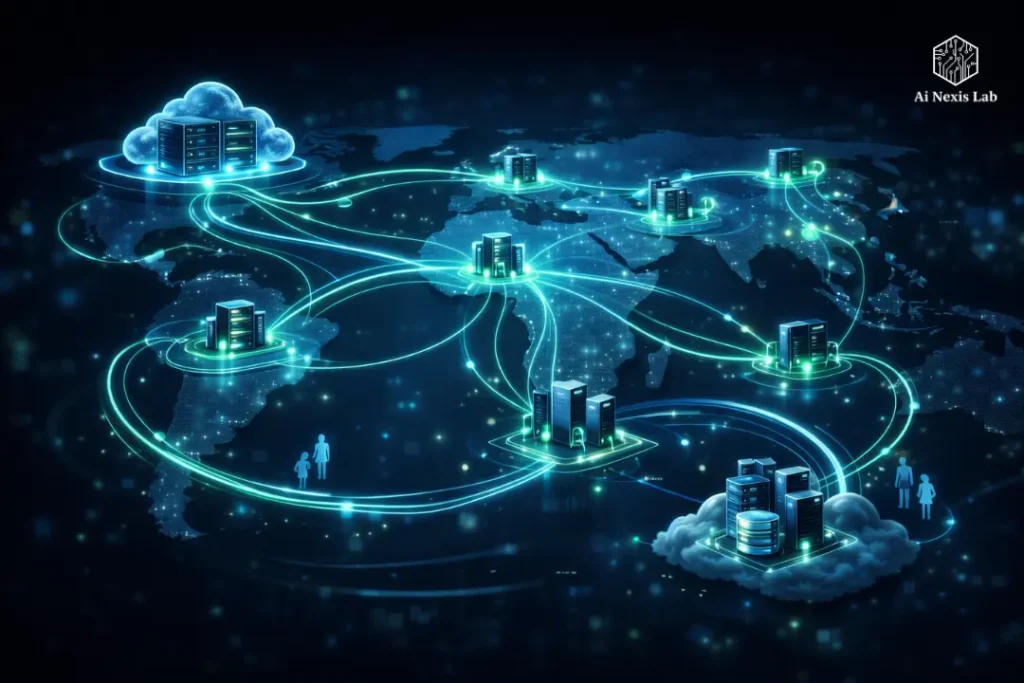
The winning strategy is simple: run the logic as close to the user as possible.
While hyperscale clouds like AWS, GCP, and Azure still form the backbone, real-time logic has moved out to the edge.
With tools like Cloudflare Workers and Vercell Edge Functions, backend code now runs directly on CDN nodes around the world.
This enables:
- Authentication at the edge
- Individualized content generation per region
- Geo-aware feature flags
- Request filtering before traffic hits core services
The result is near-zero latency experiences, even for global applications.
Instead of routing everything back to a central API, modern backends treat the edge as a first-class runtime. Logic locality is now a competitive advantage.
3. Rust and Go: A Clear Power Duopoly
The backend language wars haven’t disappeared — they’ve just settled down.
By 2026, two languages will dominate serious backend systems, each with a clear role.
Go: The Cloud-Native Workhorse
Go remains the default choice for scalable services, APIs, and orchestration layers. Its simplicity, predictable performance, and excellent concurrency model make it ideal for:
- Microservices
- API gateways
- Internal tooling
- Distributed systems
It is also deeply embedded in cloud infrastructure, powering projects like Kubernetes.
Rust: The Performance Specialist
Rust has crossed the chasm from “tough but powerful” to “worth the effort.”
Its memory safety without garbage collection makes it suitable for:
- High-throughput services
- Low-latency pipelines
- Safety-critical components
- Compute-heavy workloads
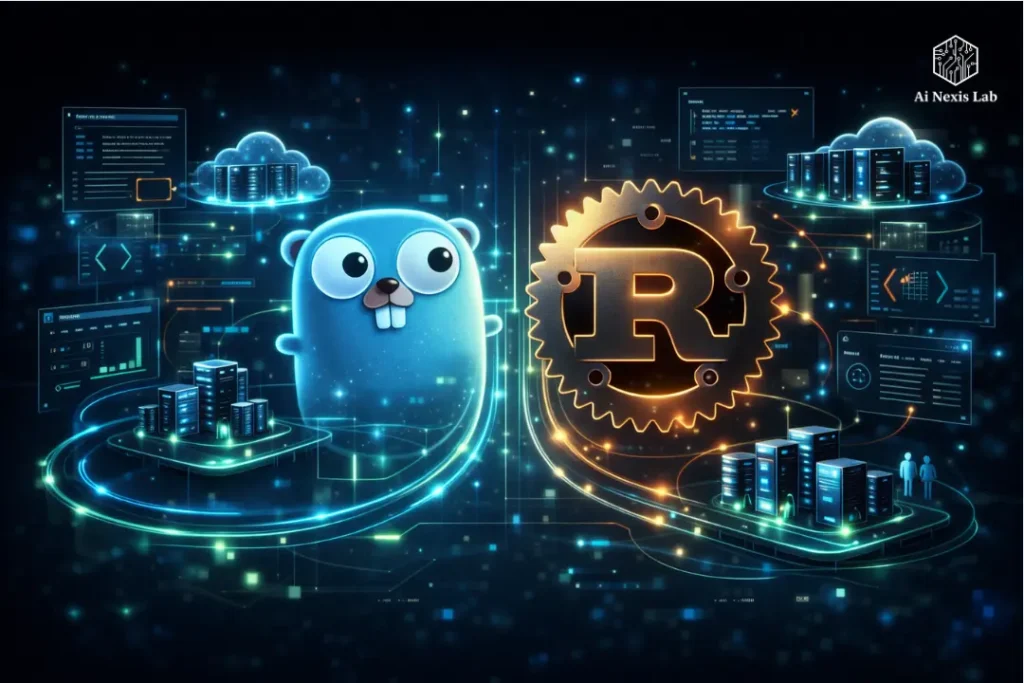
In 2026, many teams use both. Go manages the orchestration and API layer, while Rust owns the hot path where every millisecond matters.
This multilingual approach is not accidental – it is intentional.

4. WebAssembly Takes Over the Server
WebAssembly (Wasm) started as a browser experiment. In 2026, it’s a backend powerhouse.
Wasm has become the execution layer of choice for portable, secure, high-performance backend logic.
Why? Because it offers a rare combination of:
- Near-native performance
- Short startup times
- Robust sandboxing
- Language neutrality
Developers can now write backend modules in Rust, C++, Zig, or even Python, compile them in Wasm, and run them anywhere – cloud, edge, or on-prem.
Compared to Docker containers, Wasm functions start in microseconds instead of seconds. That difference matters at scale.
Many serverless platforms are now Wasm-based, quietly replacing containers under the hood. Backend runtimes are becoming lighter, faster, and more secure – developers don’t have to think about it.
5. Serverless 2.0: Stateful, Durable, and Serious
Early serverless platforms were great – until you needed state.
Stateless functions struggled with:
- Long-running workflows
- Multi-step transactions
- Session-heavy applications
In 2026, those limitations have been overcome.
Serverless 2.0 introduces durable functions and stateful entities, which allow backends to maintain context across execution.
This enables:
- Complex checkout flows
- Background data pipelines
- Event-driven orchestration
- Long-running business processes
Developers now build entire systems without having to manage servers, containers, or even runtimes.
We’re not just talking about “NoOps” anymore. We’re talking about invisible infrastructure – infrastructure that exists, but never hinders the creative flow.
6. Zero-trust security becomes non-negotiable
The idea of a trusted internal network is officially dead.
In 2026, every request is considered adversarial until proven otherwise.
Zero-trust architecture is now standard practice, not a security buzzword.
Modern backends implement:
- Mutual TLS (mTLS) between services
- Identity-first authentication using JWTs and OIDC
- Micro-segmentation to limit blast radius
- Continuous verification, not one-time verification
Internal service-to-service calls must also prove identity, intent, and permissions.
This shift is driven by reality: AI-powered attacks are advancing faster than humans. Static defenses no longer work.
Security is no longer layered on top – it’s baked into the DNA of the backend.
7. GraphQL and the Hybrid API Reality
The REST vs. GraphQL debate is over – and no one won.
In 2026, the best backends use both.
REST still matters
REST remains ideal for:
- Public APIs
- Easy integration
- Cache-friendly endpoints
- External partners
GraphQL shines internally
GraphQL dominates internal APIs and frontend-backend communication. It allows clients to request exactly what they want, which is important for:
- Mobile apps
- Edge devices
- Complex UIs
Platforms like Apollo and Hasura make it easy to combine REST and GraphQL into a single, consistent backend.
Hybrid APIs are not a compromise. It’s a belief that one size never fits all.
8. Polyglot Persistence and the Vector Database Boom
The idea of using one database for everything is gone.
In 2026, serious backends use the right database for the right function.
- PostgreSQL for transactional data
- MongoDB or Cassandra for unstructured or high-velocity data
- Vector databases for AI-powered features
Vector databases like Pinecone and Weaviate are now core backend components.
They store embeddings instead of rows, which enables:
- Semantic search
- Recommendation engines
- Context-aware AI features
AI-first applications simply don’t work without them.
9. AI-Assisted Development and Agentic Workflows
AI is no longer just about helping with writing code. It’s helping you run the system.
In 2026, developers work with AI agents that can:
- Perform deep code reviews
- Generate edge-case test suites
- Refactor legacy services
- Handle version migrations
- Suggest architectural improvements
Instead of being a “copilot,” AI becomes a dedicated teammate.
The developer’s role changes upwards – from typing code to defining direction, constraints, and priorities. You don’t lose control; you gain leverage.
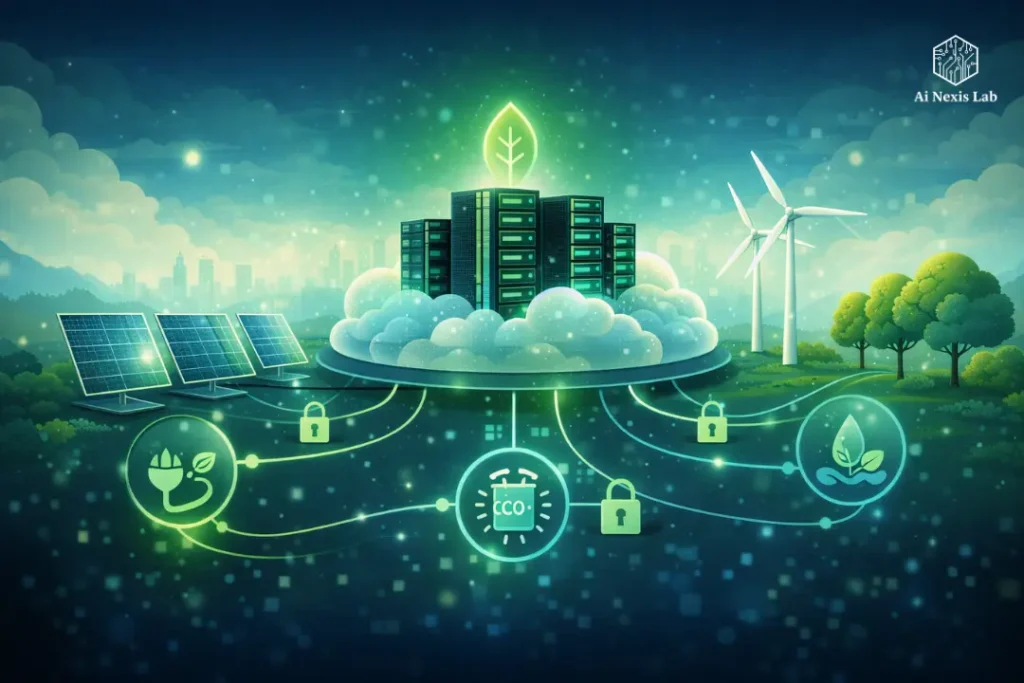
10. Green backend engineering has become a technical necessity
Sustainability is no longer optional.
As data centers consume more power, backend efficiency has become a difficult technical metric.
In 2026, teams actively design carbon-aware backends by:
- Choosing efficient languages like Go and Rust
- Scheduling non-critical workloads during low-carbon energy windows
- Choosing cloud regions powered by renewable energy
- Reducing unnecessary computation through better architecture
Green backend engineering isn’t just about ethics – it’s about cost, scalability, and long-term viability.
Efficient systems win.
Conclusion: The backend belongs to the system thinkers
Backend development in 2026 is no longer about remembering frameworks or tuning configurations.
It’s about:
- Designing Intent-Driven Systems
- Embracing Automation Without Losing Control
- Balancing Performance, Security, and Sustainability
- Thinking in Flows, Not Functions
The backend has become the invisible intelligence layer of modern software.
And the developers who thrive are the ones who think beyond code – and design the future.
Frequently Asked Questions (FAQ)
Q1: Is backend development still a good career in 2026?
Absolutely. The role has evolved, not disappeared. Engineers who understand systems, architecture, and AI-integrated workflows are in high demand.
Q2: Do I need to learn Rust to stay relevant?
Not mandatory, but very valuable. Rust is becoming essential for performance-critical backend components.
Q3: Is serverless replacing traditional backends?
For many workloads, yes. But hybrid models still exist. The main trend is abstraction, not elimination.
Q4: Are databases becoming less important with AI?
Quite the opposite. Database specialization – especially vector databases – is more important than ever.
Q5: What skill is currently most important for backend engineers?
Systems design thinking. Tools change rapidly, but understanding how components interact on a large scale is timeless.