
Backend Development in 2025: A Complete Beginner-Friendly Guide to Getting Started

Introduction — The unseen world behind your favorite apps
We use apps every day—WhatsApp, Netflix, Zomato, Instagram, UPI—but we rarely stop to think about what happens behind the screen. Tap a button… something responds. Search for a movie… it appears immediately. Track your delivery… The map updates in real time.
That invisible “brain” behind every interaction is backend development.
If the digital world were a restaurant:
- Frontend = waiters, menus, lights
- Backend = kitchen, kitchenware, inventory, billing, dishes
You see the waiters, but the kitchen does all the real work. The kitchen decides everything – like backend development.
Backend developers build the systems that keep the internet running—quietly, reliably, and at scale. And if you’ve ever wondered what they actually do (or how to become one), you’ve come to the right place.
This is your 2025 beginner-friendly guide, designed to eliminate confusion and give you a practical roadmap. That invisible system is called backend development – an engine that powers the entire internet.
If you’ve ever wondered:
- What does a backend developer actually do?
- What skills do I need today?
- Is AI replacing backend jobs?
- How long does it take to get into the backend?
Then this 2025 guide is for you.
What backend development really means
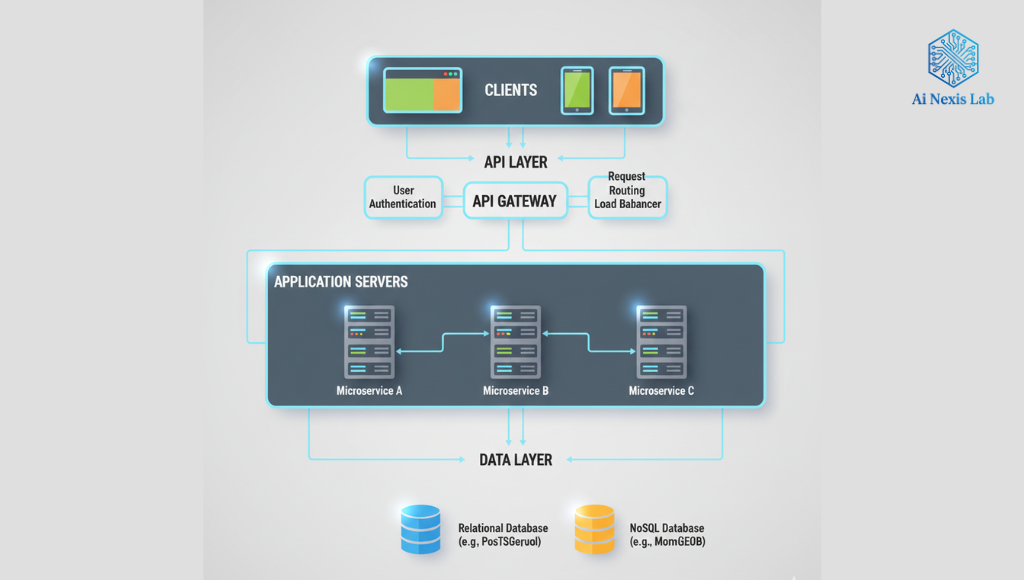
Backend development focuses on everything that users cannot see, such as:
- Servers
- Databases
- APIs
- Authentication and Security
- Business Logic
- System Performance
- Cloud Infrastructure
If an app needs to store data, process something, or talk to a server, backend developers make it possible.
What do backend developers actually do?
Most people imagine that backend developers just write quiet lines of code.
But the work is more dynamic.
A backend developer typically:
1. Creates an API
APIs allow apps to communicate with servers and databases.
2. Manages the database
Storing:
- users
- messages
- payments
- orders
- sessions
Retrieving:
- Dashboards
- Analysis
- Recommendations
3. Implements authentication
Login, Signup, OTP, Tokens, OAuth (Google/Facebook Login).
4. Write business logic
“If user adds item → Update cart → Calculate total → Generate bill.”
5. Ensures performance and security
Prevent hacks, speed up applications, reduce server costs.
6. Works with cloud services
AWS, Azure, Google Cloud, Vercel, Render, Firebase.
7. Collaborates with Front-End and DevOps
The backend is a central role in any tech team.
Do beginners need a complete roadmap?
Absolutely not.
You only need 3 things to start the backend:
- A programming language
- A backend framework
- A database
Everything else – Docker, microservices, queues, caching, system design – comes after getting familiar with the basics.
Trying to learn everything at once is tiring.
Start simple, stay consistent.
How long does it take to become a backend developer?
| Skill Level | Time Required | What You Can Do |
|---|---|---|
| Beginner | 2-3 months | Build basic APIs, CRUD operations |
| Intern-level | 4-6 months | Authentication, JWT, small apps |
| Job-ready | 6-9 months | Scalable APIs, DB optimization, cloud |
| Strong developer | 1-2 years | Architecture, microservices, security |
AI tools help speed up learning, but the basics are still important.
Tools and languages
Choose a programming language to get started:
1. JavaScript / Node.js
- Easiest to get started
- Same language for front-end + backend
- Large community
- Good for beginners
2. Python (FastAPI / Django)
- Clean, simple syntax
- Used in AI, ML, data
- Quick to build MVP
3. Java / Spring Boot
- Enterprise-level jobs
- Big tech companies love it
- Highly reliable
4. Go (Golang)
- Fastest growing backend language
- Ultra-speedy
- Great for scalable systems
5. PHP / Laravel
- Easier than most languages
- Perfect for freelancers and startups
- Very productive structure
Backend framework
Frameworks give you structure so you don’t build everything from scratch.
| Language | Frameworks | Why They’re Good |
|---|---|---|
| Node.js | Express, NestJS | Fast, Modern, Flexible |
| Python | Django, FastAPI | Beginner-friendly, Secure |
| Java | Spring Boot | Enterprise-grade, Powerful |
| Go | Gin, Echo | High Performance |
| PHP | Laravel | Elegant, Easy for CRUD Applications |
Database — SQL vs. NoSQL
SQL (Structured)
Best for consistent, organized data.
Like Excel tables. Suitable for:
- Banking
- Orders
- Users
- Transactions
Examples: MySQL, PostgreSQL, SQL Server
NoSQL (flexible)
Like storing data as notes. Perfect for:
- Chat Apps
- Real-Time Apps
- Analytics
- Logs
Examples:
- MongoDB
- Firebase
- DynamoDB
Beginners should start with: PostgreSQL (SQL) or MongoDB (NoSQL).
Real backend developer skills
Core Skills
- Data Structures
- API Design
- Authentication (JWT, OAuth)
- Error Handling
- Caching
- Database Schema Design
- Git and GitHub
- Basic System Design
- Cloud Basics
AI-assisted skills
- Using AI for Debugging
- Writing API Tests
- Auto-Generating Documentation
- Optimizing Queries
Pros & Cons of Backend Development
Pros
- High-paying worldwide
- Remote-Friendly and Excellent remote opportunities
- Exciting Real-World Problems
- Stable Long-Term Career
- In Demand Globally
Cons
- Faster learning curve than front-end
- Requires strong logic
- Debugging can be deep and time-consuming
- Must understand many dynamic parts
Backend Developer Salary
Region | Beginner | Mid-Level | Senior |
|---|---|---|---|
| India | ₹4–7 LPA | ₹8–20 LPA | ₹25–50+ LPA |
| US | $70k–100k | $110k–150k | $160k–220k |
| Europe | €40k–60k | €60k–100k | €100k–150k |
| Remote global roles | $30k–100k | $80k–150k | $150k–200k |
Backend developers earn the highest salaries in the tech sector.
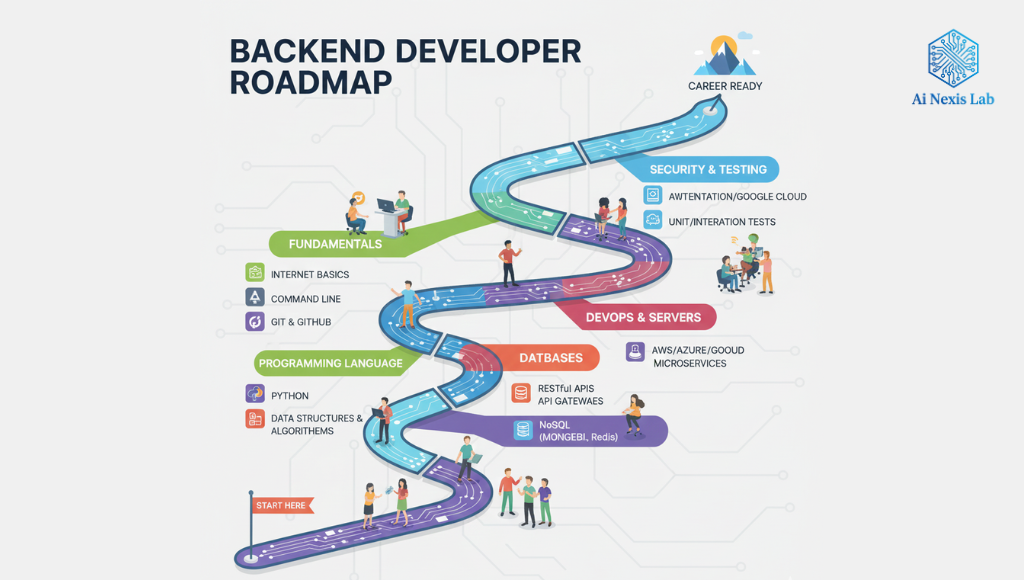
Beginner-friendly backend roadmap
Stage 1: Foundations
- Learn a language
- Basic programming
- Git, GitHub
- Command line
Stage 2: Backend Basics
- REST APIs
- JSON
- CRUD operations
- MVC architecture
Stage 3: Database skills
- SQL Basics
- Joined
- Indexing
- MongoDB Basics
Stage 4: Authentication
- JWT
- Sessions
- OAuth
- Password Hashing
Stage 5: Advanced Backend
- Caching (Redis)
- Queues (RabbitMQ)
- File Uploads
- WebSockets
Stage 6: Cloud Deployment
- AWS / Render / Vercell
- Docker Basics
- CI/CD
Stage 7: System Design
- Load Balancing
- Scalability
- Database Sharing
- Microservices Basics
Backend Projects (Beginner → Advanced)
Projects for beginners
- Login/Signup System
- Task Manager API
- Notes Application API
- Blog Backend
Intermediate projects
- E-Commerce Backend
- Food Delivery Backend
- Movie Booking System
- Payment Gateway Simulation
Advanced projects
- Chat application with websockets
- Real-time analytics system
- Ride-sharing backend (like Uber Logic)
- Microservices-based social media backend
Frequently Asked Questions (FAQs)
Q1: Is backend development difficult?
A: It is challenging but logical. With consistent practice, anyone can learn it.
Q2: Do I need math for the backend?
A: Just basic logic – no advanced math required.
Q3: Which is better for beginners: Node.js or Python?
- Node.js → if you want JavaScript everywhere
- Python → if you want a cleaner language or want AI/ML later
Q4: Do backend developers need DevOps?
A: Not at the beginning. Learn DevOps after 6-9 months.
Q5: Will AI replace backend developers?
A: No. AI is a tool, not a replacement.
Backend engineers who use AI will replace those who don’t.
Final thoughts
Backend development is one of the most powerful, stable, and future-proof skills you can learn in 2025.
It powers everything from social networks to banking, healthcare, finance, gaming, e-commerce, and AI.
- Start small.
- Choose a language.
- Create projects.
- Use AI tools to learn quickly.
Be job ready in months, not years.