v0 vs Bolt.new vs Lovable: Which AI app builder is really the best in 2026?

v0 vs. Bolt.new vs. Lovable – These three AI app builders are redefining how software is built in 2026. From pixel-perfect UI generation to full-stack automation and SaaS-ready backends, choosing the right tool can determine whether your idea gets off the ground in days or gets stuck for weeks.
Let’s be honest – software development hasn’t evolved in the last two years.
It jumped the timeline.
If you learned web development the “traditional” way – setting up frameworks, wrestling with CSS, wiring authentication, debugging mysterious runtime errors – you’ll probably be a little shocked by what’s common in 2026. Entire applications now go from idea to production before your coffee gets cold. Not demos. Not mockups. Real applications with users, payments, databases, and deployments.
We have firmly entered the prompt-to-product era.
And right now, three tools dominate that world:
I’ve spent the last year building with all three – shipping landing pages, SaaS MVPs, admin dashboards, AI-powered internal tools, and a few “side projects” that accidentally turned into real products. This article is the result of that experience.
No hype.
No launch-day excitement.
What really works in 2026.
1. From Autocomplete to Autonomous Builders
Back In 2023, AI coding mostly meant autocomplete. Helpful, yes—but still very human-driven. Then in late 2024, Andrzej Karpathi accidentally dropped a phrase that stuck: vibe coding.
At the time, it seemed frivolous. Almost irresponsible.
The idea was simple:
Describe what you want, not how to write it.
Critics were quick to respond:
- “This code will destroy quality.”
- “It’s no-code just with better marketing.”
- “Have fun rewriting everything in a year.”
Yet here we are in 2026—and vibe coding didn’t die. It matured.
Why Vibe Coding Survived
The major changes were not a good sign.
That code was proprietary.
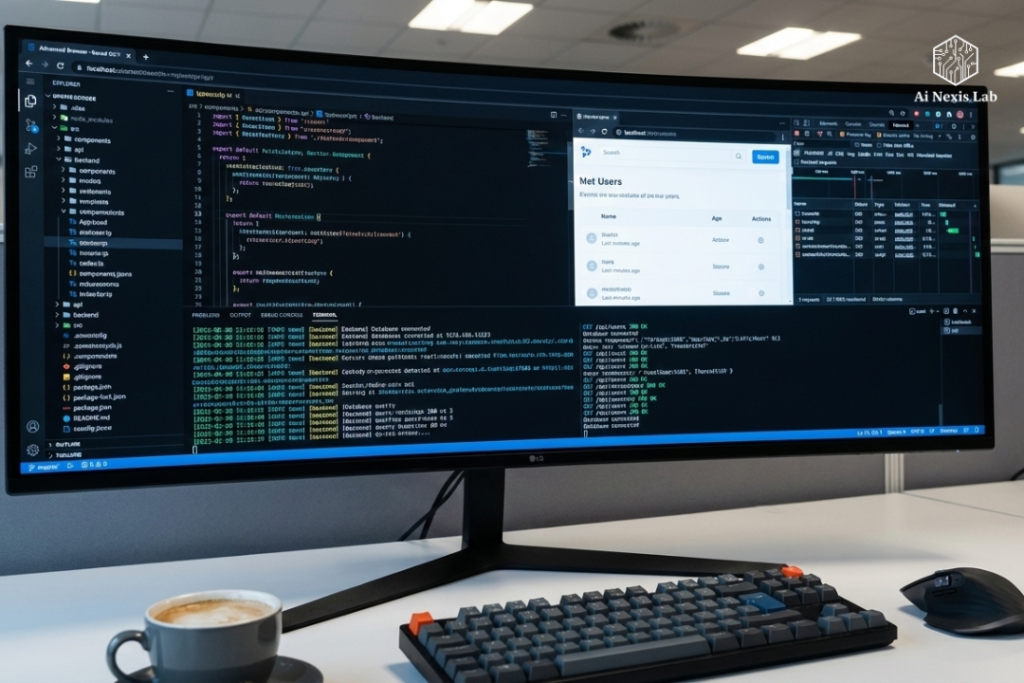
Unlike classic no-code platforms, modern AI builders generate:
You can export everything, push it to GitHub, and scale it later with a human team. That’s why this movement stalled.
2. Code-first AI vs. old-school no-code
It’s important to draw a clear line here.
Traditional no-code tools (Bubble, Webflow, etc.) optimize for speed within their ecosystem. Once you get out, you’re stuck rebuilding from scratch.
v0, Bolt, and Loveable are different.
They are code-first AI agents:
- They don’t hide complexity
- They don’t lock you out
- They don’t replace engineers – they compress engineering time
That distinction is more important than any feature list.
3. v0.dev — Where design wins taste
v0.dev comes from Vercel, the same team behind Next.js. That pedigree is immediately apparent.
v0’s main strength: Taste
Many tools can generate UI.
Very few generate good UIs.
v0 has a unique understanding of:
- Visual hierarchy
- Spacing and rhythm
- Modern SaaS aesthetics
- Accessibility by default
It doesn’t just create components – it makes them feel intentional.
Design-to-code in 2026
One of v0’s biggest leaps since 2024 is visual interpretation. You can upload:
- A Figma frame
- A rough sketch
- A screenshot
- Even a photo of a whiteboard
v0 translates that into clean, production-ready components with terrifying accuracy.
The Vercel Benefits
If you are already deploying on Vercel, v0 seems native. Prompt → Preview → Deployment is almost frictionless. Performance, SEO, and accessibility are baked in by default.
Where v0 struggles
v0 is still frontend-first. While it handles server actions and APIs better than before, complex backend workflows usually require external help or another tool.
Best suited for:
- Design-driven startups
- Investor demos
- Frontend-heavy products
- Teams that value polish over plumbing
4. Bolt.New — The Engineers AI
Bolt.new comes from the StackBlitz team, and it shows in every interaction.
This is not a design toy.
Bolt feels like a real development environment that is AI-powered.
Why Bolt feels different
1. Real terminal access
Bolt installs packages, runs scripts, manages builds, and debugs bugs just like a human developer—except faster.
2. Self-healing debug loops
This is a unique feature of Bolt. When something breaks:
- Reads the error
- Understands the stack trace
- Fixes the code
- Re-runs the application
Watching Bolt debug is one of those moments where you realize the industry has changed forever.
3. Full transparency
The Tradeoffs
Bolt won’t automatically give you an award-winning UI. You can make it beautiful—but you may need to ask explicitly or bring in a design from v0.
Best suited for:
- Full-stack developers
- Logic-heavy applications
- API-centric products
- Teams that want control without losing speed
5. Lovable.dev — The fastest way to send business
Loveable (formerly a GPT engineer) is the most opinionated – and perhaps the most powerful – of the three.
If v0 is about design and Bolt is about engineering, then Loveable is about shipping products.
Loveable’s Secret Weapon: Native Backend Intelligence
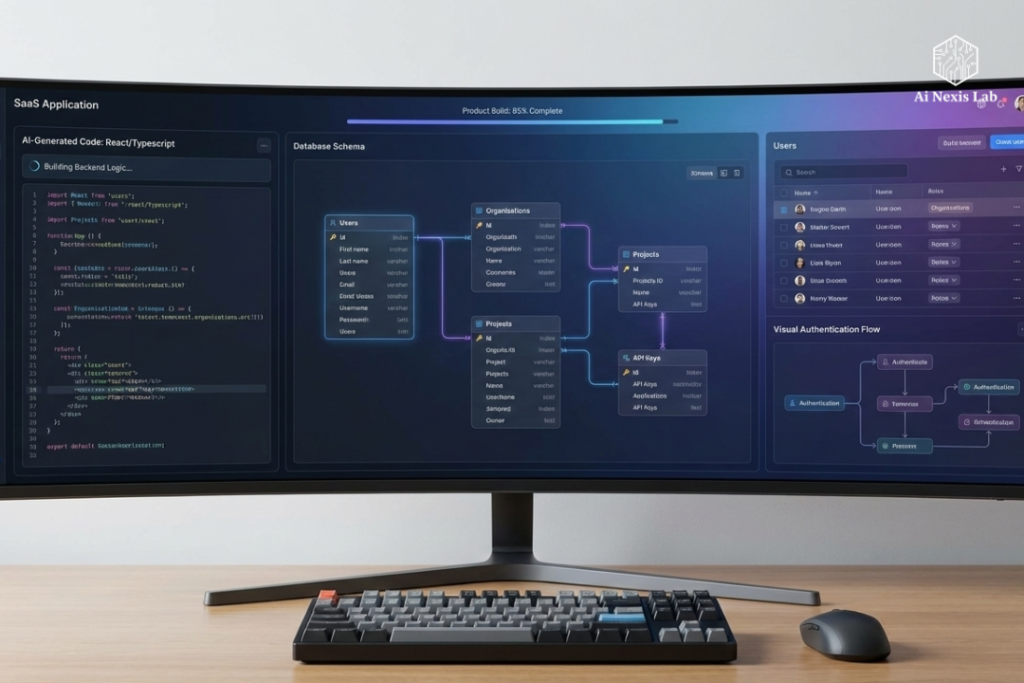
Loveable’s deep integration with Supabase is a game changer.
It just doesn’t connect to the database. It:
- Designs the schema
- Sets up authentication
- Configures row-level security
- Writes backend logic
- Keeps frontend and backend in sync
This eliminates one of the biggest bottlenecks in modern development.
Product-First Workflow
Loveable doesn’t ask you about libraries until you need them. You describe the features. It builds the systems.
Highlight a table and say:
“Add status tracking and link it to a user role.”
Loveable updates:
at the same time.
Git as a First-Class Citizen
Loveable considers GitHub as a source of truth. Commitments are clean. Pull requests can be read. Human developers can then step in without pain.
Best suited for:
- Non-technical founders
- Solo builders
- Internal tools
- SaaS MVPs with real users
6. Head-to-head comparison (2026 reality)
This keeps the flow logical:
Comparison → Deeper understanding → Workflow → Judgment
How AI App Builders Will Change Team Size and Cost in 2026
The biggest change in 2026 isn’t just how apps are built – it’s who needs to build them.
Before AI App Builders:
- A basic SaaS MVP required 3-6 people
- Frontend dev, backend dev, designer, DevOps
- 2-4 month minimum timeline
With v0, Bolt, and Loveable:
- A single builder can ship a usable product
- MVP timelines shrink from months to days
- Costs shift from salaries to predictable subscriptions
This doesn’t mean teams are disappearing — it means teams are scaling later. Founders now generate ideas, onboard users, and even revenue before hiring engineers. That’s a big shift in startup economics.
In practical terms:
- v0 replaces weeks of UI/UX work
- Bolt replaces full-stack scaffolding and debugging time
- Loveable replaces backend setup, authentication, and database wiring
Instead of paying for uncertainty, builders now pay for speed.
| Category | v0.dev | Bolt.new | Lovable.dev |
|---|---|---|---|
| UI Quality | ⭐⭐⭐⭐⭐ | ⭐⭐⭐ | ⭐⭐⭐⭐ |
| Backend Depth | ⭐⭐⭐ | ⭐⭐⭐⭐⭐ | ⭐⭐⭐⭐⭐ |
| Database Handling | Manual | Manual | Native |
| Learning Curve | Very Low | Medium | Low |
| Best For | Design Polish | Engineering Power | Shipping Products |
Real-world use cases: What people actually create with them
These tools shine in a variety of real-world scenarios.
v0.dev is commonly used for:
- Investor pitch demos
- Marketing sites with complex UIs
- Frontend-heavy SaaS dashboards
- Design systems for internal teams
Bolt.new excels at:
- API-driven products
- Developer tools
- Data-heavy dashboards
- Proof-of-concept engineering builds
Lovable.dev dominates when building:
- SaaS MVPs with login + database
- Internal CRM and admin tools
- Subscription-based apps
- Rapid client projects for agencies
A pattern quickly emerges:
Unsuccessful teams usually choose the wrong tool, not the wrong idea.
Common Mistakes Made by Beginners with AI App Builders
Despite the power of these platforms, many users still struggle – not because of the tools, but because of how they use them.
The most common mistakes include:
- Treating AI like a junior developer instead of a collaborator
- Giving vague prompts instead of outcome-focused instructions
- Ignoring architecture decisions entirely
- Shipping without reviewing security or authentication logic
Builders who succeed do one thing well:
They think in systems, not screens.
Instead of saying:
“Build me a dashboard”
they say:
“Create a role-based dashboard where admins can manage users and see analytics.”
Clear purpose produces better results – every time.
7. Hybrid Workflow Professionals Use
In 2026, serious builders don’t choose a single tool – they integrate them.
Step 1: Design in v0
Create layout, components, and visual direction.
Step 2: Build into Loveable
Add authentication, database logic, and core product features.
Step 3: Engineer in Bolt
Handle complex integrations, performance tuning, or edge cases.
Step 4: Final polish to the cursor
Refactor, secure, and customize the final 10%.
This workflow regularly replaces what previously required entire teams.
8. Is AI replacing developers?
Short answer: No.
More accurate answer: It’s replacing busywork.
AI has removed:
- Boilerplate
- Setup friction
- Repetitive syntax
- Infrastructure guesswork
All that remains is the decision.
The “Last 10%” Rule
AI gets you 90% of the way in minutes.
The last 10% is where humans matter:
- Architectural decisions
- Security audits
- Business logic nuance
- User empathy
That’s where the real value lies in 2026.
Frequently Asked Questions
Q1: Which AI app builder is the cheapest in 2026?
Bolt usually offers the most predictable price. v0 can get expensive with heavy design iterations. Loveable costs more but replaces multiple tools.
Q2: Is the generated code production ready?
Yes—for MVPs and SaaS products. Security and performance are still beneficial from human review.
Q3: Can I scale apps built with AI Builders?
Sure. Many production applications started this way in 2026 and were later scaled with human teams.
Q4: Which tool is best for beginners?
Loving is the most forgiving. v0 is natural. Bolt development assumes knowledge.
Q5: Do I own the code?
Yes. This is the difference between these tools and the old no-code platforms.
Final verdict
There is no universal winner.
- If visual quality is your edge, choose v0.dev.
- If engineering depth is most important, choose Bolt.new.
- If revenue momentum is a priority, choose Lovable.dev.
The real advantage in 2026 isn’t choosing the “best” tool – it’s knowing when to use each one.
The gap between idea and product has never been narrower.
The only real risk now is waiting.
Start building.