Pinterest Paradox in 2026: Why Your Pins Get Impressions But Zero Clicks (And What Really Fixes It)
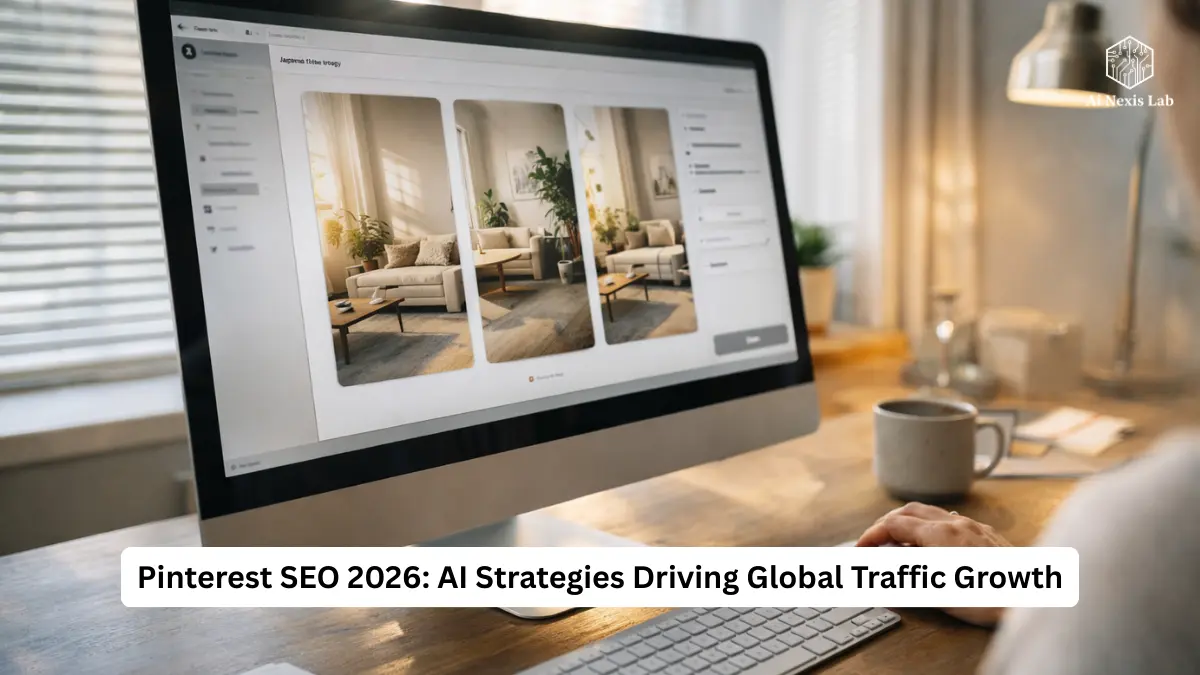
Let’s stop pretending this is random.
You are not “shadowbanned“.
You are not unlucky.
And Pinterest isn’t secretly out to get you.
What’s happening is simple – and even more disturbing:
You’re creating content for the 2022 Pinterest ecosystem inside a 2026 AI-powered visual search engine.
And they are two very different machines.
If you’ve ever looked at Pinterest Analytics and seen:
- 40,000 impressions
- 18 saves
- 3 outbound clicks
…you’re not crazy to be frustrated. That gap is real. But it’s not mysterious.
In 2026, Pinterest runs on advanced computer vision, intent modeling, and predictive behavioral clustering. The algorithm no longer just reads your keywords. It reads your pixels. It analyzes object placement. It also looks for mood, color palette, lighting patterns, implicit lifestyle cues.
Pinterest is no longer social media.
It is a visual intent engine powered by AI.
If you understand that change, everything changes.
This in-depth study follows:
- What Pinterest’s AI really prioritizes
- Why impressions don’t equal traffic
- Five AI tools that are reshaping the game
- Strategic workflows to increase outbound clicks by 300-500%
- Mistakes creators keep repeating
- And what the next 18 months look like
No fluff. No recycled guru advice. Just what works.
Table of Contents
Reality Check: Pinterest is a Search Engine, Not a Feed in 2026
Pinterest surpassed 570 million monthly active users globally at the end of 2025, with the U.S. Users still represent one of the most targeted audiences online. But here are some more important statistics:
Over 85% of Pinterest sessions start with search behavior or predictive search signals.
That’s a Google-level objective.
But unlike Google, Pinterest doesn’t rank based entirely on text.
It ranks based on:
- Image recognition
- Object classification
- Engagement velocity
- Account topical authority
- Estimated click probability
- Historical user intent patterns
This is powered by what Pinterest internally refers to as the “taste graph” – an advanced AI model that maps visual preferences to behavioral intent.
This means:
Your image creation is important.
Your color contrast matters.
Your object clarity matters.
Your layout hierarchy matters.
Not aesthetically.
Algorithmically.
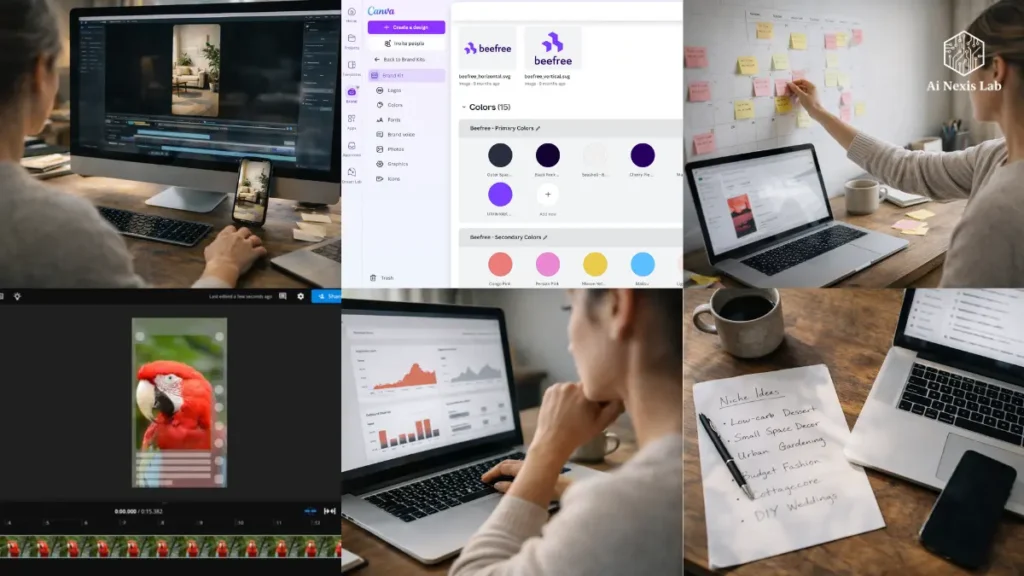
Why Are Your Pins Getting Impressions But Not Clicks
Let’s diagnose the most common problem creators face.
1. You’re Optimizing For Saves, Not Clicks
A beautiful mood board-style pin is saved.
But it doesn’t get clicks.
Why?
Because it satisfies curiosity without requiring action.
Pinterest now predicts whether someone needs to leave the platform. If your PIN visually answers the question, outbound clicks decrease.
Brutal Truth:
Pinterest rewards content that builds curiosity gaps, not content that completely resolves them in an image.
2. Your image is not machine-readable
Pinterest’s computer vision scans for:
- Distinct objects
- Clear spatial separation
- Identifiable categories
- Clean vertical hierarchy
If your Pin is cluttered, overly filtered, or uses abstract overlays, the AI will struggle to classify it.
And if he can’t classify it?
It cannot distribute it properly.
3. Your Description Doesn’t Match The Active Search Intent
In 2026, Pinterest is putting a heavy emphasis on semantic relevance and NLP clustering.
“Healthy dinner ideas” can be very broad.
But “15-minute high-protein meals for busy commuters” aligns with micro-intentions.
If your copy isn’t aligned with real-time search patterns, your impressions may come from loosely related feeds – not from active buyers or readers.
The 2026 AI stack That Changes Everything
Now let’s get strategic.
Below are five AI-powered tools that are reshaping Pinterest strategy this year – and how to use them intelligently.
1. Gemini 3 Image Model (“Nano Banana”) – Visual Precision Wins
The biggest change in Pinterest’s success?
Precision visuals surpass ordinary beauty.
Gemini 3’s advanced image model (informally known as “Nano Banana”) excels in:
- Spatial reasoning
- Object clarity
- Realistic lighting physics
- Texture authenticity
Why it matters:
Pinterest’s AI recognizes objects within your image and tags them internally.
If you generate:
“A comfortable living room”
You get a normal distribution.
If you generate:
“2:3 vertical Japanese living room, low-slung linen sofa centered, monstera plant left corner, ceramic mug on oak table catching soft morning light”
You now rank for:
- Japanese decor
- Linen sofa style
- Minimalist living room
- Indoor plant corner
- Neutral aesthetic interior
There are five search categories from one image.
Tactical Workflow
- Always specify a 2:3 vertical ratio
- Specify lighting direction
- Specify 3-5 distinct objects
- Avoid clutter
- Keep text overlays minimal and bold
Why Vertical Still Dominates
The Pinterest mobile feed is vertical-first. Square pins sacrifice up to 30% of visible screen real estate.
It’s not stylistic.
It’s lost visibility.
2. Tailwind Ghostwriter – Intent Matching at Scale
Tailwind has gone far beyond scheduling.
Ghostwriter analyzes:
- Trending keywords
- Emerging search spikes
- Seasonal pattern shifts
- Engagement signals in your niche
Example:
Instead of “easy pasta recipe,”
the tool can find trending micro-intents:
“high-protein 15-minute meal prep for office workers”
That shift is important.
What You Should Really Do
- Insert your blog link.
- Create 3-5 headline variations.
- Compare NLP words.
- Edit the first sentence to make it sound humane.
- Add structured benefit-driven language.
Don’t blindly trust AI copying.
Improve it.
A 30-second edit can dramatically increase CTR.
3. Predis.ai – Turn a Blog Into 10 Pins
Video pins are no longer optional.
In 2026:
- Video autoplay is activated at 50% screen visibility.
- Video pins get longer dwell time.
- Pinterest’s shopping integration prioritizes speed.
Predis.ai extracts:
- Hook statement
- Key steps
- Visual cues
- Script summary
And converts a blog into:
- Static Pin
- Carousel Pin
- Short video Pin
Why This Matters
Pinterest now favors “freshness signals.”
Posting the same static image over and over again reduces distribution.
But 5-10 unique visual executions of the same link?
That’s encouraging.
4. Surfer SEO – Pinterest Keyword Engineering
Surfer SEO introduced Pinterest-specific NLP optimization tools.
Here’s what most creators miss:
Pinterest ranks based on entity clusters.
If targeting “sustainable fashion,” high-performing pins also include:
- Capsule wardrobe
- Upcycled materials
- Ethical manufacturing
- Circular economy
If those semantic entities are absent, you’re incomplete.
Tactical Move
Analyze the top ranked pins.
Match semantic density.
Don’t keyword stuff – align naturally.
Pinterest’s AI rewards contextual alignment, not repetition.
5. Canva Magic Studio – Fresh Pins Without Burnout
Canva solved a big problem:
Consistency without creative fatigue.
In 2026:
Pinterest picks 5-15 fresh pins every day.
That doesn’t mean 15 new blog posts.
That means:
- New layout
- New headline
- New image crop
- New visual emphasis
Magic Switch lets you format instantly while maintaining brand identity.
It’s operational efficiency – not design fluff.
Strategic Frameworks That Really Move Traffic
1. Gap Analysis (CTR Optimization)
Find Pins with:
- Higher Impressions
- Lower Outbound Clicks
This means that:
Your distribution is working.
Your click psychology isn’t working.
Improvement:
- Strong headline promise
- Curiosity gap
- Benefit-first framing
- Clear contrast
2. 90-Day Seasonal Lead Strategy
Pinterest users plan ahead.
The increase in holiday decorations starts 90-120 days early.
If you post Christmas content in December, you’re already too late.
Start in September.
3. Micro-Niche Dominance
Wide niche = high competition.
Example Shift:
Fitness
→ Postpartum Fitness
→ Postpartum Pilates
→ Postpartum Pilates for Apartment Living
Less competition.
High authority positioning.
Faster rankings.
What The Next 18 Months Look Like
Pinterest is leaning into:
- Shoppable video pins
- AI-powered product tagging
- Enhanced visual search
- Checkout on the platform
The more machine-readable your visuals are, the better you will perform.
This is not about cheating the algorithm.
It’s about aligning with it.
Frequently Asked Questions
Is Pinterest still worth it for traffic?
Yes – but only if you treat it like a search engine. Organic Google traffic is becoming increasingly volatile due to AI summarization. Pinterest remains purpose-driven and aspiration-based. But lazy pinning strategies don’t work anymore. You need accuracy and consistency.
Will AI images hurt my account?
No – low-quality images will do. Pinterest prioritizes clarity and resolution. If your AI visuals are realistic, object-separated, and consistent, it performs well. Blurred, surreal, or incoherent scenes are buried.
How often should I pin?
5-15 fresh pins per day is the current sweet spot. No reposts. Fresh variations. With batching tools, this can take less than 30 minutes per week if structured properly.
Do hashtags matter?
Marginal. They act as navigational aids. They are not ranking drivers. Instead, focus on titles and the first two sentences of the description.
Can AI write my bio?
Yes – but optimize for keyword authority. Include 3-5 specific-defining phrases. Avoid fluff. Pinterest uses account-level context to determine local authority.
Final Verdict: Stop Fighting the Machine
The algorithm is not your enemy.
It is a system.
If your pins aren’t converting, it’s not because Pinterest changed overnight.
That’s because the ecosystem has evolved – and you haven’t.
Start small:
- Upgrade your visuals.
- Improve your semantic targeting.
- Create a new variation.
- Track CTR, not vanity metrics.
You don’t need all five tools tomorrow.
Choose one.
Test for 14 days.
Measure outbound clicks.
Make adjustments.
This is how you turn ghosted pins into traffic assets.
Decide now:
Are you posting content?
Or building a distribution system?
Because in 2026, it’s not the same thing.