You Don’t Need $1,000 to Start a Dropshipping Business – The Real $0 Playbook for 2026 is Here
Start a dropshipping business with $0 using 10 proven strategies for 2026. Learn free traffic, winning niches, suppliers, and first sales fast.
Table of Contents
Introduction: Let’s Kill the Biggest Lie in Dropshipping
Let me be clear: Most “start a dropshipping business” guides are designed to sell you something.
They’ll tell you that before you make your first sale, you need:
- Shopify subscription
- Premium theme
- Paid product research tools
- Facebook ad budget
- Expensive automation apps
- A “winning product” course from someone who rents Lamborghinis for thumbnails
By the time you complete their “beginner setup,” you’re already $500–$1,000 down and have zero proof your store will work.
That’s stupid.
A business must prove itself before emptying your bank account.
The basic idea behind dropshipping was simple: sell first, invest later. Somewhere along the way, people turned it into a pay-to-play fantasy.
This guide fixes that.
Yes, in 2026, you can still start a legitimate dropshipping business with $0 – if you stop chasing shortcuts and build it like a real operator.
No magic.
No fake guru nonsense.
No “passive income in 7 days”.
Just a lean, practical system that works.
The global dropshipping market is still huge and still growing. Multiple industry reports from 2026 place the market at over $400 billion globally, with strong projected growth through 2030 and beyond. That doesn’t mean easy money – it means that opportunity still exists for people who know what they’re doing.
And that’s the part that most people ignore.
The winners are not the ones with the biggest advertising budgets.
They are the people who:
- Choose better products
- Build more reliable stores
- Understand customer psychology
- Use free traffic before paid traffic
- Solve boring operational problems better than everyone else
That’s what we’re covering.
Everything in the original framework is still true – we’re just upgrading it for how e-commerce really works in 2026.
Let’s get into it.
Why Dropshipping Still Works in 2026 (and Why Most People Still Fail)
The Business Model Is Simple – People Make It Complicated
At its core, dropshipping is not complicated.
The customer makes a purchase from your store.
You forward the order to your supplier.
The supplier ships directly to the customer.
You keep the margin.
You never buy inventory in advance.
You never rent warehouse space.
You never pack boxes in your garage.
That part is easy.
The hard part is this:
Why should someone buy from you instead of Amazon?
It’s a real business.
No product imports.
No Shopify themes.
No automation tools.
Trust.
If a portable blender costs $9 from the supplier and sells for $39 retail, your job isn’t to simply pocket the difference.
Your job is to build enough trust that someone feels comfortable buying from your store, not from a larger marketplace.
That means:
- Better positioning
- Clear messaging
- Strong product pages
- Better customer trust
- Smart content
That’s where the money is made.
Why Most Beginners Fail Quickly
Most people don’t fail because dropshipping is dead.
They fail because they are impatient and bad at making decisions.
Usually it’s one of these three:
1. They Choose a Terrible Niche
They chase random trending junk.
Neck fans.
Galaxy lamps.
USB nonsense.
No repeat buyers.
No brand potential.
No emotional connection.
No pitfalls.
It’s not a business. It’s gambling.
2. They Spend Money on Advertising Too Early
This is a classic beginner’s mistake.
They spend $300 on Meta ads even before it’s proven that anyone wants the product.
It’s the other way around.
Organic traffic must first validate demand.
Paid traffic should measure what already works.
Not the other way around.
3. They Give Up At The First Point of Friction
Shipping problem?
They panic.
Supplier delay?
They panic.
No sales after 10 days?
They panic.
This is not a lottery ticket.
It is a business.
Businesses need to adjust.
The people who survive are the ones who solve problems instead of reacting emotionally to them.
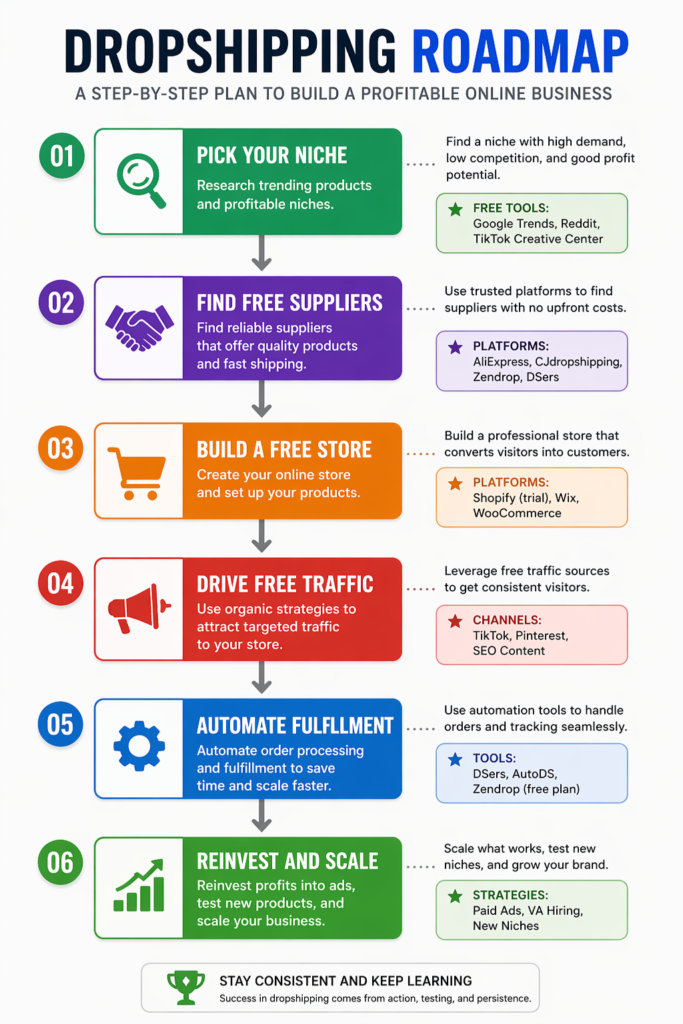
Niche Trap: How to Choose a Category That Really Converts
Your Niche Determines Almost Everything
Your Niche Controls:
- Who Buys From You
- How Much They’re Willing to Pay
- How Competitive Your Market Is
- Your Content Strategy
- Your Supplier Quality
- Your Long-Term Brand Potential
Choose the wrong one, and everything gets tough.
Choose the right one, and growth becomes dramatically easier.
That’s not an exaggeration.
That is reality.
Stop Choosing a Niche Based Solely On Personal Passion
People like to say:
“Sell what you love.”
Terrible advice.
You don’t need passion first.
You need buyer intent first.
If you love vintage typewriters but no one consistently buys them online, your passion is financially irrelevant.
You need both:
Interest + Demand
Not just interest.
A Free Research Stack That Really Works
You don’t need expensive equipment.
Use this:
Google Trends
Free.
Simple.
Still powerful.
Check what the demand is:
- Growing
- Stagnant
- Dying
Avoid products that had a viral spike six months ago.
That ship has already departed.
This is underrated.
Go where real buyers complain:
- r/BuyItForLife
- r/GiftIdeas
- r/Frugal
- r/AskWomen
- niche-specific communities
People tell you exactly what they want there.
For free.
It’s better than most paid tools.
Amazon Best Sellers
Ignore the theory.
Look at what people are already buying.
Focus on the following products:
- Strong review volume
- 4.2–4.7 star range
- Proven demand
- Repeat customer potential
Too low = Quality issue
Perfect 5.0 with 12 reviews = Fake crap
Pinterest Trends
People underestimate Pinterest because they think it’s just for recipes and wedding boards.
Wrong.
Pinterest is buyer intent hidden as inspiration.
If people save it there, they often buy it later.
That’s important.
Golden Niche Formula
Good products typically do these five things:
They Solve a Real Problem
Pain sells faster than entertainment.
People buy convenience faster than innovation.
They Are Hard to Find Locally
If Walmart has it cheaper today, your margins are dead.
They Allow Upsells or Repeat Purchases
One-time random products are weak.
You want an ecosystem.
Pet care.
Skin care.
Home organization.
Fitness accessories.
Good business.
They Range From $25–$200
Too cheap = poor margins
Too expensive = difficult conversion
This range is the sweet spot.
They Are Not Legal Nightmares
Avoid:
- Supplemental products
- Food
- Electronics with safety risks
- Medical claims
- Counterfeit products
- Anything FDA-heavy
You want profit, not lawsuits.
Example of a Strong Niche
Senior Dog Accessories
Products such as:
- Orthopedic beds
- Mobility ramps
- Slow feeders
- Support harnesses
- Quiet products
Why it works:
- Emotional purchasing decisions
- Older millennial pet owners spend aggressively
- Repeat purchases exist
- Strong upsell potential
- Brand loyalty is high
It’s a real business.
Not a Random TikTok Gadget Store.
Finding Suppliers Without Wasting Money
Supplier Quality Is The Backbone of Your Business
Bad Suppliers = Bad Business.
Simple.
You can do perfect marketing and still be ruined by:
- Slow shipping
- Poor packaging
- Broken products
- Fake tracking
- Refund disasters
Most beginners ignore this.
That’s why they get chargebacks.
Best Free Supplier Alternatives In 2026
AliExpress
Still useful.
Dangerous if used lazily.
Find:
- 97%+ Ratings
- 3+ Years of Operation
- Strong Review History
- Fast Shipping Options
- Real Communication Response
Message Suppliers First.
How they respond is important.
A lot.
CJDropshipping
Functionally better for many stores.
Why people like it:
- US/EU warehousing
- Fast delivery
- Sourcing requests
- Better scaling support
Slightly higher price.
Overall it’s worth it.
Zendrop
Cleaner quality control.
Better for:
- Beauty
- Wellness
- Lifestyle
Solid free entry point.
Spocket
US and EU-focused suppliers.
Margins a little tight.
Customer confidence is greatly strengthened as shipping improves.
That trade often wins.
Order The Product Yourself
Yes, even if you are “starting from scratch”.
I disagree with this.
If you absolutely refuse to spend $20 to test your product, you’re not building a business – you’re pretending.
You need to know:
- Shipping speed
- Packaging quality
- Actual product quality
- Return risk
- What your customer will experience
Skipping this is amateurish behavior.
Don’t do it.
Building Your Store for Free
Your Store Doesn’t Have To Look Expensive
It just needs to look credible.
Different story.
People confuse “fancy” with “credible”.
Customers don’t care about your premium animated homepage.
They don’t care if they think they’re going to cheat.
That’s it.
Free Platform Options
Shopify Free Trial
Still the cleanest testing route.
But use it strategically.
Don’t start your trial before:
- Specific validation
- Supplier selection
- Production decision
Otherwise you’ll ruin the trial.
WooCommerce + WordPress
Technically free.
Good if you want ownership and SEO control.
A little more setup.
Good for the long term.
Big Cartel
Useful for small product testing.
Simple.
No complexity.
Wix
Good for proof of concept.
Not ideal for the long term.
Good enough for testing.
The Only 3 Pages You Actually Need
Homepage
Tell people:
- What you’re selling
- Who it’s for
- Why they should trust you
A clear CTA.
No clutter.
Product Page
This is the most important.
Solve a problem and lead.
Not features.
Nobody buys “stainless steel”.
They buy:
“Finally stop your dog from getting in the car.”
That converts.
FAQ + Policies
This page builds trust quickly.
Include:
- Shipping time
- Return policy
- Refund expectations
- Contact information
People definitely check this.
Especially in 2026 when scam shops are everywhere.
Zero-Dollar Traffic Playbook
Organic Traffic First. Always.
If you can’t sell organically, paid advertising usually helps you lose money quickly.
Start with free traffic.
Validate first.
Scale second.
TikTok Organic Is Still The Best Free Weapon
TikTok still gives new accounts a real shot.
That’s important.
A new store with zero followers can still gain a huge reach if the content is good.
Not “professional.”
Well.
Different story.
What Really Works
Not obvious advertising videos.
Nobody wants that.
Use curiosity-driven content:
- “I tested this for 30 days”
- “This solved a problem I hated”
- “People pay $140 for this at retail…”
Show utility.
Show surprise.
Show evidence.
Not sales pitch.
Posting Volume Matters
Yes, three posts a day is annoying.
Do it anyway.
Batch content.
Film 15+ videos at once.
Use free editing tools like Capcut.
Stop making excuses.
Consistency often beats creativity.
Pinterest: Slow, Powerful, Ignored
Pinterest is a long game.
Unlike TikTok, PINs work for months.
Sometimes years.
That makes it worth it.
Create:
- Keyword-focused boards
- Product solution boards
- Problem-solving content
Pinterest traffic combinations.
They’re rare.
SEO Blog Content
This is a mature strategy.
It’s slower.
It’s less exciting.
It’s also smarter.
Write content around the long-tail buyer’s intent:
“Best orthopedic dog ramp for SUVs under $75”
That traffic converts.
And once he gets the rank, he keeps working.
It is ownership.
Paid ads don’t give you ownership.
Automation Tools That Save Time for Free
Automation Is Important Because Repetition Kills Growth
If you spend every day manually copying addresses into the supplier dashboard, you’re creating a job for yourself.
Not a business.
Fix it early.
Free Stack
DSers
Strong for AliExpress fulfillment.
One-click order handling matters.
Use it.
Tidio
Customer Service Automation.
Most messages are repetitive.
“Where is my order?”
Automate it.
Stop pretending that manual responses are noble.
It is inefficient.
Mailchimp
Email list from day one.
This is important.
A buyer is more valuable than a visitor.
Protect that asset.
Abandoned Cart Emails Are Mandatory
The average cart abandonment rate in 2026 is still around 70%, according to Baymard-supported benchmarks.
That means most people who almost buy… give up.
It is recoverable money.
Set up:
- 1 hour reminder
- 24 hour follow-up
- Small urgency trigger
This can only recover meaningful revenue.
Ignoring it is simply laziness.
Scaling From $0 to Your First $1,000/Month
Stage 1: Validation
At zero dollars:
You are testing.
Nothing is sacred.
Everything is data.
Product.
Content.
Audience.
Traffic source.
No ego.
Just evidence.
Stage 2: Proof of Concept
About $200/month:
Something works.
Stop chasing shiny new ideas now.
Double down.
Update:
- Product Page
- Content Hook
- Email Flow
- Customer Trust
Optimization beats constant reinvention.
Stage 3: Controlled Reinvestment
$500/month:
Now paid tools make sense.
Not before.
Priorities:
- A decent Shopify plan
- Small paid advertising tests
- Better operational tools
No luxury branding nonsense.
Only revenue-first decisions.
Stage 4: Real Business
$1,000/month:
Congratulations.
You are no longer “trying dropshipping”.
You are running a business.
Now think:
- Systemization
- Delegation
- Supplier Leverage
- Customer Retention
That’s where serious growth begins.
Legal and Ethical Landmine
Ignore This Section And You Will Be In Trouble
Most people skip legal basics because they seem boring.
Then they suffer from:
- Tax issues
- Stuck payment processors
- Chargebacks
- Compliance issues
Suddenly becomes tediously expensive.
Business Registration
Get started easily.
Often a sole proprietor works at the beginning.
But once the income becomes real, LLC protection is important.
Especially in the U.S.
Don’t wait until there’s a problem.
Sales Tax
This is not optional.
Understand the Nexus.
Understand the responsibilities.
Use resources like TaxJar and Real CPA Advice.
Ignoring taxes is not entrepreneurship.
It’s stupid.
Product Liability
You are the seller.
Your supplier is not.
You carry a reputational risk.
And often a legal risk.
Avoid dangerous categories.
Products with less liability are smarter.
Return Policy Honesty
If shipping takes 15-20 days, say so.
Don’t write “fast shipping” and pray.
Chargebacks are destroying stores.
Transparency prevents them.
Simple.
The long-Term Game That Most People Miss
Dropshipping Is the Launchpad – Not the Final Destination
This is the smartest part.
Dropshipping is not a dream.
It is a testing phase.
It tells you:
“What do real customers actually buy?”
That information is extremely valuable.
Once you know that, the next step is:
- Better sourcing
- Private labeling
- Inventory ownership
- Strong branding
- Better margins
This is how real DTC brands are built.
Not by endlessly flipping random products.
Using dropshipping as market research.
That’s the real end game.
Frequently Asked Questions
Can you really start dropshipping with no money?
Yes – for testing.
By using free trials, free plans, and organic traffic, you can validate the product without large initial costs. That part is real and still works in 2026.
But don’t be naive.
Ultimately, you should invest in better tools, templates, and operations. “Free forever” is not the goal. Zero-risk validation is the first goal.
How long does it take to make your first sale?
Usually 2-6 weeks if you are actually working.
“Don’t think about it.”
Don’t redesign your logo for three days.
Actual work:
1) Posting content
2) Testing offers
3) Improving product pages
Some people become successful quickly because a TikTok is successful. Most people don’t. Expect consistency, not miracles.
Is dropshipping still profitable in 2026?
Yes – but lazy dropshipping is now discontinued.
General stores lose.
Good operators win.
Margins are tighter than they were years ago, the competition is smarter, and customers are less loyal.
That means implementation is more important.
You win not with cheap prices, but with positioning.
What if customers want a refund?
You need a written process before your first sale.
Not after.
For inexpensive items, a refund without a return often makes more sense than paying for return shipping. For higher-priced products, coordinate return terms with suppliers first.
Never emotionally modify a refund. Create a policy first.
Do I need a business license?
Depends on the state and country
Many people start out as a sole proprietor with minimal setup, but once income becomes consistent, the right structure for taxes and liability is critical.
Do not take legal advice from TikTok comments. Talk to a CPA or use legitimate resources like SCORE.
Final Verdict
Starting a dropshipping business with $0 is not a trick.
It is a filter.
It forces you to learn the right lessons first:
- Product Validation
- Customer Trust
- Operational Discipline
- Organic Marketing
- Problem Solving
Instead of teaching you how to burn money quickly.
Most people reading this still won’t start.
They will save him.
They will “do more research”.
They will keep watching YouTube videos of fake gurus.
And six months later, they will still be where they are now.
Because the information is simple.
Execution is rare.
So here are the steps:
Choose your niche today.
Open your supplier account tonight.
Build a minimally practical store this week.
Post your first content before the end of the week.
Not next month.
“Not when you’re ready.”
Not now.
Because a $0 budget is not a problem.
Indecision is.
And that part is up to you.