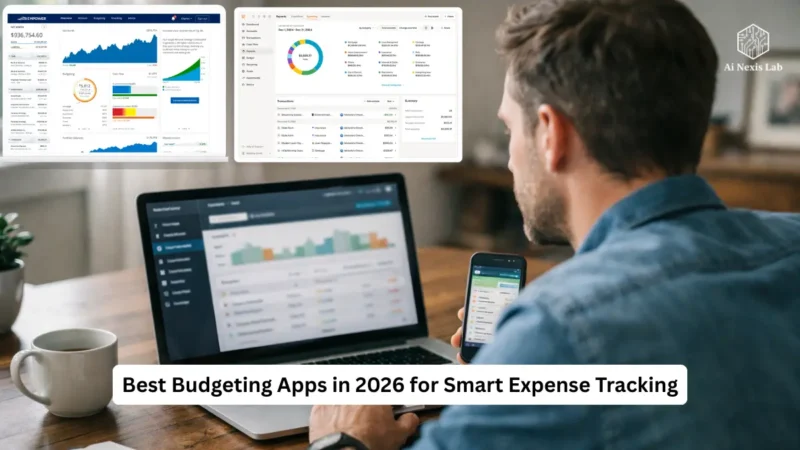
Invisible Architect: Why an AI brain is coming to your wallet (and you’re invited)
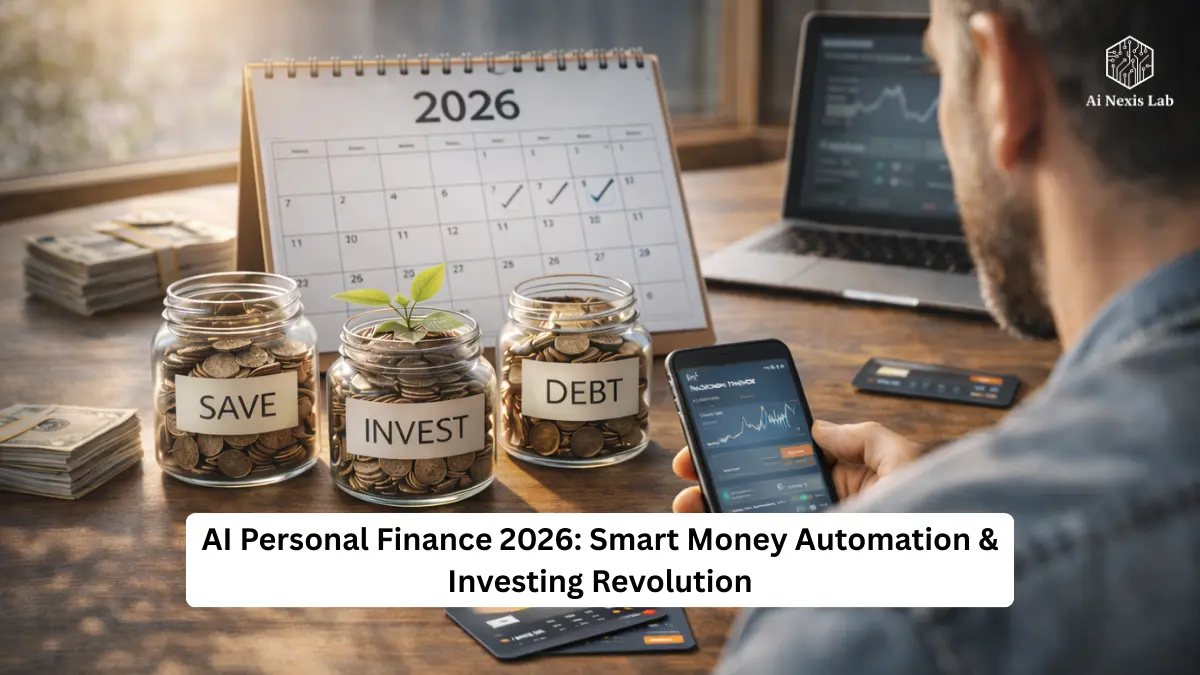
AI personal finance is transforming money in 2026. Discover 7 powerful ways to predict spending, cut hidden leaks, and automate smarter wealth growth.
AI is quietly becoming the operating system for your money.
Let’s be honest.
The last time you opened your banking app, it probably wasn’t a strategic financial planning session. It was a quick pulse check. A nervous glance at your balance. Scroll through transactions that you vaguely remember. Maybe a little internal negotiation about whether that $7 latte is “worth it.”
Then you closed the application.
This is how most people manage money. Reactive. Emotional. Fragmented.
For decades, the advice has been the same:
“Track every dollar.”
“Create discipline.”
“Stick to a budget.”
Here’s the uncomfortable truth: Most humans are terrible spreadsheets.
We’re busy. We’re distracted. We’re emotional. We are not wired to manually reconcile transactions, optimize tax positioning, rebalance portfolios, and detect fraud patterns.
And that’s why AI is getting involved.
This isn’t about insidious chatbots telling you your balance. It’s about a structural shift from passive tracking to autonomous financial intelligence. Your money no longer just sits in accounts. It is being analyzed, predicted, optimized, and secured in real time by machine learning models.
And whether you realize it or not, you are already part of it.
Table of Contents
1. The Death of The Fixed Budget
For years, budgeting meant classifying what had already been done.
That’s backwards.
You would open a spreadsheet or use something like Mint (which shut down in 2024), assign categories, and pretend that next month would be different. It rarely was.
Modern AI-powered finance tools have flipped the model.
Instead of looking back, they model the future.
Predictive cash flow is the new Standard
Apps like Copilot Money and Monarch Money use machine learning to:
- Analyze your recurring income patterns
- Automatically detect billing cycles
- Identify seasonal spending behavior
- Predict weeks before a deficit occurs
This is predictive modeling, not bookkeeping.
If your spending trend suggests you will have $180 less by the 28th, the system flags it early. Some platforms now automatically adjust “safe to spend” numbers daily based on dynamic estimates.
It’s a big psychological change.
Instead of asking:
“How much is in my account?”
You are asking:
“What is safe to use next month without harm?”
Those are completely different questions.
Why is this important
U.S. According to the Federal Reserve’s latest Survey of Household Economics and Decisionmaking, a significant percentage of Americans would still struggle to cover a $400 emergency expense with cash.
It’s not just a problem of income.
It is a problem of planning friction.
AI reduces friction.
Instead of relying on willpower, it creates automatic buffers:
- Automatic sweeps for savings
- Variable spending alerts
- Smart cash reserve thresholds
The future of budgeting is not about more discipline.
It is automatic control.
By 2027, “budget” as a manual activity will seem outdated.

2. Investing: The Democratization of The Family Office
For decades, serious wealth strategies have required:
- Financial advisor
- Minimum portfolio threshold
- Ongoing advisory fees (often ~1% annually)
Now that level is being automated.
The Rise of Intelligent Robo-Advisors
Platforms like:
- Improvement
- Wealthfront
have gone far beyond simple asset allocation.
Modern robo-advisors now implement:
Tax-loss harvesting (automatically)
They sell losing positions to offset capital gains elsewhere – something high-net-worth investors used to rely on accountants to manually manage.
Direct Indexing
Instead of buying a single ETF, the platform buys individual components of the index. This allows for granular tax optimization.
Smart Rebalancing
Rebalancing is no longer calendar-based. It is threshold-based and algorithm-based.
Cost Reality Check
Here’s the harsh truth:
If an AI platform charges 0.75% annually and you can buy a low-cost index fund tracking the S&P 500 for an expense ratio of ~0.03%, that fee difference adds up to a huge amount over 30 years.
AI doesn’t automatically mean better returns.
That means:
- Better optimization
- Better tax efficiency
- Better automation
Excellent performance is not guaranteed.
The market is competitive. Once the AI strategy finds an edge, other algorithms adapt. That edge quickly disappears.
Use AI for operational efficiency – not magical alpha.
3. Subscription Leak Hunter
This is where AI generates immediate ROI.
You probably have at least one forgotten subscription.
Most people do.
Apps like Rocket Money scan not only merchant names, but recurring merchant IDs. That means they detect billing patterns even when there are slight changes in company names.
They can:
- Flag duplicate subscriptions
- Identify price increases
- Offer cancellation workflow
- Negotiate fixed bills
Studies and company-reported user data have shown average annual savings in the hundreds of dollars for users who actively engage these features.
Is it life-changing? No.
Is it measurable? Yes.
And unlike investments, this is guaranteed savings. They eliminate costs.
4. Credit Is Moving Beyond FICO
Traditional credit scoring has blind spots.
FICO models were built around:
- Credit utilization
- Length of credit history
- Payment history
- Debt mix
If you are a gig worker, a recent immigrant, or someone who avoids traditional credit, you will be penalized.
AI-powered underwriting models are now analyzing:
- Rent payment history
- Utility consistency
- Cash flow stability
- Bank account transaction data (via the Open Banking Framework)
This is called alternative data underwriting.
Fintech lenders are increasingly using machine learning models to more accurately evaluate “thin file” borrowers.
Pros:
More inclusive credit decisions.
Cons:
Opaque models. If the algorithm rejects you, you may not fully understand why.
This is where regulation is still catching up.
5. Fraud Detection Is Becoming Behavioral
Old fraud systems were rule-based.
“If transaction > $500 and foreign country → block.”
Hackers learned those rules quickly.
Modern systems use inconsistency detection.
They create behavioral fingerprints:
- Time-of-day patterns
- Geolocation trends
- Merchant type clusters
- Device usage behavior
If something deviates drastically, the system intervenes.
Major financial institutions already use AI-powered fraud detection engines that analyze millions of transactions per second.
Key changes:
Fraud prevention is moving from reactive to predictive.
That’s important because identity theft and digital fraud remain problems worth billions of dollars annually.
6. Real-Time Scenario Simulation
Financial anxiety is not caused by math.
It happens because of uncertainty.
“What happens if I quit my job?”
“What happens if I max out my 401(k)?”
“What happens if the market falls 20%?”
Platforms like Origin Financial and Magnify allow for conversation simulation.
Behind the scenes, some tools use Monte Carlo simulations – running thousands of probability scenarios based on different return assumptions.
Instead of a single retirement projection, you get probability ranges.
He is mentally powerful.
He changes this to:
“I think I’ll be fine.”
With:
“If I stay on this path, there is an 82% chance of success.”
That is strategic clarity.
7. Risks You Shouldn’t Ignore
AI is not a financial oracle.
Hallucination Risk
Generative models can:
- Misrepresent tax laws
- Refer to outdated rules
- Current theoretical strategies without practical context
If an AI suggests a tax method that violates current IRS guidance, you are responsible – not the algorithm.
The Danger of Over-Automation
Full automation without oversight is lazy.
If you don’t:
- Review rebalancing
- Cancel audit subscription
- Verify classification accuracy
You could be in for a lot of mistakes.
Emotional Context Gap
AI can optimize for probability.
It cannot optimize for your anxiety threshold.
If a 90% stock allocation keeps you awake during volatility, it’s not optimal – regardless of expected returns.
Humans still have emotional governance.
8. Ethics and Bias Question
Machine learning systems learn from historical data.
If historical lending patterns are biased, the algorithm can perpetuate that bias.
This is called algorithmic bias.
Regulators and fintech companies are actively researching fairness controls and model transparency, but we are not yet at full clarity.
If AI determines that:
- Loan approvals
- Interest rates
- Credit limits
Transparency is important.
You should be aware of who trained the model.
Frequently Asked Questions
Is it safe to link my bank account to the AI Finance app?
Generally yes — if the platform uses secure aggregators like Plaid and maintains SOC 2 Type II compliance with encryption standards. These connections are typically read-only. However, use a strong password and enable multi-factor authentication.
Will AI completely replace financial advisors?
No. It will replace transactional advisors who simply rebalance portfolios. Complex estate planning, tax structuring, and behavioral coaching still require human expertise. AI reduces costs, but not all of the value.
Can AI consistently beat the stock market?
For retail investors, the chances are slim. Markets adapt quickly. Once a strategy is clear, it becomes arbitrary. AI improves efficiency and tax position more than raw performance.
Is AI good for beginners?
Yes – especially for budgeting and automation. It reduces friction. But beginners should avoid over-trading or aggressively using AI-powered stock prediction tools.
Does AI tax software eliminate the need for an accountant?
For easy W-2 filing, modern AI-assisted tax platforms work well. For business owners, multi-state income, or complex deductions, human review is still advisable.
Are robo-advisors cheaper than traditional advisors?
Yes. Robo platforms typically charge 0.25%–0.40% annually, while traditional advisors can charge around 1%. This difference has been increasing significantly over the decades.
Can AI help improve my credit score?
Indirectly. By optimizing cash flow and ensuring timely payments, it can reduce missed payments – a major credit score factor.
Is my data being sold?
Depends on the platform. Always review privacy policies. Some fintech companies monetize anonymized data patterns. Transparency changes.
How to Use AI Without Losing Control
If you want real benefits, follow these:
1. Start small
Link an account. Monitor the accuracy of the classification. Don’t hand over your entire financial life on the first day.
2. Quarterly Audit
Every 90 days:
- Review automation rules
- Confirm savings sweeps
- Check portfolio allocation
You are still the CEO.
3. Don’t chase predictive tools
AI day-trading platforms marketed as “guaranteed edge” systems are usually hype.
Stick to automation, optimization, and risk control.
Bottom line
AI won’t automatically make you rich.
But it will:
- Eliminate administrative friction
- Catch waste you missed
- Optimize taxes
- Improve fraud detection
- Provide potential clarity
It’s powerful.
Money management is shifting from manual tasks to intelligent operating systems running quietly in the background.
And the people who will benefit the most will not be those who chase lucrative AI stock bots.
They will be the ones who will use it for structure, automation, and discipline – while keeping ultimate control in human hands.
The invisible architect is already at work.
The real question is not whether AI will manage your money or not.
It’s whether you manage to let the AI manage it or not.