Chris Waller: 1 The ESSENTIAL Choice for Federal Reserve Chair
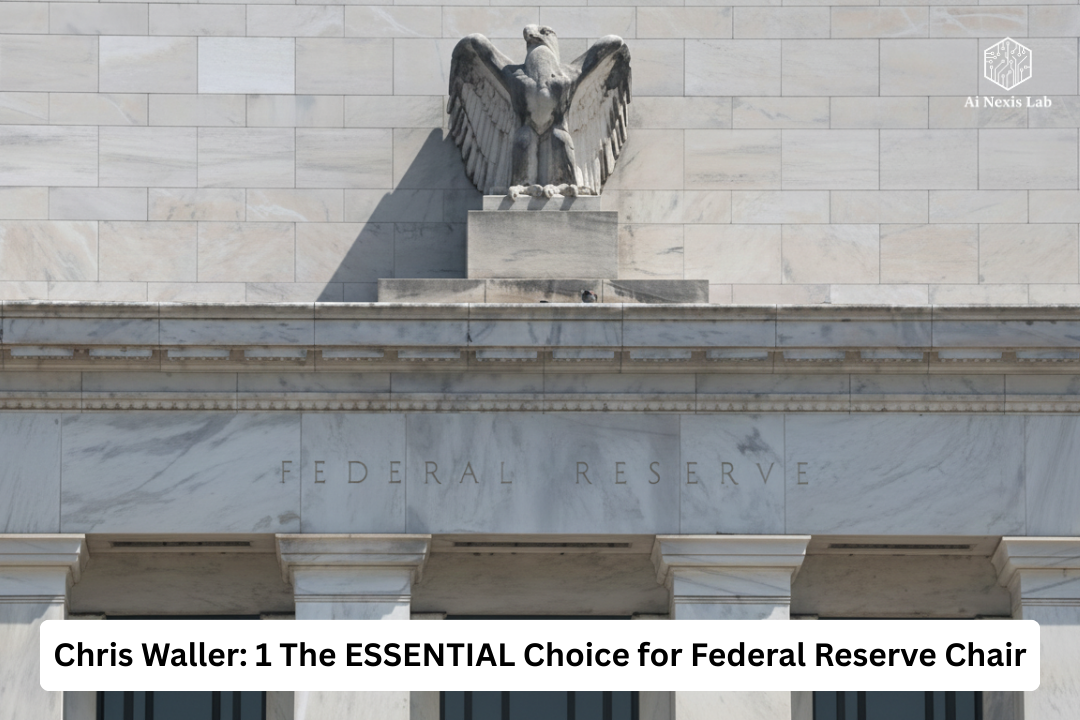
The US economy demands Federal Reserve Chairman Chris Waller. We analyze the risk of Kevin Hassett’s appointment and the need for Fed independence. The calendar page is turning, and with it comes a decision that will quietly, yet profoundly, reshape the American and global economy for years to come. The Federal Reserve, the institution that acts as the financial heartbeat of the world’s largest economy, is close to a significant regime change. The presidency is the most powerful non-elected economic position on the planet, and reports suggest that an announcement from the incoming administration is expected as early as 2026.
This isn’t just a personnel change; It is a turning point for monetary policy, market stability and central bank independence. The selection is based on two extremely important figures: Chris Waller, a current Fed governor and respected macroeconomist, and Kevin Hassett, a veteran political operative and former White House economist.
While both men share influential credentials, they represent two fundamentally different philosophies regarding the relationship between politics and economic management. Reflecting the consensus view among those who value institutional stability and data-driven rigor, The Economist has drawn a suitably clear line in the sand: Chris Waller, not Kevin Hassett, is the candidate who can protect the Fed’s credibility and the nation’s economic future.
The stakes are very high for political appointments. The economy now needs a maestro – a steady hand deeply connected to the delicate instrument of monetary policy. What he risks gaining is a mercenary – a loyalist whose primary allegiance may be political, not economic.
The coming change in governance and the weighing of the decision to start in 2026
The atmosphere surrounding the nomination for the position of Federal Reserve Chairman always attracts attention, but this cycle seems particularly intense. The context is one of continued global economic uncertainty. While the immediate threat of inflation may have been contained, the economy continues to move on a treacherous path defined by structural debt, geopolitical instability, and the perennial risk of a sudden recession. The next Fed chairman will not inherit a calm sea; They will inherit a ship battered by years of crisis management, requiring skillful navigation through the narrow path between suppressing growth and resuming price pressures.
Reports, including from CNBC, confirm the environment: a regime change is coming, and an announcement is imminent. The decision is scheduled to be announced in the first quarter of 2026, setting the stage for months of intense scrutiny, Senate confirmation hearings and market concerns.
Why is the chairman so important? The Fed is responsible for a dual mandate: maximizing employment and maintaining stable prices. To achieve this, the chairman influences interest rates, the money supply, and the entire credit structure of the US financial system. Cher’s words, tone, and projections can instantly invest billions of dollars in global markets. A successful chair is one who maintains the independence necessary to make tough, unpopular decisions while staying away from market credibility and short-term political cycles.
A key requirement for market confidence is the belief that the central bank will follow the data, not the political winds. This principle is the entire axis on which the Waller versus Hassett debate revolves.
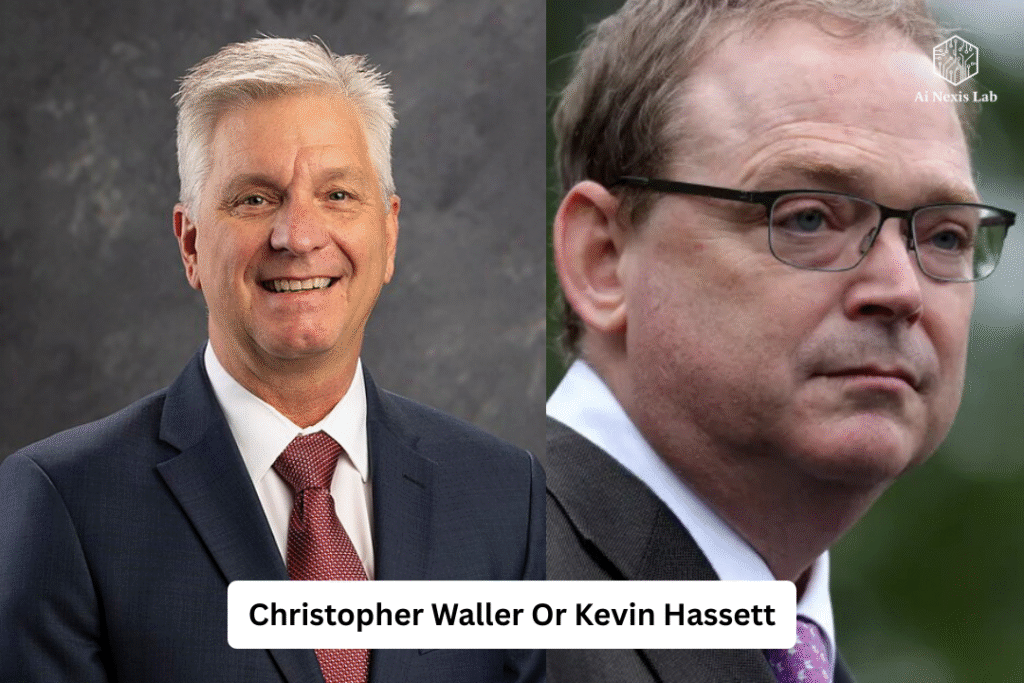
Two paths – Waller’s skill versus Hassett’s loyalty
When comparing Chris Waller and Kevin Hassett, we are looking at two contrasting career paths that demonstrate their different suitability for the role of Fed Chair. One path is rooted in academic rigor and institutional experience; The second is rooted in political proximity and ideological advocacy.
Chris Waller: Institutional and Data Enthusiast
Chris Waller’s career is the ideal path for a modern central banker. Prior to his tenure as governor on the Federal Reserve Board, Waller served as director of research at the Federal Reserve Bank of St. Louis. He holds a Ph.D. in Economics. and has spent decades immersed in macroeconomic theory, monetary policy modeling, and inflation dynamics.
Waller’s strength lies in his deep, unrivaled understanding of the mechanics of central banking. They are not observers; He is a practitioner who has spent his career within the Fed system. Importantly, as the current Fed governor, he has been an active participant in the recent, painful process of fighting inflation. He has consistently demonstrated a commitment to following data where it leads, even if it contradicts popular opinion or political preference.
Markets and institutional observers consider Waller to be fiercely dedicated to the independence of the Federal Reserve. His record suggests a willingness to use the Fed’s tools decisively, underpinned not by political expediency, but by rigorous quantitative analysis. In short, he is seen as a conservative but non-partisan steward of the institution.
Kevin Hassett: Loyalist and political advocate
In contrast, Kevin Hassett is primarily known for his role as former chairman of the Council of Economic Advisers (CEA) during the previous administration. He holds a Ph.D. in Economics. has also done, and his academic career includes time at the American Enterprise Institute (AEI), a conservative think tank.
Hassett’s identity is not weak, but his defining professional identity is intertwined with political loyalties. He is a skilled political advocate and communicator, but this very quality makes him a risky choice for Federal Reserve chairman.
The head of the CEA is, by definition, a political appointee whose job is to advocate for the administration’s economic policies. This role demands loyalty to the executive branch. In contrast, the Federal Reserve Chairman demands loyalty to the Constitution and the economic order. The transition from one role to another – from presidential advocate to economic counterweight to the president – is extraordinarily difficult to accomplish without arousing profound suspicion. The market’s primary concern with Hassett is the perception that he may prioritize the administration’s political agenda over the Fed’s mandated fight against inflation or the need for institutional integrity.
The contradiction is clear: Waller is the policy veteran who ensures the Fed’s institutional health; Hassett is a political veteran who risks an organization subject to short-term political needs.
Chris Waller and the compelling case for institutional integrity
To understand why Chris Waller is an inevitable choice, one must appreciate the value of predictability and reliability in monetary policy. Central banking, at its heart, is an exercise in expectations management. The market needs to believe that the Fed will act rationally and consistently. This belief is the foundation of economic stability.
The value of a data-driven hand
Waller’s approach is the highest principle of a data-driven approach. His public statements and speeches during his tenure have been characterized by clear, quantitative analyses of inflation, labor market tightness, and financial conditions. They speak the language of the market and the language of the organization.
In times of high volatility, the market seeks clarity. Waller provides that clarity because his decisions are based on publicly observable economic criteria, which reduces political noise. Waller’s appointment signals to the world that the incoming administration respects the Federal Reserve System’s established processes and is prioritizing professional competence over political convenience. It will be a vote for the organization itself.
Safeguarding the Fed’s Independence
The single greatest threat to sustainable economic prosperity is the erosion of central bank independence. History is replete with examples of countries where politicians eager for short-term stimulus before elections pressured the central bank to keep rates low, inevitably leading to inflation and economic collapse. This is why the separation between fiscal policy (Congress/White House) and monetary policy (Fed) is sacrosanct.
The appointment of someone considered a political loyalist like Hassett sends shivers down the spine of global finance. That raises the possibility of a Fed that is hesitant to raise rates when needed, or eager to cut them prematurely simply to support a political campaign’s economic success narrative. Immediately markets lose faith in the Fed’s unpopular, inflation-fighting desire, inflation expectations rise, the dollar weakens, and the cost of capital rises – effectively undoing all the painful work of recent years.
Waller, already deeply respected within the Fed system, holds a shield of institutional protection. His appointment would be a powerful, non-verbal confirmation that the separation of powers in economic policymaking remains intact. His reputation is built on the independence he has gained through years of objective analysis rather than partisan service.
The fear of politicization and the Hassett risk
The argument against Kevin Hassett is not an attack on his intelligence or character, but a systemic rejection of the risks his appointment poses to the institution.
The Political Cloud
Hassett’s main responsibility is his reputation as a political warrior. Because of his past role, he had to constantly defend the administration’s controversial financial claims. This makes him a perfect target for critics who argue that any policy action he takes as Fed chairman will be tainted by suspicion of political motivation.
For example, imagine that the economy is on the verge of recession in late 2026. There would be enormous political pressure on the Fed to cut rates quickly. If Hassett were chairman, every rate cut, no matter how economically justified, would be viewed from the perspective of supporting the president and the election cycle. This political cloud is hurting the effectiveness of the Fed’s policy. The organization needs a leader who is politically vaccinated. It’s Waller. Hasset is not.
The Stability factor
Experience in the Fed’s unique ecosystem is essential for financial stability. The job of Fed Chair is only available to those with a Ph.D. in economics. in economics; It’s about managing the internal dynamics of the Federal Open Market Committee (FOMC), communicating with the 12 regional Fed banks, and navigating complex international banking relationships.
Waller has been in the room, making decisions, reading the data flow, and shaping the policy consensus. He has a proven ability to lead a committee, which is often made up of diverse and stubborn personalities. Hassett, while academically strong, lacks this specific, important organizational experience. Their leadership will need to learn at the worst possible time, risking policy mistakes or, worse, internal disagreements that undermine the Fed’s communications and market confidence.
Conclusion: A clear choice for economic prosperity
The decision facing the incoming administration is a choice between institutional health and political expediency. The signs are clear: As reports show, the selection of the next Federal Reserve Chairman in early 2026 is a defining moment for the entire economic landscape.
Chris Waller is the best candidate for every important step for central banking. He is an incumbent governor, a committed data-driven pragmatist, and a staunch defender of the Federal Reserve’s independence – the exact qualities needed in a world hungry for economic stability and predictability. His appointment would be like a calming nugget for the markets, signaling maturity and seriousness about monetary policy that transcends short-term political gains.
Kevin Hassett, for all his intelligence, represents a dangerous path to politicization. His tenure will cast a lasting shadow of doubt over the Fed’s integrity, jeopardizing the credibility painstakingly built over decades.
The Federal Reserve is important enough to be considered a consolation prize or worthy of political loyalty. The incoming administration must look beyond its immediate circle of trusted allies and recognize that the health of the American economy requires a leader whose primary allegiance is to the dual mandate, not the political docket. The choice is clear, and the responsibility is huge: Chris Waller should be the next maestro of the Federal Reserve. The stability of the next economic cycle depends on it.