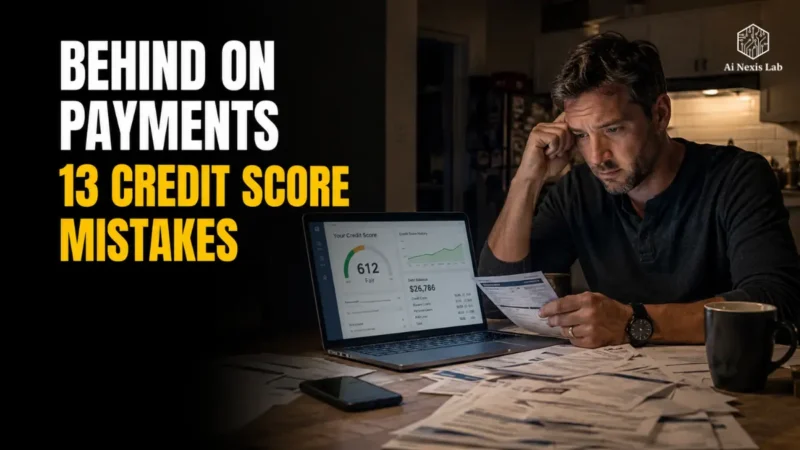
The Invisible Leak: Why You Feel Broke While Making More Money (and How to Stop It)

You got a raise. Finally.
After months – maybe years – of working, you don’t even get half time, your salary finally reflects some level of progress. You tell yourself this is the turning point. This is when things get easier. When you finally start saving. When life stops feeling so stressful.
So you celebrate. Nothing crazy, just a few upgrades.
Better food. Better clothes. Maybe a better car. Maybe you move to a slightly better place because “you can afford it now.”
Six months later, reality hits you like a brick.
Your income is higher – but your bank balance looks the same. Or worse, it’s more volatile. You are still checking your account before spending. Still putting off saving. Still telling yourself you’ll “get serious next month”.
What do you think you are confused about? The difference between over-earning and a broken experience?
It’s not bad luck.
The flow of that lifestyle creep you quietly.
And if you don’t fix it, your future income will never matter – because your expenses will always increase.
Table of Contents
1. Anatomy of an Upgrade: What Is Lifestyle Creep?
At a basic level, lifestyle creep (also called lifestyle inflation) is simple:
As your income increases, your expenses match it – often without you even realizing it.
But that definition is too shallow. The real problem is not spending more money.
The real problem is this:
Your definition of “normal” keeps getting upgraded.
The Changing Baseline Problem
Here’s how it really happens:
- A $20 meal used to feel expensive → now it feels casual
- A budget hotel used to be good → now it feels uncomfortable
- A basic car used to work → now it feels like a compromise
The exterior hasn’t changed.
Your expectations have changed.
And once your baseline changes, it almost never goes back.
That is the trap.
Why This Is Worse Than Earning More
In 2026, the data is pretty clear:
- The median household income in the U.S. is about $80,000
- Yet nearly 60% of Americans still live paycheck to paycheck
- Even among those earning $150K+, a significant portion report financial stress
It’s not an income issue.
That’s the problem of expenditure elasticity – your spending stretches to absorb whatever you earn.
Hidden Danger: Permanent Cost Structures
Small improvements won’t hurt you.
Frequent improvements do.
- Rent increases → permanent
- Car payments → locked in
- Subscriptions → invisible but constant
- Lifestyle expectations → mentally sticky
Once these accumulate, your financial life becomes a mess.
And rigidity kills flexibility.
Why Your Brain Is Hardwired to Fail
You’re not randomly making bad decisions. Your brain is literally designed to push you towards lifestyle wear and tear.
Here’s why:
1. Social Comparison Is Automatic
You don’t evaluate your life in isolation.
You evaluate it in comparison to other people.
If your colleagues:
- Upgrade the apartment
- Travel internationally
- Buy a nice car
Your brain is quietly rewriting your definition of “acceptable.”
This is called relative deprivation – and it is one of the strongest psychological drivers of spending.
2. Dopamine Prefers Upgrades, Not Stability
Your brain doesn’t reward maintaining a stable life.
It rewards change.
- New phone → dopamine spike
- New car → bigger spike
- New lifestyle → identity reinforcement
But once the novelty wears off, you’re left with:
- Higher costs
- Same emotional baseline
It’s a losing trade.
2. The “Wealth-Expense” Spectrum: Identifying The Symptoms
A lifestyle reduction doesn’t seem like a big mistake.
It appears as hundreds of small “reasonable” decisions.
That’s why most people don’t understand it until it already becomes a problem.
Convenient Trap
This one seems harmless.
You start paying to save time:
- Food delivery
- Grocery apps
- Laundry services
- Ride-sharing instead of driving
Personally, every decision makes sense.
But stack them up, and suddenly:
You’re spending $500–$1,500/month on “saving time.”
Here’s the uncomfortable truth:
Most of that time isn’t being reinvested in anything meaningful.
You are not buying time.
You are buying comfort in the guise of efficiency.
Subscription Snowball
Subscriptions are one of the most underrated financial leaks in modern life.
Because they don’t feel like spending.
They seem like background noise.
Typical 2026 stack:
- 3–5 streaming platforms
- Fitness apps
- Productivity tools
- AI tools
- Monthly boxes, memberships, or premium services
Individually: $5–$20
Collectively: $200–$600/month
That $2,400–$7,200/year quietly disappears.
The “Just This Once” Fallacy
This is where people lie to themselves.
- “It’s just an expensive dinner.”
- “This trip is special.”
- “I deserve this after a tough week.”
The problem?
Every week becomes “hard.”
And “just this once” becomes a pattern.
The Real Test: Your Last 10 Purchases
Forget the theory.
Look at your last 10 discretionary purchases.
Ask:
“Would I buy this even if I had to work extra hours?”
If the answer is no, you’re not spending intentionally.
You are reacting emotionally.
3. The Psychology of “Deserving It”
This is where things get uncomfortable.
Because this is the belief that keeps people stuck.
The “I Earned It” Story
You tell yourself:
- “I work hard.”
- “I deserve better.”
- “What’s the point of having money if I don’t enjoy it?”
Sounds reasonable.
But here’s the reality:
You’re using spending to compensate for dissatisfaction.
It’s not a reward.
It’s a self-soothing behavior.
Gold-Plated Cage Effect
When your lifestyle expands, your burn rate increases.
And that creates dependency.
Example:
- You earn $80K → need $50K to live
- You earn $120K → now need $95K to live
You haven’t got freedom.
You have only increased the value of your life.
The Brutal Truth
Spending money to tackle a job you love doesn’t solve the problem.
It makes you more dependent on that job.
You are not rewarding yourself.
You’re shutting yourself out.

4. “Frictionless Financial” Framework
If you rely on discipline, you will fail.
That’s not an opinion – it’s behavioral reality.
You need systems that remove decision-making ability.
Reverse Budgeting (Pay Yourself First)
Most people budget backwards.
They:
- Spend money
- Save what is left
So they never save.
Reverse it.
Step-By-Step System
1. Calculate fixed expenses
- Rent
- Utilities
- Insurance
- Minimum obligations
2. Set a savings structure
- Minimum: 20%
- Better: 30-40% (if you are serious about building wealth)
3. Automate everything
- Savings → Separate account
- Investing → Automatic contributions
4. Spend the rest freely
No guilt. No tracking every dollar.
Because the important part has already been taken care of.
Income Growth Rule (No Negotiation)
Every time your income increases:
At least 50-70% of that income automatically goes into savings/investments
Not optional.
If you don’t do this, lifestyle creep will absorb 100% of it.
Why This Works
Because you never “see” the money.
And what you don’t see, you don’t spend.
5. Strategic Recession: How to Enjoy It Without Losing Your Money
This is where most advice becomes foolish.
“Stop spending” is unrealistic.
You need controlled pleasure – not deprivation.
Value-Based Spending
Instead of cutting everything, you:
- Spend heavily on what really matters
- Cut ruthlessly on what doesn’t matter
Example:
- Love to travel? Spend more there
- Don’t care about the car? Stop upgrading them
This creates satisfaction without inflating your entire lifestyle
The 48-Hour Cooling-Off Rule
Anything over $100:
- Wait 48 hours
Most purchases are driven by impulse, not necessity.
Procrastination kills impulse.
The “One-In, One-Out” Rule
Want something new?
Good.
But something else needs to happen.
Example:
- Want a premium gym → Cancel unused subscriptions
- Want a new gadget → Sell or get rid of something similar
This keeps your lifestyle stable.
The Harsh Truth About “Treating Yourself”
If you need a reward every week, the structure of your life is broken.
Fix the structure.
Not the symptoms.
Frequently Asked Questions
Is lifestyle clutter always bad, or is some level of it normal?
Some level of improvement in lifestyle is normal – and even healthy. If your income increases and your quality of life doesn’t improve at all, that’s not a win either. The problem starts when the upgrade happens automatically instead of intentionally.
If every increase in income leads to a proportional increase in expenses, you are not making progress – you are maintaining a more expensive version of the same life. The goal is not to permanently stabilize your lifestyle. It’s about controlling when and how it develops, rather than letting it happen by default.
How do I know if I’m really progressing financially?
Ignore your income. It is a vanity criterion.
Instead, track:
1) Savings rate
2) Net worth growth
3) Investment contributions
If they’re not growing consistently, you’re not making progress – no matter how much you earn. A person earning $70K by saving 25% is in a stronger position than a person earning $150K by saving 5%. Progress is not about income earned, but about capital retained.
What is the fastest way to stop lifestyle chaos?
Do three things immediately:
1) Automate savings before your next paycheck
2) Cancel 30-50% of your unused subscriptions today
3) Freeze any new recurring costs for 60 days
It’s not complicated. It’s just uncomfortable. And most people avoid discomfort, which keeps them stuck.
Should I avoid luxury purchases completely?
No. It is unrealistic and usually backfires.
But here’s the rule:
1) Luxury items should be rare, intentional, and debt-free.
If you need justification, credit, or emotional reasoning to make a purchase, it’s probably not worth it. Real flex isn’t about having expensive things – it’s the freedom to get away with things you don’t need.
Why do high earners still feel broke?
Because income does not improve behavior.
High earners often:
1) Upgrade quickly
2) Normalize expensive lifestyles
3) Surround themselves with high-spending peers
This creates constant upward pressure on spending. Without a system, more income only leads to more financial complexity – not more security.
The Ultimate Reality Check
Lifestyle clutter isn’t obvious.
It doesn’t feel like a mistake.
It feels like progress.
That’s why it’s dangerous.
If you don’t actively control your lifestyle, it will escalate until:
- Your income seems average
- Your expenses seem necessary
- Your savings seem impossible
And then you’ll tell yourself the same lie everyone tells:
“I just need to earn more.”
You don’t.
You need to stop leaking what you are already earning.