
The Great Semi Rebound of 2025-2026: A Human Strategic View on ASML, “Cheap” Chips, and New Semiconductor Orders
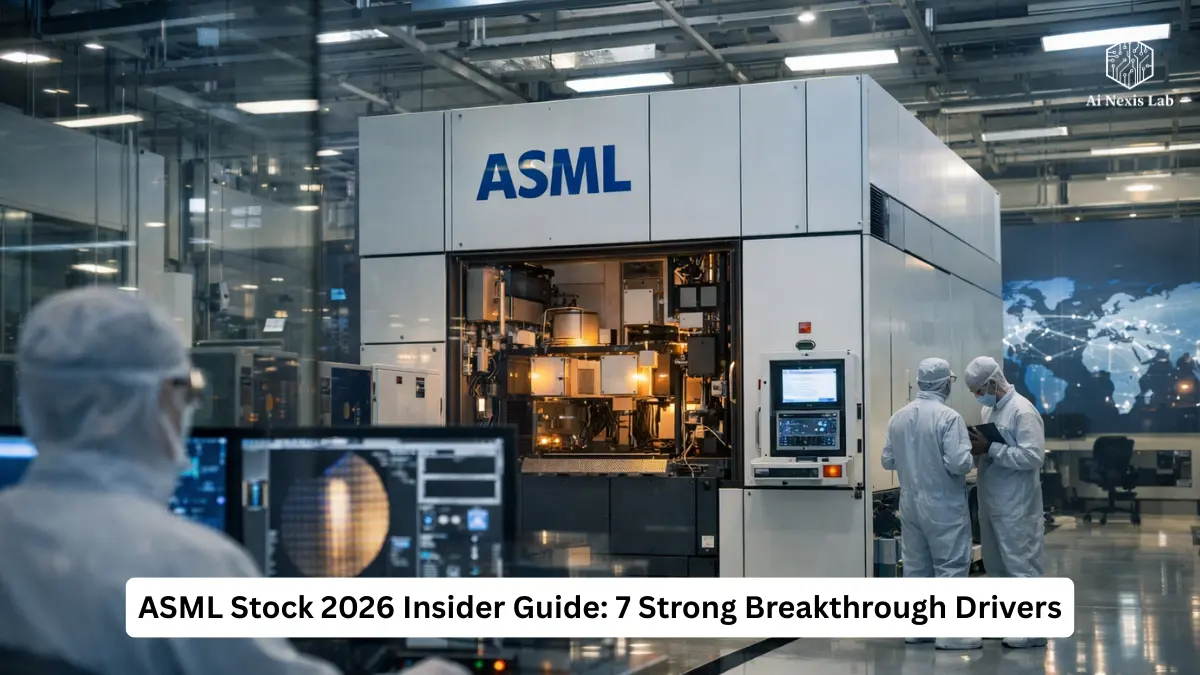
If you picture the semiconductor field over the last decade, it would look like a rollercoaster drawn by someone who secretly loves chaos: steep climbs, stomach-churning descents, and a few loops that defy logical explanation. For years, “chip stocks” meant Nvidia and the AI GPU crowd — ticker symbols that dominated headlines and Twitter threads.
But as we enter 2026, that dynamic has quietly – decisively – changed. The stage we’re in is no longer hype. Not really. It is something deeper: industrialization. It’s the point where the excitement of the early stages gives way to real product, real megaprojects, and long lead times. The market is not trading on buzzwords; It is trading on capital expenditure (Capex) plans, equipment backlogs, and physical reality.
At the root of this transformation is a company that many investors still don’t fully understand: ASML Holding N.V. That Dutch machinery maker — which everyone knows is important but few truly understand — has become the quiet linchpin of the global semiconductor ecosystem. Its machines sit in clean rooms at TSMC, Samsung, Intel, Micron, SK hynix and others. Without ASML’s lithography tools, most of the “AI revolution” would never leave the whiteboard.
Today, we’re going to unpack what’s really going on:
- Why ASML’s performance in late 2025 and early 2026 isn’t just about market sentiment.
- Why “cheap semis” have suddenly become a real game again – not just clickbait.
- No one saw it coming the way geopolitical forces are reshaping supply chains.
- Where are the real opportunities – and risks – for the next 12-24 months?
Think of this as a strategist’s conversation – as if you’ve traveled for a long time with someone who has spent years in Silicon Valley, Seoul, Taipei and Amsterdam keeping an eye on these things. No fluff. No clichés. Just the logic you really need.
Let’s get started.
Part I — ASML: The Invisible Engine of the Chip Cycle
If you looked at ASML stock in 2025, you saw something surprising: it didn’t just rise — it was re-rated. It went from being a misunderstood industrial play to being accepted as the real centerpiece of modern chipmaking. In fact, after a 50% move in recent sessions, the general story changed from “ASML is exclusive” to “ASML is indispensable” – and Wall Street is giving it a multiple close to its true strategic size.
But stock moves rarely happen without real, underlying forces. With ASML, there are three most important ones.
Catalyst #1 — High-NA EUV moves into production
For years, critics have doubted whether ASML’s so-called high-NA extreme ultraviolet lithography (EUV) systems would ever play a commercially meaningful role. The argument was simple: the machines are expensive, complex, and chipmakers may delay adoption to maintain margins. Instead, what has happened is more crucial.
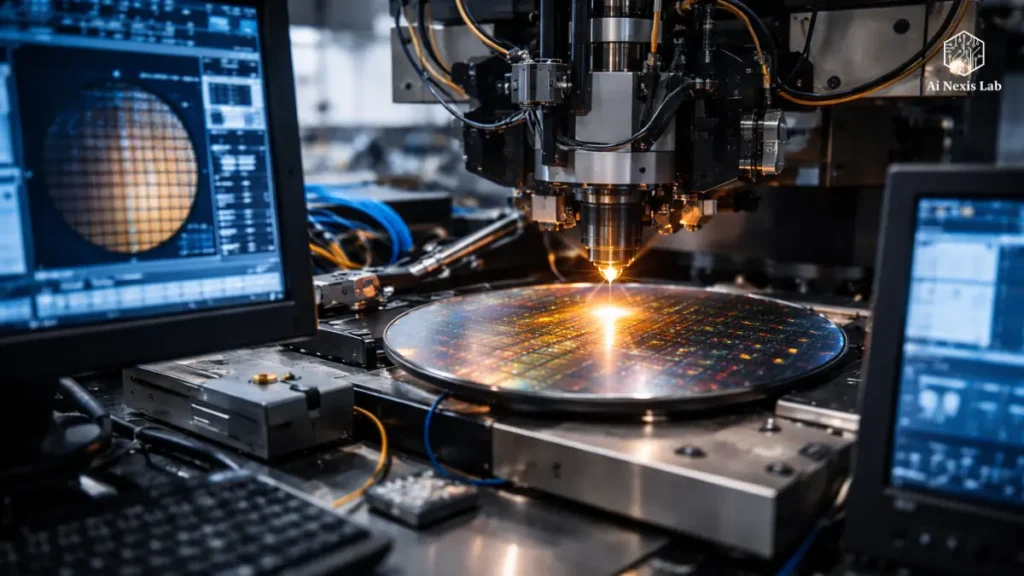
ASML’s high-NA EUV gear – with significantly larger numerical apertures and the ability to print small features at unprecedented precision – has moved beyond R&D labs to actual fab validation and early deployment. It is important because it is the only practical option for the next step in advanced logic and memory scaling.
In simple terms:
- Old technologies are hitting a physical ceiling.
- Advanced GPUs and AI accelerators demand tight packaging and performance.
- High-NA EUV fills that gap.
For the first time, the industry isn’t just talking about high-NA – it’s building with it. That change is a structural shift, not a momentary headwind.
Catalyst #2 — Demand is growing, not shrinking
In most chip cycles, you see a divergence: logic demand will peak while memory declines, or vice versa. But in 2025, something unusual happened: both ends of the spectrum – logic and memory – experienced real expansion.
Logic
Silicon custom design – particularly application-specific integrated circuits (ASICs) for large language models (LLMs), data center accelerators, and sophisticated edge AI – has forced foundries to deepen their engagement with cutting-edge nodes. This is why advanced lithography remains important.
Memory
At the same time, there has been growing interest in high bandwidth memory (HBM) – memory designed specifically for high-speed data throughput. And to make it efficiently, fabs require multiple EUV layers with precision alignment, which in turn also drives advanced lithography demand.
Result? A smaller inventory glut and more actual orders than many analysts expected – a rare alignment that supports industrial capital spending rather than speculative trading.
Combine this with the broader macro picture – global semiconductor revenues reached record levels in 2024 and continued to grow in 2025 – and the logic becomes clear: this is not a short-term mistake. It’s a cyclical expansion.
Catalyst #3 – Recurring Revenue is More Important Than You Think
People outside the industry often view ASML as a pure hardware vendor. That’s not accurate.
Lithography systems are complex beyond imagination. When someone installs a fab, they are signing up for decades of support, software, upgrades, parts, and optimization services. This has created a stickiness in ASML’s revenue that is rarely discussed outside of institutional circles.
Gone are the days when a machine was shipped and revenue was recognized once. Today, a large portion of ASML’s revenue comes from services – and those margins are strong. That recurring flow acts like a safety net under a trapeze artist: it keeps investors comfortable even during cyclical downturns.
And in 2025-2026, that safety net becomes important – especially with macro uncertainties and changing capital expenditure timing.
Part II — The “Cheap Semi” Revolution: Value Where You Least Expect It
While ASML has garnered its fair share of attention, a quieter story is unfolding in semiconductor sub-segments that used to be brushed aside as “boring.” And only now is the broader investment community becoming aware of it.
Why “Cheap” Is No Longer a Dirty Word
For most of the AI era, the semiconductor narrative was simple:
- Nvidia, AMD, and Broadcom — GPU, network-accelerator, and AI-focused companies — got expensive.
- Everyone else traded sideways.
But as valuations soared among AI superstars, the disparity between growth and value became hard to ignore. Companies providing analog chips, testing and packaging, materials, and other enabling functions began to appear undervalued relative to their role in the ecosystem.
And now that demand is picking up again in the automotive, industrial and consumer markets, these “cheap” stocks are in a position to capture it.
In fact, this old cycle – the mid-2000s and early 2010s – reflects a time when infrastructure players were permanently re-evaluated after their strategic importance was recognized by the broader market.
Key categories worth looking at
Here’s how I think about it:
1. Analog chips
This may not be sexy, but it’s everywhere: EVs, motor controls, power management, sensors – it all relies on reliable analog semiconductors. As EV production becomes common and industrial automation expands, this segment stands to benefit. Growth is not explosive, but it is steady and profitable.
2. Testing and Packaging
This largely overlooked part of the value chain – Teradyne-style testers and assembly-level partners seem to be moving forward as core fab investment increases. Interestingly, as advanced nodes proliferate, test complexity increases faster than line throughput, creating an opportunity for compound growth.
3. Materials and Substrate Supply
It’s easy to forget that each semiconductor layer requires gases, chemicals, silicon wafers, and specialized materials. And the companies that supply these are effectively the consumers of the chip world – they sell to every major fab and every process node.
This is not an overnight rocket. But their fundamentals are often directly linked to global capital spending, meaning they participate in upcycles without the over-valuation risk of pure AI plays.
If you are looking for value – real value – then you should pay attention to this.
Part III – Navigating the China Paradox
No modern semiconductor analysis is complete without grappling with China.
For years, Wall Street narrative frames have oscillated between two extremes:
- “China weakness means demand collapse”
- “China’s rise means unstoppable growth”
The reality, as always, lies somewhere in between.
ASML and China – A Complex Relationship
ASML has faced regulatory hurdles. Western export controls on advanced equipment – including certain EUV and DUV machines – have tightened in response to geopolitical pressure. This has, in some ways, reduced China’s clearly addressable market.
However, the story is not just “China is out”.
Here’s what’s important:
- China is still buying mature equipment. Despite restrictions on the latest machines, Chinese fabs continue to invest in older DUV gear – enough to keep mid-range revenues strong.
- Indigenous ambitions are real. Local companies and government-supported programs are aggressively building tooling capabilities. Some have even begun producing prototype EUV equipment—a major milestone, even if commercial readiness is years away.
- Restricted access is different from having no access. The Chinese market is not disappearing so much as being reshaped. Advanced nodes remain limited, but legacy and mid-level requirements still drive purchases.
So the “China weakness” thesis turns out to be less a demand collapse and more a market fragmentation. It’s not gone – it’s rebalancing.
In contrast, Western markets (US, EU, Japan) are putting a hard squeeze on domestic fab capacity through subsidies and strategic industrial policies – and that is insulating demand from companies like ASML.
Part IV — The Numbers That Matter Now
Let’s step back from the story and look at the real numbers that will guide decisions in 2026.
Valuation Reality
ASML stock is no longer a deep value play. With prices hovering in the mid-$1,000s and at multiples well ahead of traditional industry norms, this is not a “cheap” stock. Yet, compared to other tech megacaps with similar strategic positioning, ASML’s valuation is not unreasonable – especially when you consider:
- Dominant EUV market share
- Long lead times on machinery
- Sustained demand from top-tier fabs
- Strong service revenue streams
Analyst models – including 12-24 month forecasts – show a potential bounce back into the mid-teens if capex momentum continues. Most forecasts expect solid but explosive growth in 2026, driven by China’s normalization and macro caution.
Capex Hike Still Rising
The overall semiconductor equipment market is still growing at a double-digit CAGR, with many forecasts projecting continued growth throughout this decade. That means upstream players – from lithography to H to metrology – will gain in lockstep with fab expansion plans.
Memory Dynamics
Memory supply constraints in 2024-2025 – driven by AI infrastructure demand – have altered the pricing and inventory landscape. Instead of cyclical oversupply, we now see a real structural realignment towards higher-value memory products.
Part V – The Human Side of This Market Cycle
Let’s step back from the charts and earnings calls for a moment.
The semiconductor industry is not growing because of spreadsheets. It is growing because the world has decided that it cannot risk having the technology supply chain dominated by a single region or provider. It’s not something a neural net spits out – it’s a geopolitical, human decision.
Governments in the US, Europe, Japan, South Korea and beyond have actively subsidized local fabs. The CHIPS Act in the US, similar initiatives in Europe and Asia – all of these are manifestations of a strategic view: semiconductors are too important to leave to chance.
This is important. Capex isn’t just economics – it’s strategic financing. And ASML sits directly at that intersection.
When you invest in ASML, you are not just buying a machine manufacturer. You are betting on global industrial policy, sovereign supply chains, and decades-long infrastructure shifts.
It’s a different kind of bet – and that’s why this cycle is unfolding differently than any before it.
Part VI – Where to Look Next (Beyond ASML)
So if ASML has already made its big run – where will the average investor turn in 2026?
Here’s a structured way to think about it:
1. Equipment Adjacent Players
Companies that supply complementary equipment – etchers, deposition systems, inspection gear – benefit when fabs build or expand. They don’t get the headlines, but they see a steady order book.
2. Materials and Consumables
Lithography chemicals, special gases, silicon wafers and photoresist – these are the main components of every fab. When fabs run 24/7, this segment makes a profit.
3. Packaging and Testing
As chips become more complex, packaging becomes more important – and expensive. Test demand increases faster than wafer starts – that’s a structural pattern that’s worth noting.
4. Analog and mixed signals
Not flashy, but resilient. These chips are in every EV, IoT device, and industrial control system. They are not based on bleeding-edge nodes – which can be a feature during cycles where there are advanced capex lumps.
Conclusion — The Semiconductor Industry in 2026
Here are the clean takeaways:
1. The chip cycle has matured.
We are not in the campaign. We are in implementation.
2. ASML’s role has been redefined.
It is no longer an exclusive supplier; it’s the foundation of advanced manufacturing.
3. Value exists beyond AI superstars.
The real opportunities lie in untapped segments with sustainable end markets.
4. Geopolitics is as important as technology.
Supply chains are being regionalized, not globalized – and that is changing risk profiles and investment horizons.
5. This is not a mistake.
This is structural.
Silicon did not become the world’s most important material by accident. And while ASML gets a lot of attention – rightly so – the broader Rebound ecosystem is about scale and strategic imperatives.
We are still at the beginning in the big picture.
Frequently Asked Questions
Q1: Is ASML still a good buy in 2026?
Many analyst models and capex forecasts suggest that 2026 growth could be moderate, but the long-term prospects will remain strong through 2027-28 due to structural demand for advanced lithography.
Q2: What is the biggest risk for ASML in the near future?
Geopolitical restrictions and the timing of macro capital expenditures are the biggest risks in the short term. China’s push for self-sufficiency could reduce some high-end demand, even as mid-end demand remains strong.
Q3: Do cheap semiconductor stocks offer a real opportunity?
Yes – especially in the analog, materials, test, packaging and mid-tier equipment segments where valuations remain reasonable and demand is stabilizing or growing.
Q4: Isn’t China making its own EUV machines?
China has reportedly built a prototype EUV machine, but commercial readiness and competitive quality are many years away.
Q5: Will memory shortages continue?
Structural memory supply constraints driven by AI demand and a resurgence in high-value memory such as HBM suggest that tightening may continue, leading to increased prices and fab demand in certain segments.