
How Polymarket Created a Stunning 27-Year-Old Billionaire — The Inside Story Behind the Prediction Market Shaking Up Finance
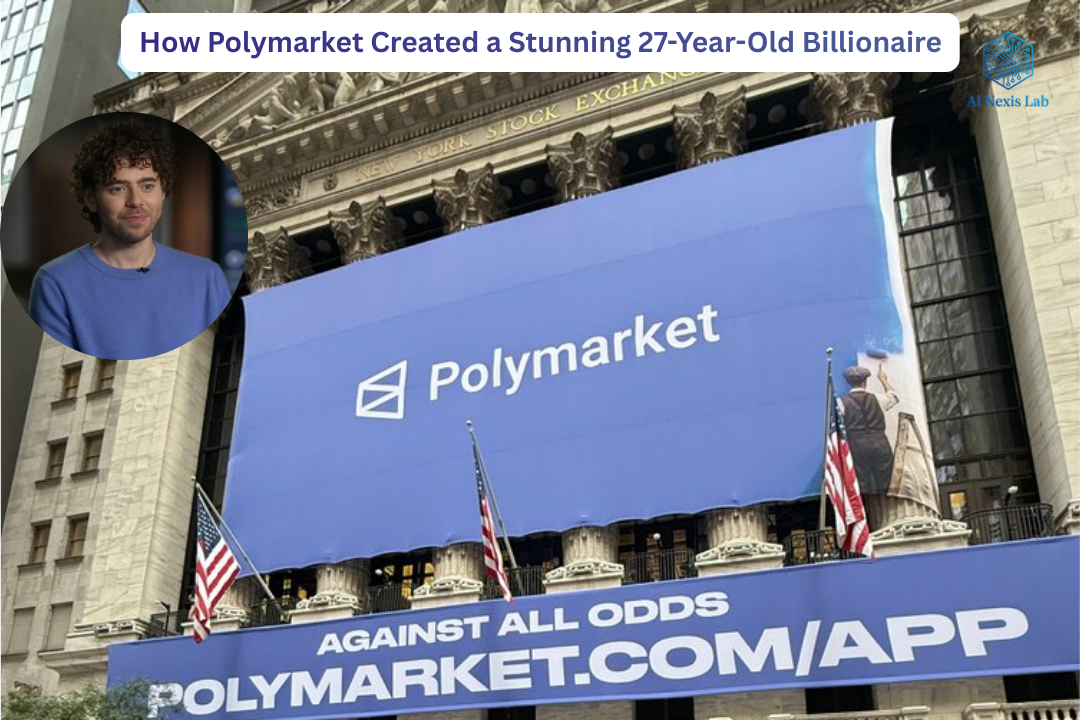
Polymarket: How a prediction market made its founder a billionaire – and sparked controversy. When Shane Coplan says his platform is “the most accurate thing we have as a human race right now”. he’s not exaggerating – at least that’s PolyMarket’s big promise. What started as a crypto-driven experiment by a 22-year-old college dropout in 2020 has exploded into a global phenomenon, generating billions of dollars in investment, predicting major geopolitical events, and – by the end of 2025 – making Coplan one of the youngest self-made billionaires on Earth.
But along the way, Polymarket has faced intense regulatory scrutiny, law enforcement raids, and enthusiastic criticism. In this blog post, we’ll explore what makes PolyMarket so powerful – and so controversial.
What is Polymarket – and why is it important?
Origin and vision
- Coplan founded Polymarket in 2020, when he was just 22 years old – at a time when many of us were wondering when pandemic lockdowns and vaccines would be eased.
- First market? A simple question: When will New York City reopen? From these humble beginnings, Polymarket quickly expanded into politics, pop culture, economics, sports – basically, anything people wanted to ask a “yes/no” question about.
- Like traditional voting, “Who will you vote for?” Instead of asking, Polymarket asks “Who will win?” asks – and people trade real money (stablecoin USD-equivalent) to bet on the results. As the stakes flow, the odds fluctuate – reflecting the “wisdom of crowds”.
The main idea of PolyMarket: By aggregating real-time betting odds from a large, diverse crowd, you get real-time probability predictions based on incentives.
How it works: Betting like the market, not like voting
- Users take a “yes” or “no” position on specific outcomes – for example: “Will candidate X win the 2026 election?” or “Will Company Y announce earnings above $5/share?”
- The price (odds) of each outcome reflects how much money is currently being bet on it – and changes dynamically as new information arrives.
- Because it uses blockchain (specifically Polygon) and stablecoin payments, Polymarket trades 24/7 – giving it speed and flexibility over traditional voting or polling methods.
In effect, Polymarket transforms public opinion into a kind of real-time, money-backed “prediction engine”.
Why do some people call Polymarket a “super crystal ball”?
Track record: When markets beat polls
- During the 2024 US presidential election, PolyMarket predicted a comfortable victory for Donald Trump before many traditional polls or pundits – and it ended up being right.
- According to Coplan, a total of $3.6 billion was wagered on that election alone – a massive concentration of real money wagers and thus a big data signal.
- Proponents argue that this type of forecasting is better than polling because it is based on incentives. People who bet money have skin in the game – so they (the theory goes) dig into the facts, news and potential outcomes more seriously than poll respondents choosing their “favorites”.
Encouraged truth seeking
Polymarket’s model probably encourages deeper research and engagement. If you believe that one outcome is more likely than another, you can express that belief financially – and potentially make a profit if you are right. This aligns incentives: the more specific and knowledgeable you are, the higher your stake – which probably filters out noise and idle speculation.
In other words: unlike casual attitudes or poll responses, Polymarket pushes for real accountability.

The Rise – Valuation, Growth, and Billionaire Status
Explosive growth and institutional support
- Early investors included big names in crypto and venture capital (e.g., companies associated with Peter Thiel and Vitalik Buterin).
- By the end of 2025, PolyMarket reportedly struck a multi-billion dollar deal with Intercontinental Exchange (ICE), the parent company of the New York Stock Exchange (NYSE). The deal sent the company’s valuation into the multi-billion dollar range – and made Coplan a billionaire at just 27 years old.
- The deal was celebrated as a bridge between traditional finance and “prediction-market” finance – a bold push to institutionalize what started as a fringe, crypto-driven concept.
From dorm rooms to dinner with Wall Street titans
One of the most striking images of 2025: Coplan — in jeans and a T-shirt — walking into a posh Manhattan restaurant where ICE officials discussed integrating Polymarkets data into legacy financial systems. That paradox captures Polymarket’s transformation: from “bathroom-startup” to serious financial contender.
The Controversies, Risks & Legal Turbulence
Regulatory trouble – and FBI raids
- In January 2022, PolyMarkets paid a US$1.4 million fine to the Commodity Futures Trading Commission (CFTC) after it was found to be operating as an unregistered derivatives-like exchange. As part of the settlement, U.S. users needed to be banned.
- However, in November 2024 — after Polymarket’s election-betting markets attracted widespread attention — federal agents from the Federal Bureau of Investigation raided Coplan’s New York apartment and seized his phone and other electronic devices.
- Alleged concern: PolyMarkets allowed U.S. residents to place bets on its platform, violating its agreement with regulators. But no charges were filed.
Continuing ethical and structural criticisms
Critics raise several legitimate concerns:
- Liquidity and market depth: Prediction markets are more accurate when many people participate – but not all markets get enough stakes. Low-volume markets can be influenced by a few “big whales”, who tend to beat the odds. This raises questions about how representative the “crowd” really is.
- Potential for manipulation: Big bettors may place large bets to influence the odds for personal gain or to influence public perception. Even if markets are transparent, it does not eliminate the risk of dominated or manipulated outcomes – especially in sensitive political or geopolitical events.
- Moral and ethical lines: The idea of betting on wars, elections, or tragedies seems unethical to many people. When the stakes are high – and the events are sensitive – the “crowd-wisdom” defense can seem cold or exploitative. In fact, regulators in many countries have already blocked or limited access to PolyMarkets.
- Profit volatility: Even if the market predicts outcomes correctly, day trading and profits are not guaranteed. Especially if users trade with small stakes or at inappropriate times, the results can be unpredictable.
Why people use (or trust) Polymarket — the real benefits
- Faster, sometimes more accurate than polls or expert predictions: Because users are betting real money, they have stronger incentives to research and vote confidently – potentially providing sharper, incentive-based predictions than poll respondents who might answer randomly.
- Broad scope and accessibility: From politics and economics to entertainment or global events, Polymarket allows users to “bet” on many things at once. That breadth can provide insight into a wide range of global emotions.
- Market dynamics reflect changing information: odds change as real-time news arrives – providing a dynamic signal that can adjust much faster than traditional forecasting methods.
- Potential for institutional use and data-driven insights: With the support of the ICE/NYSE infrastructure, PolyMarkets can become a tool not only for casual bettors, but also for serious analysts, traders, and decision-makers to get early signals from the “wisdom of the crowd.”
Case Study: 2024 US Presidential Election – Polling Against Polymarkets
- Polls vs. Markets: Before Election Day 2024, many traditional polls and pundits suggested a close race. Polymarkets – based on real money betting – was predicting a clear win for Donald Trump.
- Billions at stake, total signals: With nearly US $3.6 billion at stake on that election alone, there was significant liquidity in the market – which gives weight to its prospects.
- Outcome and aftermath: Trump’s eventual victory in that election was seen by many as a validation of the predictive power of the polymarket. But at the same time, the sudden public attention sparked a regulatory backlash – including a high-profile FBI raid.
This episode encapsulates both the potential of polymarkets and their risks.
What’s next for Polymarket?
Regulatory reinvention and U.S. reentry
In mid-2025, after years of legal battles and scrutiny, both the DOJ and CFTC formally ended their investigations into Polymarkets – without filing any charges.
Additionally, PolyMarket acquired a fully licensed and regulated exchange and clearinghouse (QCEX), which allows it to operate legally under U.S. regulation.
Combined with ICE/NYSE investment, this could usher in a new, more institutionalised era – where prediction markets become part of mainstream finance, not fringe gambling.
Expansion, integration and growing ambitions
Polymarkets now eyes a broader global presence. As regulatory compliance continues and with institutional support, the platform could expand into more markets, more types of “event contracts”, and perhaps even data services for investors and analysts seeking “price indices” based on real-money forecasts.
However – success depends heavily on regulatory clarity, ethical use, and meaningful liquidity across different markets.
Frequently Asked Questions (FAQs)
Q1: Is Polymarket legal?
A: It depends on the jurisdiction. In the United States, PolyMarkets was previously fined and banned, but in 2025 it obtained a regulated exchange (QCEX), allowing U.S. regulatory scrutiny, and thus appears positioned for legal re-entry.
Q2: Does Polymarket offer a profit guarantee?
A: Absolutely not. As with any market or investment, outcomes – and profits – are uncertain. Even correct predictions don’t always guarantee big returns, especially for small or late trades. Liquidity, timing, and market sentiment are all important.
Q3: Can big players manipulate Polymarket results?
A: Yes – that’s one of the main criticisms. In markets with low volume or few participants, large stakes from “whales” can disproportionately influence the odds, potentially distorting the “wisdom of the crowd.”
Q4: How is Polymarket different from gambling or a casino?
A: Proponents argue that prediction markets are different because they pool information and incentives to predict actual outcomes – which is more similar to speculative trading than gambling. Users place bets based not only on chance, but also on beliefs and information. But critics say the line is thin.
Q5: Why should we trust prediction markets over traditional polls or experts?
A: Because money adds responsibility. People who bet on real bets have a stronger incentive to research and place bets based on beliefs. This can lead to sharper, more disciplined forecasting – especially when the market is large and diverse.
Conclusion
Polymarket represents a bold, high-stakes bet on the power of collective intelligence. The crypto-chase started by a young NYU dropout — who was asking when New York would reopen — has matured into a global platform predicting wars, elections, financial crashes, and pop-culture milestones. Despite billions of dollars at stake, institutional backing from the NYSE’s parent company, and recent U.S. regulatory status, PolyMarkets is at a crossroads: either it transforms into a respected tool for forecasting and financial support, or it remains a controversial gamble on the future of information markets.
If you’re curious about the future – or you just want to test your own gut – Polymarket offers a unique lens on what might happen next.