7 Money Leaks in 2026 That Are Silently Destroying Your Wealth (And How to Seal Them Forever)

Stop hidden money leaks before they ruin your future. Discover 7 proven fixes, smart habits, and tools to protect wealth and grow with confidence in 2026.
Imagine this.
You are standing in a large, quiet field with a heavy wooden bucket in your hand. A small stream flows in the distance. Your mission is simple: fill that bucket with as much water as possible.
So you get to work.
You scoop, you pour, you walk back, you scoop again, you pour again. Over time, you get better at it. You learn where the water flows faster. You lift more wisely. You move faster. Before long, you’re moving water like a pro.
But something’s wrong.
No matter how fast you get the water into the bucket, it never fills up. The level rarely rises—and sometimes it even goes down.
Frustrated, you finally get down on your knees to inspect the bucket. And that’s when you see it:
Tiny cracks. Hairline cracks. Two small, pitted holes allow water to slip through as soon as it reaches the bottom.
And just like that, everything makes sense.
You weren’t losing because you weren’t working hard enough.
You were losing because the bucket was never designed to hold what you poured in.
For millions of people – that’s personal finance in 2026.
We focus on income.
We chase side gigs.
We read about investing, real estate, crypto, passive income, options trading, and “early retirement” strategies.
But the uncomfortable truth is:
Wealth is not measured by how much you earn.
Wealth is measured by how much you keep.
And right now, millions of families are wasting money through leaks they barely notice – month after month, year after year – while wondering why building wealth seems impossible.
It’s not laziness.
It’s not a lack of intelligence.
It’s not like “some people are just lucky.”
It’s a leak.
So let’s slow down, take an honest look at the cracks in the bucket, and patch them – one by one – before worrying about adding more water.
Because once you finally get what you earn in your bucket?
Everything changes.
Leak #1: Subscription Ghosts – You Never Forget the Charges You Forgot
Somewhere along the way, we stopped “buying” things.
Now we subscribe to them.
Music.
Movies.
Cloud storage.
Fitness programs.
Meal kits.
Car amenities.
Razor blades.
Coffee pods.
Digital tools we signed up for “just to try.”
Companies love subscriptions because they don’t have to convince you again to buy them again. They just… keep charging you.
And because the dollar amounts are small – $4.99 here, $9.99 there, $14.99 somewhere else – they seem harmless.
This is how subscription ghosts work.
You signed up during a free trial.
You forgot about it.
The trial quietly converted.
And now, like clockwork, it’s tapping your account every month.
Personally, that charge seems pointless. You shrug. You promise you’ll cancel “later.”
But do some math and reality quickly sets in.
Let’s say you have five forgotten subscriptions at $15 a month.
That’s:
- $75 per month
- $900 per year
- About $9,000 over ten years before interest – and about $13,000+ if that money could have been invested instead.
Not because you bought a sports car.
Not because of a dramatic mistake.
But because of a silent AutoPay charge that no one knows about — until it’s too late.
How to Seal This Leak
Don’t rely on memory. Memory is what subscription companies bet on.
Do this:
- Open your bank or credit card statements for the last three months.
- Write down every monthly or annual recurring charge.
- Ask one question for each one:
“Have I actually used this in the last 30-45 days?”
If the answer is no – cancel it.
Not next week.
Not “when you have time.”
Now.
You can resubscribe later if you really need to.
Plugging this leak frees up more money in 30 minutes than most people save in six months.

Leak #2: Buy Now, Pay Later — Dressing Debt Friendly
Buy Now, Pay Later (BNPL) has exploded. It’s everywhere:
Groceries.
Clothing.
Flights.
Electronics.
Even fast food in some places.
This sounds harmless:
“Split it into four easy payments – interest free!”
Technically, if you pay exactly on time, you can avoid interest. So what’s the catch?
The catch is mental.
Your brain sees:
- $400 upfront and thinks: “Oh – expensive.”
- Four payments of $100 and thinks: “Oh, that’s not bad.”
Same purchase. Totally different emotional response.
Multiply that across multiple purchases, and suddenly you’re piling up obligations like bricks – without fully realizing how much of your salary has already been pledged for future payments.
Then a late payment hits.
Then the fees start rolling in.
Then something unexpected happens – a car repair, a medical bill, a reduction in work hours – and suddenly your entire budget is shattered.
BNPL doesn’t just spread out payments.
It spreads out consequences.
And it quietly turns people into tenants of their own lifestyle.
How to Seal This Leak
Ask yourself a simple question before using BNPL:
“If I can’t afford it today, why do I think I’ll magically be able to afford it later?”
If you really need it – save for it first.
And if BNPL is already part of your life, here’s the reset plan:
- Make a list of every BNPL payment you currently have outstanding.
- Arrange them from smallest balance to largest.
- Pay off small amounts as quickly as possible for speed.
- Delete apps from your phone once they’re gone.
You’re not punishing yourself.
You’re taking back your salary.
Leak #3: Lifestyle Breach — When a “Little Upgrade” Becomes a Trap
You work hard. You get a raise. You finally breathe.
Then the thoughts begin:
“Maybe it’s time for a better apartment.”
“I deserve a better car.”
“It makes sense to upgrade my phone now.”
“Everyone at work dresses better than me.”
Soon, the new income disappears — swallowed up by upgraded subscriptions, new gadgets, bigger rents, fancier dinners, nice vacations.
You’re making more money.
But somehow, you don’t feel wealthier.
That’s lifestyle breach.
It doesn’t appear in a dramatic moment. It appears quietly, under the guise of “rewarding yourself”, “taking care of the family” or “caring on”.
And here’s the brutal truth:
If every increase leads to an increase in expenses, your financial progress remains stuck at zero – no matter how much you earn.
You’re not building wealth.
You are just increasing the cost of staying stable.
How to Seal This Leak
Use what I call the 50% Upgrade Rule:
Whenever you get a raise or bonus:
- Save or invest 50%
- Enjoy the 50%
This way:
Yes — your lifestyle improves.
But so does your future.
Wealth is created in the gap between what we earn and what we spend. Treat that gap as sacred and protect it.
Because it is.
Leak #4: No Emergency Fund — The Silent Destroyer of Compound Interest
Compound interest is amazing — money quietly, in the background, makes more money year after year.
But it has one enemy:
Emergencies.
Broken transmissions.
Medical bills.
Sudden job loss.
Family emergencies.
Without an emergency fund, your only choices are usually:
- Collect high-interest credit card debt, or
- Sell investments at the worst possible time.
Both options put a hole in years of progress.
All because there was no cushion.
In 2026, with unstable job markets, automation shifts, and unexpected expenses, emergency funding is not “extra.”
It’s a protection for everything you’ve built.
How to Seal This Leak
Aim for:
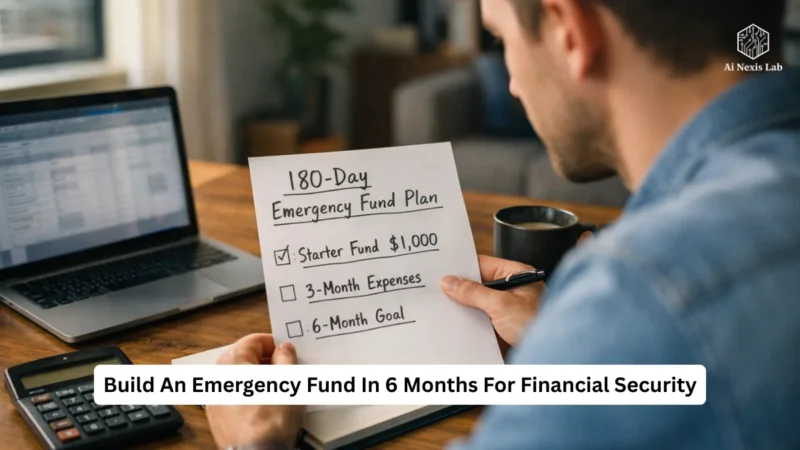
- 3-6 months of living expenses
- Stored in a high-yielding savings account – not invested in the market
Start small if necessary.
First goal: $1,000.
Next goal: One month.
Then two.
Then three and so on.
You don’t build an emergency fund overnight.
You build it consistently – and get a good night’s sleep every night along the way.
Leak #5: Ignoring Inflation – Losing Money Just by Sitting There
There’s a strange comfort in watching cash pile up in a low-interest savings account.
It feels safe. Predictable. Familiar.
Except… it’s not.
If inflation is 3% and your bank is paying 0.1%, your money is depreciating in real value every year. Groceries go up. Rent goes up. Utilities cost more.
And your “safe” cash buys less and less.
It’s not safety.
It’s slow erosion.
Rich people understand one simple thing:
Cash is useful — but only for stability and short-term needs.
Everything else should be working.
How to Seal This Leak
Think about your money in buckets:
1. Emergency + Short-Term Needs:
High-yield savings.
2. Long-term growth:
Investments appropriate for your risk tolerance and time horizon (index funds, retirement accounts, etc.).
Your goal is not to gamble.
Your goal is to not let inflation quietly rob you while your money is sleeping.
Leak #6: Emotional Spending – Buying Feelings Instead of Things
Bad Day. Long week. The burden of stress on your shoulders.
You scroll. You browse. Something catches your eye.
Add to cart. Checkout. Relief.
Shopping doesn’t just cost money – it hits the same reward centers in the brain that respond to sugar and social recognition. That’s why emotional spending feels so satisfying at first.
But after a few days, the package loses its zest – while the bill remains very real.
For months, emotional costs add up to clutter, regrets, and debts disguised as “little things.”
How to seal this leak
Take a 72-hour break.
If something is not essential:
- Wait three days before purchasing.
- Put it in the list instead of the cart.
- Reassess when the initial wave of emotion passes.
Most “needs” fade with time.
People who survive the pause are usually profitable – and it’s easier to afford consciously.
Leak #7: Being Underinsured – The Risk You Don’t See Until It’s Too Late
Insurance is boring – until it’s not.
A medical emergency.
A major accident.
An unexpected lawsuit.
And suddenly, years of progress disappear in a weekend.
Insurance isn’t about fear. It’s about building a structure under your life so that one bad event doesn’t push you back to zero.
In today’s world, people often cut insurance first to “save money.”
Ironically, that step may be the most expensive decision they have ever made.
How to Seal This Leak
Review your coverage once a year, especially:
- Health insurance
- Disability insurance (your income is your biggest asset)
- Auto coverage — especially for new vehicles with high repair costs
- Liability insurance if you own property or have significant assets
The right policy won’t make you rich — but it will protect assets from disappearing.
Three-Step Quick-Action Fix (Do This Within 24 Hours)
It’s normal to feel overwhelmed. Money leaks happen in secret.
Instead of trying to fix everything at once, do these three things today:
Step 1: Subscription Purge
Cancel three unused subscriptions – immediately.
Step 2: Emergency Shift
Move your emergency savings to a high-yield savings account.
If your money is earning less than 4-5% in 2026, you are missing out on easy, risk-free growth.
Step 3: Spending Barrier
Delete BNPL apps and rely on your card or bank balance for everyday purchases.
When you know the full cost in advance, spending naturally becomes wiser.
This isn’t a dramatic move – but it often unlocks thousands over time.
Now that the leaks are sealed… what happens next?
A bucket that doesn’t leak gives you something new:
Options.
When your money stops leaking through the cracks, you can really see progress. Savings increase. Investments increase. Debt decreases. Stress decreases. Choices open up.
Stopping the leaks isn’t flashy. No one posts screenshots of “Cancelled subscription today!” on social media.
But this is the real foundation of wealth.
Before passive income.
Before rental properties.
Before stock market strategies.
First, make sure your bucket holds water.
Then?
We begin to learn how to overflow that bucket – even while you are sleeping.
Frequently Asked Questions
Q1: If I already have a credit card, do I really need an emergency fund?
Credit cards are not an emergency plan – they are expensive loans. Interest rates can trap you quickly, and using debt during a crisis delays recovery. Cash reserves give you breathing room without creating new problems.
Q2: How much should I keep in cash compared to investments?
A simple guideline:
1) 3-6 months of essential expenses in savings
2) The rest can be invested based on your goals, timeline, and comfort level.
Short-term money is safe. Long-term money should grow.
Q3: Are all subscriptions bad?
Absolutely not. Subscriptions that actually improve your life or help you earn more are fine. The risk is in forgotten, unused, or rarely used subscriptions that provide zero value while draining your account.
Q4: Is buy now, pay later always a mistake?
BNPL can only work if:
1) the purchase is necessary,
2) you can easily afford it,
3) you have budgeted for it, and
4) you do not make multiple BNPL payments at once.
For most people, it leads to overspending – which is why companies push it so hard.
Q5: What if I start late – is it too late to build wealth?
Absolutely not.
You can’t change when you start – but you can change how consistently you move forward. Stopping leaks, creating a deliberate budget, and investing steadily work at almost any age.
Q6: How often should I review my finances?
A simple rhythm:
1) Quick review: once a week
2) Subscription + expense check: once a month
3) Insurance + big picture planning: once a year
Think of it like regular maintenance – cheaper and easier than fixing a major breakdown later.
Q7: What is the first step in investing after fixing these leaks?
Start by learning the basics: retirement accounts, index funds, risk, and time horizons. Then start with small, automatic contributions. Consistency > perfection.
Final Thought
You are not bad with money.
You are living in a world that is designed to quietly separate you from it.
When you understand that – and start plugging the leaks one by one – the money stops slipping through your fingers like sand.
It becomes something different:
A tool.
A safety net.
A path to the choices that really matter.
You don’t need another bucket.
All you need is a bucket that can hold all the hard work you put into it.
Whenever you’re ready, we can go deeper into the next step – learning how to grow that money intelligently, peacefully, and sustainably.
Just say the word.