
The Mobile App Revolution of 2026: Why the Future Won’t Live in Icons
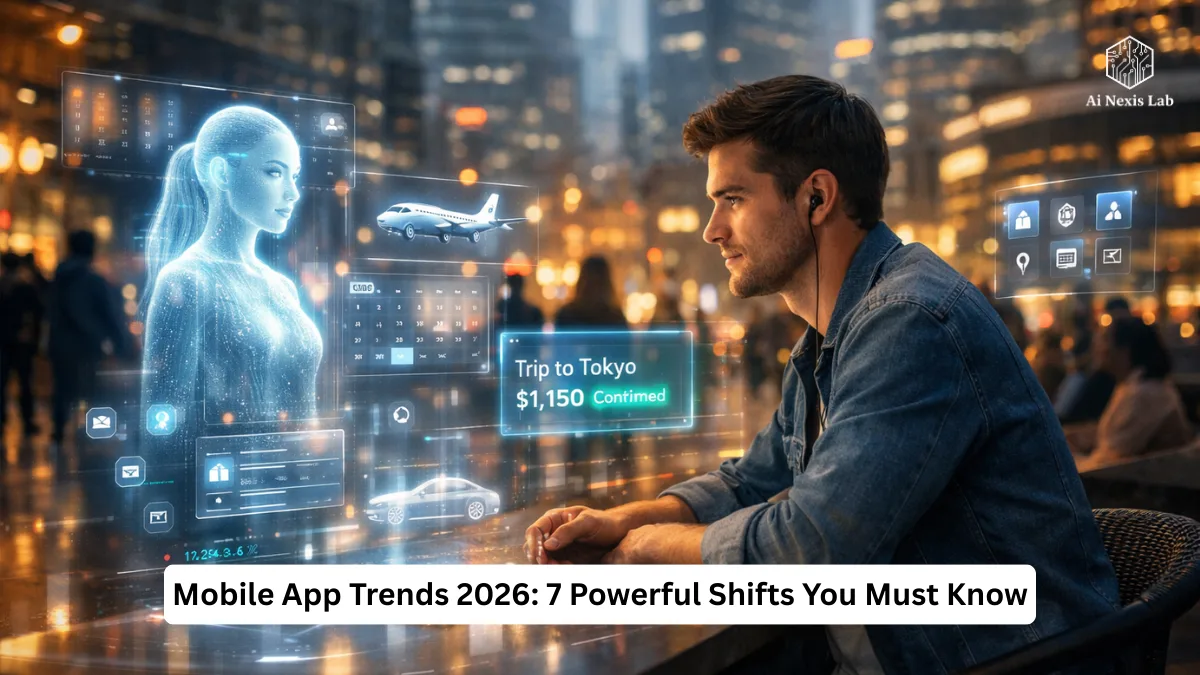
Discover how 7 powerful mobile app trends will reshape 2026 — from agentic AI to spatial and bio-smart apps. Learn what to build next and stay..
Not long ago, having a mobile app meant your business was “modern”. Customers walked through that digital door when they wanted to shop, book, read, scroll, or connect. Every industry was rushing to launch something in the App Store or Play Store because that was where the focus was.
But the world is changing fast.
Mobile apps are no longer just little squares on the home screen. They have quietly woven themselves into our homes, our cars, our workplaces – even our bodies. Instead of becoming a destination, the app has dissolved into the background, transformed into something more ambient, more intelligent, and more deeply integrated into everyday life.
And for more than a decade, two companies have written that story: Apple and Google. They built the ecosystem, controlled the distribution, and set the rules. If you wanted users, you went through with it.
Now, those walls are cracking – and what’s moving forward is a new era that feels less like “software you open” and more like “capability that simply exists“.
We are entering the era of ambient computing.
This is a world where technology is always around you, working quietly, ready when needed – and often acting before you even think to ask. You don’t go to any app anymore. The app comes to you. Sometimes it appears as a sound. Sometimes as augmented reality. Sometimes in the form of automated decision-making happening invisibly in the background.
And if you want your product, startup, or business strategy to remain relevant until 2026, this is a change you can’t ignore.
Below are seven disruptive mobile trends shaping that world – not as theory, but as real paths that we’re already seeing unfold.
Table of Contents
1. Agentic AI: Apps That Don’t Just Respond – They Act
We’ve been told for years that AI will transform apps. For a while, that mainly meant adding a chatbot tab or sprinkling in “AI features” that wrote text or generated images. The phase that many companies went through was basically:
Plug ChatGPT into the app and call it innovation.
That era is coming to an end.
Welcome to agentic AI – systems that have goals, understand context, and are capable of performing multi-step actions in services without hands-on intervention.
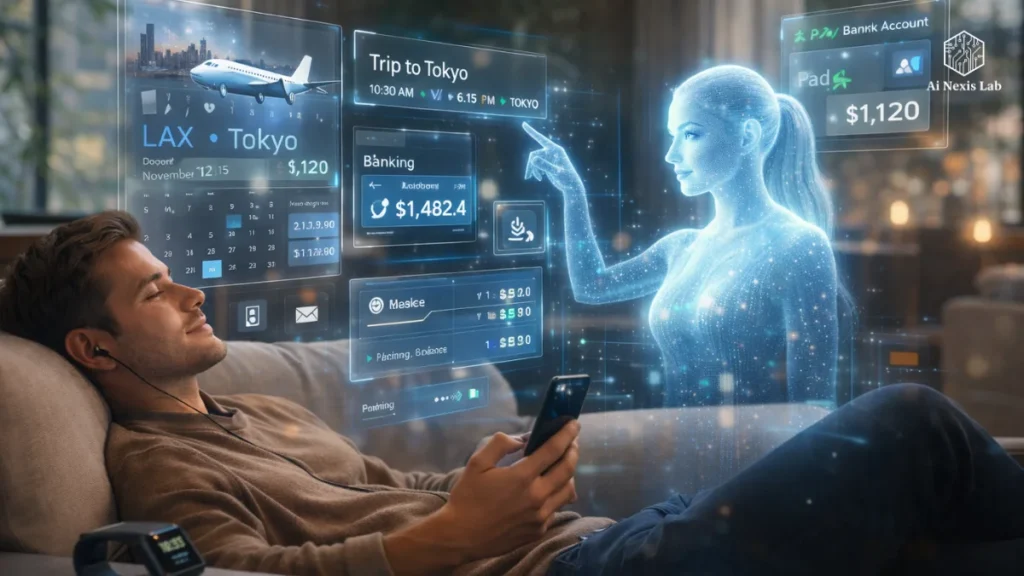
Think about how you currently travel. You open your flight app. Then your calendar app. Then your bank app. You compare, check, cross-reference, book, and confirm.
By 2026, the experience will look like this:
“Find a weekend trip to Tokyo for under $1,200 that works around my meetings – and takes care of everything”.
Your device does the rest. It researches, compares, books, syncs, pays, and keeps you updated if prices drop or plans change.
This isn’t science fiction. It’s just the next logical step in automation.
Why does this change everything
Zero-UI becomes the norm.
Instead of designing endless menus and buttons, we will design around purpose. Talking, texting, or prompting through behavior replaces tapping.
Applications are starting to not just react, but predict.
Your grocery delivery service could reorder milk before you realize the fridge is empty. Your ride-hailing app might already have a driver nearby because it knows your regular commute.
We are moving from assistants waiting to agents who expect.
2. On-Device Intelligence: When AI Stops Living in the Cloud
For years, “the cloud” was the answer to everything. Data storage? Cloud. Processing? Cloud. Machine learning? Definitely the cloud.
But privacy expectations have changed. Latency expectations have changed. And chip companies have quietly made phones powerful enough to run serious neural models locally.
That’s flipping the script.
Local-first becomes the new standard
Instead of sending data to remote servers, more AI processing happens directly on the phone. It comes with three big shifts:
1. Privacy by default
Sensitive conversations, health insights, personal habits — they stay on your device instead of bouncing off servers you don’t control.
2. Offline Intelligence
You can be on a plane, on a mountain, in a basement, or in a country with poor connectivity — and still get full AI functionality.
3. Lower costs for developers
Instead of paying per request to third-party APIs, companies use the computing power that users already have in their pockets.
The cloud won’t disappear. But he becomes a partner — not the sole brain in the system.
3. Spatial Applications: When Software Enters the Real World
We have designed mobile interfaces for flat screens. Lists, grids, tabs, icons.
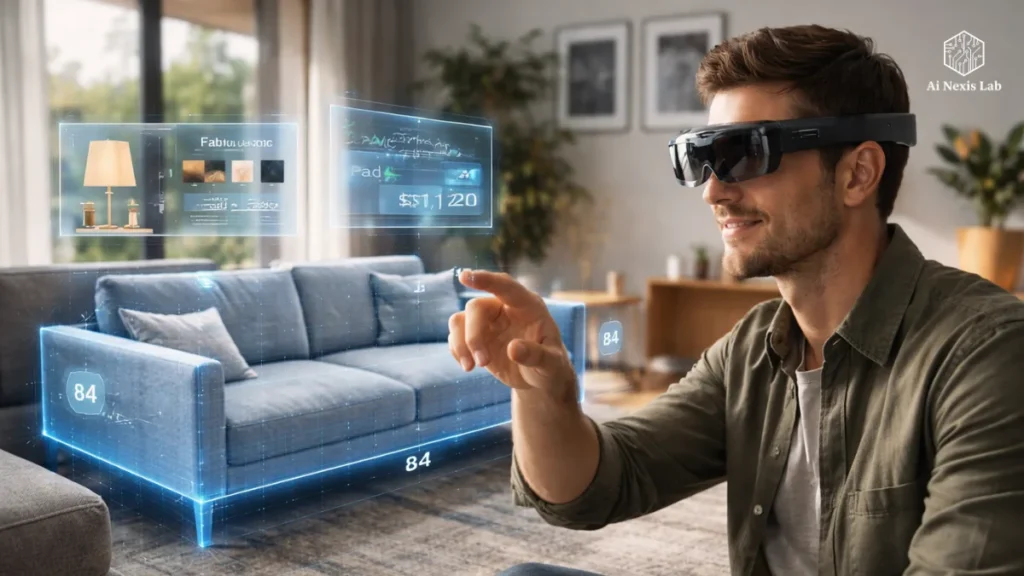
But 2026 is a turning point as augmented reality, VR, and mixed-reality headsets enter everyday life. Apps are no longer trapped in rectangles. They become something you see layered over the physical environment around you.
What this looks like in real life
Retail
Instead of previewing furniture in a basic 3D model, you’ll see how that sofa interacts with real shadows, your lighting, and your space – all in real time.
Education
History will not just be read. It’ll be lived. Imagine wandering through a holographic Roman Forum built to scale in your city park.
Remote work
Remote colleagues appear as avatars, tools float among you, and “apps” become objects that everyone can interact with.
Spatial computing removes the limitations. Apps stop feeling like documents and start feeling like places.
4. Decentralized Apps: Taking Back Control from Big Platforms
Public trust in big tech has eroded. Data scandals. Algorithm manipulation. Platform censorship. Ever-rising fees.
By 2026, more developers will embrace decentralized frameworks – not just because of crypto enthusiasm, but because ownership, transparency, and fairness are once again important.
What shifts in this world
Decentralized identity
A secure, portable identity that you actually own – with authentication that doesn’t rely on corporations storing your passwords.
Peer-to-peer commerce
A marketplace that directly connects buyers and sellers. Fewer intermediaries. Less platform taxes.
Community-owned networks
Social platforms where users collectively decide what is visible and how things work, rather than mysterious recommendation systems.
This isn’t about hype coins or quick speculation. It’s about giving back to the agencies users and evolving into a shared ecosystem rather than a platform controlled gateway.
5. The Rise of the Western Super App
In Asia, “super apps” became commonplace years ago. Messaging, payments, transportation, government services, entertainment – all live in the same ecosystem.
Meanwhile, Western countries laughed – until users started drowning in app overload.
Forty apps for forty tasks are no longer convenient. They’re boring.
So in 2026, expect consolidation to accelerate.
Major players – social networks, ride-sharing giants, big banks – will try to become the all-in-one platform that people never leave, competing to become digital hubs.
Inside the Super-App Universe
- Identity verified everywhere by biometrics
- Mini-programs that run instantly without downloads
- Unified wallets that connect cash, digital currency, loyalty points and more
- Layered conversations in every transaction
The app becomes less like a tool – and more like a personal operating system.
6. Micro-Apps: A World Without Downloads
Let’s be honest. Half the time, people don’t install apps because it feels like work. Search. Tap. Download. Sign up. Learn. Delete later.
In 2026, the best apps will not require installation at all.
Thanks to advances in edge computing and lightweight application frameworks, ephemeral micro-apps load instantly when needed – and disappear when finished.
Imagine this
You go on a scooter. Tap your phone. The fare interface appears instantly.
No signup. No payment entry. No mess afterwards.
Or you sit down at a restaurant. Scan the code. The entire dining experience – menu, customization, payment, loyalty – is run through a small app that disappears as soon as you leave.
It’s a frictionless interaction. The app becomes a short-term experience rather than a long-term resident on your phone.
7. Bio-synchronous apps: Technology that understands your body
Wearables were pedometers. Cute trackers. New fitness toys.
That era is gone.
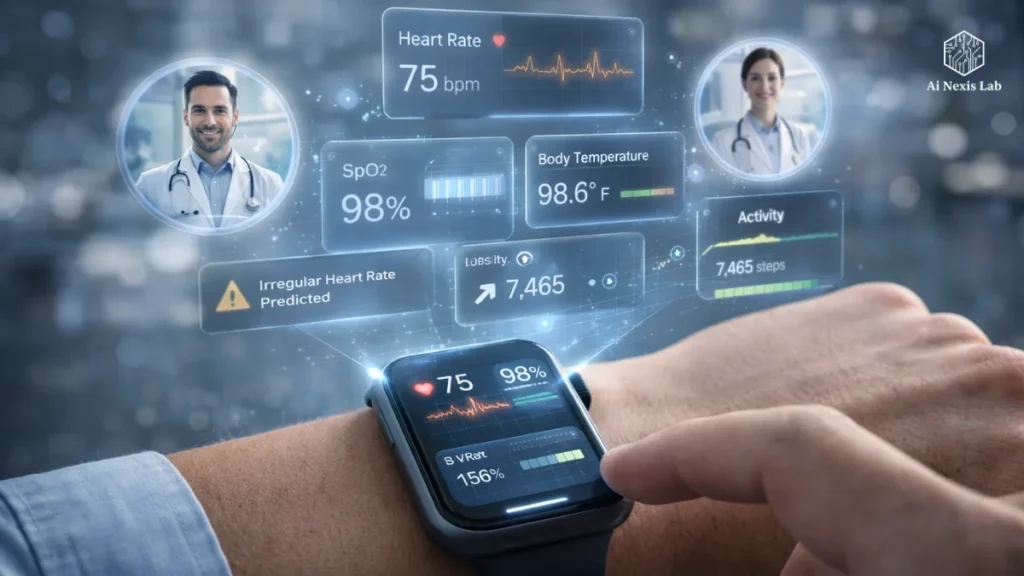
By 2026, wearables could read glucose trends, hormone fluctuations, oxygen saturation, stress responses – sometimes continuously and in real time.
It unlocks bio-synchronous applications: software that adapts based on what your body needs in the moment.
Real-world possibilities
Stress-smart productivity
If your task manager detects increased stress markers, it can delay demanding work blocks, moving focus windows to when your brain performs best.
Nutrition that adjusts itself
Your food app can nudge you toward meals that counteract blood sugar spikes – not theoretical nutritional goals, but living biological responses.
Proactive healthcare
Instead of reacting to symptoms, doctors could be alerted days before something serious happens – powered by subtle biometric signals that algorithms detect early.
The line between device, doctor, and daily life is blurring – responsibly, we hope.
The Big Picture: Services, Not Just Apps
Developers and business leaders need to embrace this truth:
The idea of “build an app for it” is dying.
What’s being replaced is:
“Build a service that can live anywhere”.
Voice, wearable screens, agents, cars, AR spaces, biometric interfaces – your product should be able to travel between them all.
And to thrive in that landscape, there are three principles that are more important than anything else:
1. Privacy is no longer optional
Users expect control. Systems that leak data, sell behavior, or store personal information will quickly lose trust.
2. Everything should be API-ready
AI agents – not just humans – will use the services. If your system isn’t built to connect and interact autonomously, it gets left behind.
3. The experience must go beyond the phone
If your product can’t survive on the surface – spatial, wearable, audible, ambient – it risks becoming irrelevant by 2027.
The App Store is not going away. But it’s no longer the universe.
In 2026, apps are everywhere – and even invisible.
Frequently Asked Questions (FAQ): Mobile app trends
Q1: What exactly is “ambient computing”?
Ambient computing refers to technology that fades into the background. Instead of consciously opening apps, devices, networks, and AI work silently around you – anticipating needs, responding automatically, and only appearing when interaction is necessary.
Q2: Does this mean that traditional mobile apps will die?
Not immediately. Many applications will still exist – especially for specialized tasks. But the center of gravity is shifting from “open the app” to “trigger the experience wherever you are”.
Q3: Are agentic AI systems secure?
They can be – but they require thoughtful design. Permissions, audit trails, user approvals, and clear boundaries will be important. Good systems will feel empowering, not intrusive.
Q4: How realistic is the AI on the device?
Very much so. Flagship phones already run surprisingly capable models natively. As chipsets improve, local-first AI becomes the norm rather than an innovation.
Q5: Do decentralized applications mean that everything becomes crypto-based?
No. The real story is ownership, not speculation. Decentralization focuses on verifiable identities, open data, and community-controlled structures – with or without tokens.
Q6: Why are super apps finally coming to Western markets?
Convenience. Users don’t want application fatigue. Businesses want retention. The infrastructure ultimately supports it. Cultural resistance is diminishing as integration improves.
Q7: How do micro-apps work without installation?
It is delivered on demand, runs in a lightweight runtime environment, and then disappears – powered by the edge networks and system-level frameworks of platform providers.
Q8: Are bio-synchronous applications a risk to privacy?
If used incorrectly, it can happen. Biometric information is very personal. Regulations, encryption, and transparent data practices will determine whether this trend becomes empowering or exploitative.
Q9: What should developers prioritize first?
Design services for interoperability. Build APIs. Adopt a privacy-first architecture. Prepare now for agents, wearables, and special interfaces, rather than just building for screens.
Q10: Will every business need to adopt these trends?
Not all at once. But it’s dangerous to ignore them completely. Organizations that experiment early will shape user expectations – and organizations that wait may have difficulty meeting them.


