
From high hopes to a humble grid – what went wrong with 2025 Las Vegas GP qualifying

The lights were on, the cameras were rolling, and the world was tuned in – but for Lewis Hamilton and Scuderia Ferrari the story turned out to be far from the glamour of the Las Vegas Strip. In a crucial weekend for Formula 1, Hamilton was at the bottom of qualifying, while his teammate Charles Leclerc made his frustrations clear.
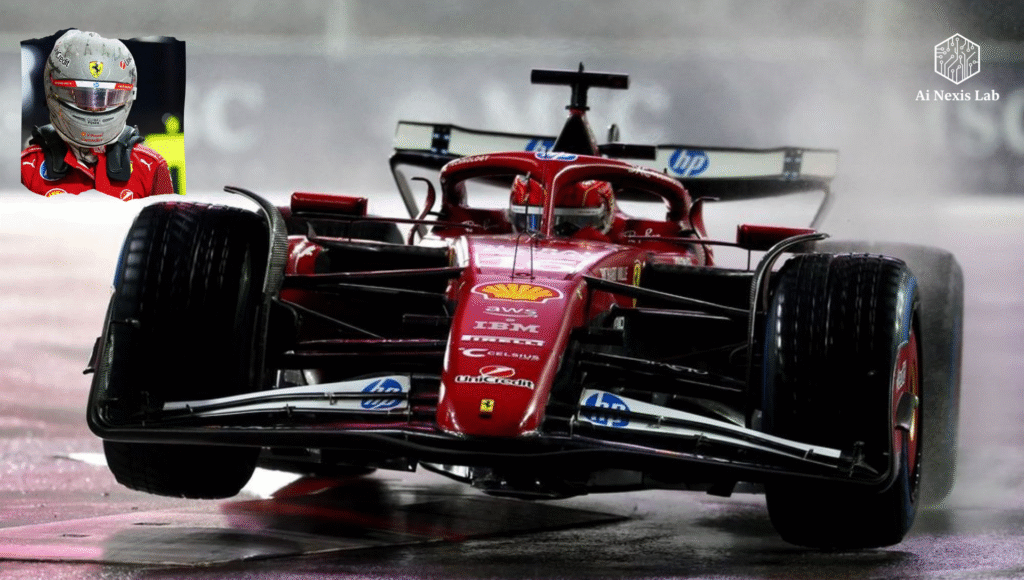
“It obviously can’t get much worse than that.” — Hamilton after qualifying last.
“My God, shameful, shameful… zero grip, like zero fing grip.” – Leclerc on his team’s performance.
As a fan, pundit, or casual observer, you might ask: How did this happen? What does that mean for Ferrari’s season? Will Hamilton be able to get out of this? In this we will break down the key moments, advantages and disadvantages, share lessons learned, and answer any questions you may be wondering.
What happened in Las Vegas qualifying?
Scene and expectations
As the night of the 2025 Las Vegas Grand Prix approached, conditions were already changing to watch. Heavy rain, poor visibility under the lights and a circuit with street-track tendencies meant that marginal set-ups would be punished.
Ferrari and Hamilton had shown signs of being in good form, but there was a sudden change at the end of the weekend. Hamilton put in a promising performance in the third practice session (FP3) – only to qualify in the worst result of his career.
Qualifying Breakdown
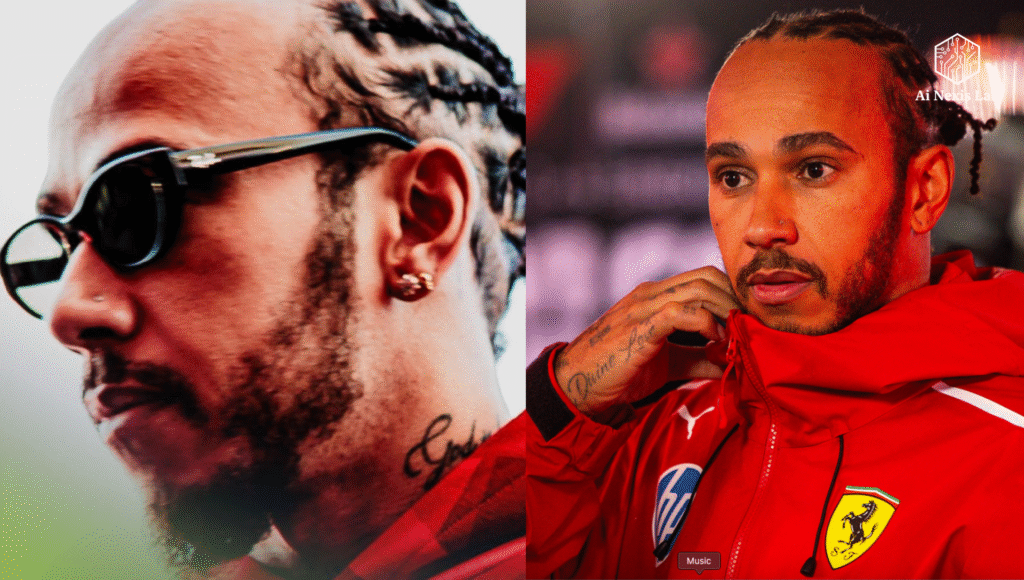
- Hamilton qualified in 20th (last in pace) for the first time in his entire F1 career.
- Meanwhile, Leclerc qualified P9 – in the top-ten, but far from what Ferrari expected or needed.
- This is the first time a Ferrari driver has been the slowest in qualifying since the 2009 Abu Dhabi GP (Giancarlo Fisichella) made this humiliating footnote.
- The data showed that Hamilton lost around 2.5 seconds to Leclerc in key areas, particularly in corners where grip and aero balance mattered most.
What went wrong – why?
Several factors combined to cause this failure:
- Tyre temperature and grip – Hamilton admitted he “couldn’t get any temperature into the tyres” and suffered from severe understeer and glazed front brakes.
- Aerodynamic choice – Data suggests Hamilton chose a low-drag configuration (Monza-spec rear wing) which gave him good top speed but lost grip in corners. Leclerc had a more heavily loaded wing, which helped in the wet/low-grip sectors.
- Driver-team confusion – Hamilton felt he crossed the time line too late, saw the red light and cancelled a lap. But technical data and analysis say the green light was still on and he could have continued.
- The unpredictability of the conditions – the sudden loss of traction and visibility under the lights on wet asphalt – magnified the weaknesses in Ferrari’s chassis and set-up compared to its rivals. Leclerc pointed out: “Zero grip”.
Why this matters – big picture consequences
For Hamilton
This result comes at the lowest level of the career. Hamilton is widely regarded as one of the greatest F1 drivers of all time – yet finding himself the slowest for the first time feels like a pivotal moment. It suggests that even legends can fall, and it puts his first season with Ferrari under the microscope.
Coming in last place on a road where overtaking is difficult makes his task for the race even more difficult. It raises questions about the harmony between driver, car and team.
For Ferrari
Such sessions have put Ferrari’s championship ambitions at risk. Starting P9 and P20 means fewer points, more stress, and a deeper hole to dig. When a team with such a legacy shows heavy rain/set-up issues, you know the internal pressure will increase.
Leclerc’s outburst on the radio wasn’t just one of frustration – it was symptomatic of a team that clearly knows it is underperforming in key areas.
For the fans and the championship
This is fascinating in terms of storytelling. A former dominant driver, a legendary team, the glittering backdrop of Las Vegas – these are all elements of drama. For the championship battle, this result could change the momentum, favoring the rivals and forcing Ferrari to play catch-up.
Benefits, Drawbacks, and Lessons — Real Takeaways
Benefits
- Real-world stress testing: When things go badly, weaknesses quickly become apparent. Ferrari now knows some of its weak links under pressure.
- Inspirational quote: Sometimes failure is more of a catalyst for change and innovation than success. If used correctly, this can be a turning point.
- Fan involvement: This kind of high-profile stumble draws attention to the game – even if it’s painful for the team involved.
Drawbacks
- Championship losses: Losing points and starting grid position creates a handicap that is difficult to overcome at certain tracks.
- Reduced morale: Morale can be negatively impacted for both the driver and the team, especially when words like “shameful” are used publicly.
- Brand/Legacy Risk: Ferrari’s image suffers when results are poor and there are moments of public frustration.
Lessons
Here are the specific lessons that teams (and fans) can learn:
- Wet/variant conditions expose vulnerability — the best-prepared teams adapt quickly. Ferrari’s data shows that cornering and tire temp issues were crucial.
- Communication and pit-wall clarity are important — Hamilton’s misunderstanding on the light/timing line shows that even a small misreading of a signal can be costly.
- Set-up trade-offs must be consistent with the conditions — choosing less drag helped top speed but hurt cornering grip and tire window.
- Don’t let pride hide a performance gap — success in dry conditions doesn’t guarantee wet competence; Teams must be honest about their all-weather capabilities.
As a mini-case-study: compare Ferrari to a well-prepared team like the McLaren F1 team, whose pole-setter Lando Norris navigated similar conditions more effectively. The difference was not in talent but in preparation and adaptability.
FAQs
Q1: Has Hamilton ever qualified in last place before?
A: No — this is the first time in his entire career that Hamilton is bowling at the slowest pace in qualifying.
Q2: Why was Ferrari so slow in this session?
A: Several reasons: tire temperature issues, poor grip, not optimizing aerodynamic choices for low traction conditions, and possible miscommunication with the driver. The data suggests that Hamilton lost a lot of time in corners where grip was particularly lacking.
Q3: Does this result mean Ferrari’s season is over?
A: Not necessarily finished – but it is certainly in jeopardy. When there are three drivers remaining, this type of qualifying result reduces their margin for error and increases the pressure. The risk of a winless season for Ferrari (or Hamilton) is high.
Q4: Can Hamilton recover from starting in last place on the Street Circuit?
A: Theoretically yes – but practically it’s a big question. Street circuits generally provide fewer overtaking opportunities, and starting 20th due to the speed disadvantage means that even a flawless race may not produce a strong result. It will depend on strategy, the safety car and the mistakes of others.
Q5: What immediate steps should Ferrari take?
A:
- Revisit car behavior in wet weather and tire warming strategies.
- Make sure driver-engineering communication is crystal-clear, especially in unusual situations.
- Audit aerodynamic package choices related to track demands and weather variability.
- Establish internal accountability and manage morale – Leclerc’s radio was a warning signal.
Conclusion:
What happened in Las Vegas wasn’t just a bad weekend for Hamilton and Ferrari – it was a snapshot of how even the best team can falter when variables change, pressure mounts and the team isn’t fully aligned. For Hamilton, this is the first big challenge of his career. For Ferrari, there is a clear sign that the foundation of the season may be more fragile than fans expected.
As we look ahead, the key question is not simply what went wrong? – That is, how will both the driver and the team react? Will this be a catalyst for new performance, or will the downturn deepen?
Join the conversation: If you’re an F1 fan, let me know below – do you think Hamilton and Ferrari can bounce back from this? Or is this the beginning of a downward spiral? And if you want, I can write a follow-up after the race showing whether they reacted or just regrouped. Let me know!
