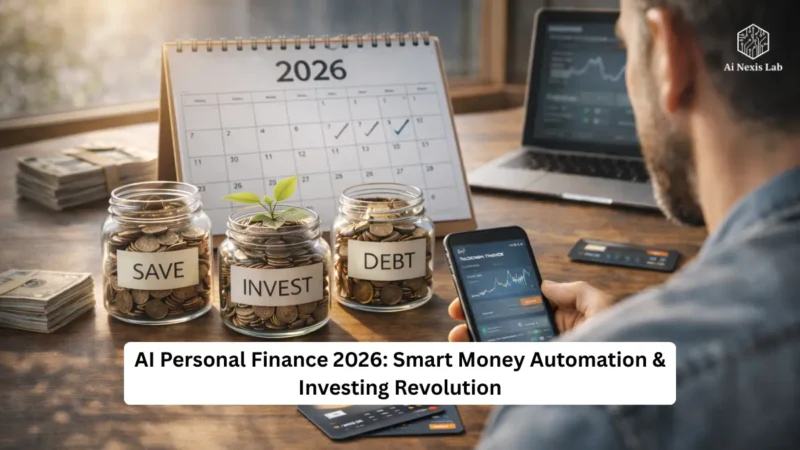
2026 Financial Survival Manual

The old financial advice – keep a savings account, give up small luxuries, hope inflation slows down – no longer works. The world you live in demands a different mindset: rooted in movement, negotiation, skill leverage, and smart use of capital. Let’s rebuild your survival game from scratch.
The truth is, most people “did nothing wrong”. The rules changed faster than anyone expected. Costs rose, wages lagged, and systems that should have felt secure – banks, housing, retirement plans – suddenly felt fragile. That shakes your confidence. And when confidence drops, most people freeze.
Stagnation is the real threat.
Because the economy we currently live in does not pay off in staying stagnant. It rewards people who learn, adapt, negotiate, and move their money purposefully. That doesn’t mean being careless. It means understanding that every dollar you control is either working for you – or quietly working against you.
Savings alone aren’t bad. They’re just incomplete. A savings account can protect you from shocks, but it won’t create stability in a world where essential expenses keep sliding upward. Stability now comes from strategy – redirecting money, building skills, creating buffers, and locking in benefits before prices change again.
Think in terms of leverage, not sacrifice.
Leverage is asking your landlord for a longer rental in exchange for a discount. It’s learning how AI tools save you hours of work so you can produce more – or negotiate more. It’s something pre-paid today because you know it will be more expensive tomorrow. This isn’t a glamorous move. It is practical, iterative, and powerful.
And here’s the most important shift: Stop seeing money as something you “store.” Start seeing it as something you use.
Every bill, every subscription, every negotiation, every new skill is part of a larger system that you control. The people who perform well in 2026 aren’t necessarily richer. They’re just more intentional. They really understand the game they are playing – and they stop waiting for the old rules to come back.
This guide is about helping you do exactly that – step by step, without the panic, guilt, or shame that usually surrounds money discussions.
Section 1 – What Really Changed
Think of the 2026 world economy as more than a “recovery” and more like a structural transformation.
Since the pandemic, we have seen:
- Persistent cost pressures on essentials – housing, insurance, healthcare – that have outpaced many wage gains.
- AI reshaping labor demand in real time; Jobs that do not integrate AI are at greater risk of becoming stagnant or shrinking in value.
- Monetary policy that will remain above the ultra-low rates of the 2010s and early 2020s, even if some easing occurs.
- Inflation that is stabilizing, but not returning to the quiet, below 2% world we once knew.
This is no short-term shock. It’s a new baseline, and the old advice – cut your lattes, save up money and wait for things to return to normal – now does more harm than good.
Section 2 – The New Economic Reality of 2026
A. Inflation is moderating – but cost pressures are not gone yet
Global inflation is no longer stuck at crisis-level peaks, but prices in daily life are still rising faster than people expect – especially healthcare, rent, insurance and education.
For most people, the inflation that matters is not the headline numbers you see from the central bank; That’s the actual out-of-pocket expense you face each month. And they haven’t magically disappeared.
B. Interest rates aren’t falling – they’re just stabilizing
After years of aggressive tightening by central banks to fight inflation, 2026 looks like a year of moderation – not a return to ultra-cheap money. Rates are still at historically low pre-pandemic levels, and the cost of your debt remains meaningful.
It changes our approach to:
- Mortgage
- Business loans
- Credit card management
- Leasing and rental negotiations
Money is more expensive today than ever before.
C. Wages are rising – but unevenly
In some markets, real wage growth is returning, but not across the board. General wage growth exists, but if your skill set is non-AI, non-tech, non-negotiable, your income growth is likely to lag behind.
This means you can’t rely on automatic wage escalators to keep pace with rising costs – you have to engineer your own pay increases by changing roles, learning new skills, or negotiating aggressively.
D. AI dominates productivity, but does not create equal opportunities
AI is not just a tool – it is a differentiator. People who know how to use AI to increase their productivity, manage workflows, and negotiate on their behalf now command a premium. Those who don’t will increasingly find themselves at the lower margins of return growth.
This is the reality of the labor market in 2026.


Section 3 – A New Financial Philosophy: A Reversal of Hoarding
The old model – hoard cash and wait for an opportunity – no longer works.
In a world with constant cost pressures, high real rates, and rapid AI-driven change, cash that simply sits idle loses value in opportunity cost and mental preparedness.
New Rule: Make Money
I call this principle the momentum of wealth.
Instead of hoarding cash, put your money into dynamic vectors – methods that either:
- reduce future costs (prepay essential costs at a discount)
- generate cash flow
- increase your value or earning power
This is not action for action’s sake – it’s strategic positioning.
A. Prepay what you can to lower future costs
In an inflationary environment – even moderate – locking in prices today is more expensive than paying higher prices tomorrow.
Real-world examples:
- Prepay for health or auto insurance at a discount for annual/yearly coverage.
- Negotiate multi-month rental deals where landlords offer small discounts for lease certainty.
- Secure subscription service rates if a price increase is imminent.
Locking in price certainty is practically like getting a guaranteed return.
B. Convert cash into small, reliable cash flow streams
Your cash shouldn’t be sleeping – it should be working. Options include:
- Dividend-paying investments
- Income-generating side businesses
- Selling digital products or services
- Renting unused assets
Monthly returns also grow faster than a stable savings account at a low real rate of $50–$200.
C. Use debt strategically instead of fearing it
Many people still operate under the old rule that “debt is always bad.”
Not anymore.
In 2026:
- Good debt means borrowing at a productive rate to generate income or cost savings.
- Bad debt is high-cost consumer spending that doesn’t increase your net worth.
Because rates are not falling, you need to be strategic about debt, not adversarial conservative.
Section 4 – Real Savings Habits of Financial Expertise
People who thrive in 2026 aren’t just “frugal.” They are strategic, opportunistic, and skill-forward. Here’s what it really looks like in everyday life.
Savings Habit #1 – Aggressive Money Circulation
Your goal here isn’t just general savings or small cuts — it’s strategic deployment.
1. Move cash toward immediate benefits
Instead of letting money sit:
- Use it for discounted prepaid expenses
- Expand revenue channels
- Hedge essential expenses (like energy or professional services)
If you can lock in $100/month of future expenses today at the discounted effective rate, that’s a better investment than most idle cash vehicles in today’s environment.
Savings Habit #2 – Negotiate Big Wins
This is probably the single biggest opportunity that most people still overlook.
Instead of canceling $15 streaming services, focus on:
Your big annual expenses. This is where negotiation can mean saving thousands, not tens.
Here’s a hierarchy that really moves the needle:
| Category | What to Do | Typical Gain Potential |
|---|---|---|
| Housing/Rent | Negotiate lease terms, prepay, or secure discounts | $2,000+ |
| Insurance (Health/Auto/Property) | Bundle policies, shop aggressively (including AI pricing bots) | $500–$1,500 |
| Work Compensation | Ask for AI stipend + performance-linked pay vs. flat raises | $1,500+ |
| Interest & Credit Terms | Seek balance-transfer offers with nominal fees | $500+ |
This move matters a lot more than cutting lunch or a streaming service.
A focused quarterly audit of these areas using AI negotiation tools can pay dividends.
Savage Tab #3 – Skill Stacking for the Real Economy
Work smarter – not just on tasks, but on skill gains.
AI is not a threat – if you know how to use it.
Four skill categories will matter most in 2026:
A. AI Integration and Orchestration
Knowing how to use multiple AI tools together – not just one chatbot – is a force multiplier.
This means:
- Building automated workflows
- Using AI for market research
- Automated negotiations and optimization
People who can build AI workflows are rare – and in demand.
B. Data Interpretation Without a PhD
You don’t need a doctorate to turn raw data into decisions. But you need skills in:
- Framing questions
- Analyzing output
- Validating models
- Finding the ground and risk
This is contextual intelligence – and the 2026 job market pays for it.
C. Financial Negotiation as a Key Skill
We don’t spend enough time teaching people how to negotiate their fixed costs, but that’s where the biggest wins lie.
Example:
- Demanding for “AI tool stipends instead of annual 3% raises”
- Negotiating cheaper health care coverage through bundling and competition
- Re-negotiating mortgage refinancing with better terms
These measures consistently yield hundreds of thousands of dollars annually.
D. Cross-functional Adaptability
In 2026, deep specialization is less important than deep adaptability.
Someone who can navigate:
- Finance Basics
- Digital Tooling
- Project Management
- AI Orchestration
…will do better than someone who focuses on a single discipline.
Section 5 – Reviving Emergency Funds for a Dynamic World
You still need a buffer. But it needs to adapt to the shape of the buffer.
“Liquid and Leveraged” Buffer
Old advice: 3-6 months of cash in a savings account.
New advice: Liquid, interest-earning, and strategically located.
Your buffer should be:
- In money market funds or liquid ETFs
- Earning interest or dividends
- Easily accessible without penalties
If you sit on just 6 months of cash and have close to zero real returns, you are losing time value and opportunity cost.
Instead, let your buffer be a dynamic reserve – something that you are willing to use for opportunity as well as safety.
Section 6 – How to Think About Money in 2026
You must internalize three truths:
1. Money in motion is stronger than money at rest
Sitting idle is losing out to rising necessities and opportunity costs.
Movement – even if it is normal – is assimilated more quickly than inertia.
2. Small savings are distractions – big negotiations are gains
Cutting $15 a month won’t change the trajectory of your wealth.
Negotiating mortgage terms, insurance bundles, or job compensation is what matters.
3. Skills are your true capital
In 2026, what you can do with AI, data, and negotiation tools will directly shape your income.
Having skills that expand your output multiplies your earning power.
Frequently Asked Questions
Q1: Is inflation still a big problem in 2026?
Inflation has generally eased since the sharp increases in the early 2020s, with many forecasts showing inflation rates in the range of 2.5%-3.5% for 2026.
But your personal inflation – the increase in your own food, housing, healthcare and energy costs – can be higher than the official figures, especially if your income is not keeping pace.
Q2: Should I still have an emergency fund?
Yes – but don’t let it sit idle.
Your emergency buffer should be liquid, interest-earning, and ready to be used for protection or opportunity.
Q3: Is saving cash now a bad idea?
Not always, but storing cash in zero-yield accounts is a mistake because:
1) Interest rates are higher elsewhere
2) The opportunity cost is real
Instead, focus on cash flows that generate returns or lock in future savings.
Q4: What are the smartest negotiation tricks that most people ignore?
Housing and Insurance.
A well-executed negotiation or prepaid agreement on this can often yield better results than most passive investment returns.
Q5: Do I need technical skills for development?
You don’t need to be a coder – but you do need to be able to use, configure, and integrate AI tools.
The premium value remains here today.
Q6: Which careers are booming?
Combined roles:
1) AI orchestration
2) Decision making and strategy
3) Negotiation and communication
4) Interdisciplinary knowledge
… are in high demand.
Q7: Are small daily savings useful?
Only if they don’t distract you from bigger opportunities.
Ignoring the $1,000/year negotiation and canceling a small subscription is like focusing on the wrong thing.
Q8: Are central banks cutting rates?
Many central banks are cautiously cutting interest rates, but the world is not returning to ultra-low rates. Most forecasts suggest that rates will remain moderate but higher than in the pre-pandemic era.
Final Takeaway — Winning in 2026 is not about sacrifice, it’s about strategy
You don’t thrive by shrinking your life – you thrive by expanding your leverage.
That means:
- Using cash wisely
- Negotiating where it matters most
- Building skills that deliver premium returns
Welcome to 2026 — where being proactive is not optional, it’s essential.