Heavy weight Champion: ISRO’s LVM3-M6 Mission and the Rise of the Bluebird Era
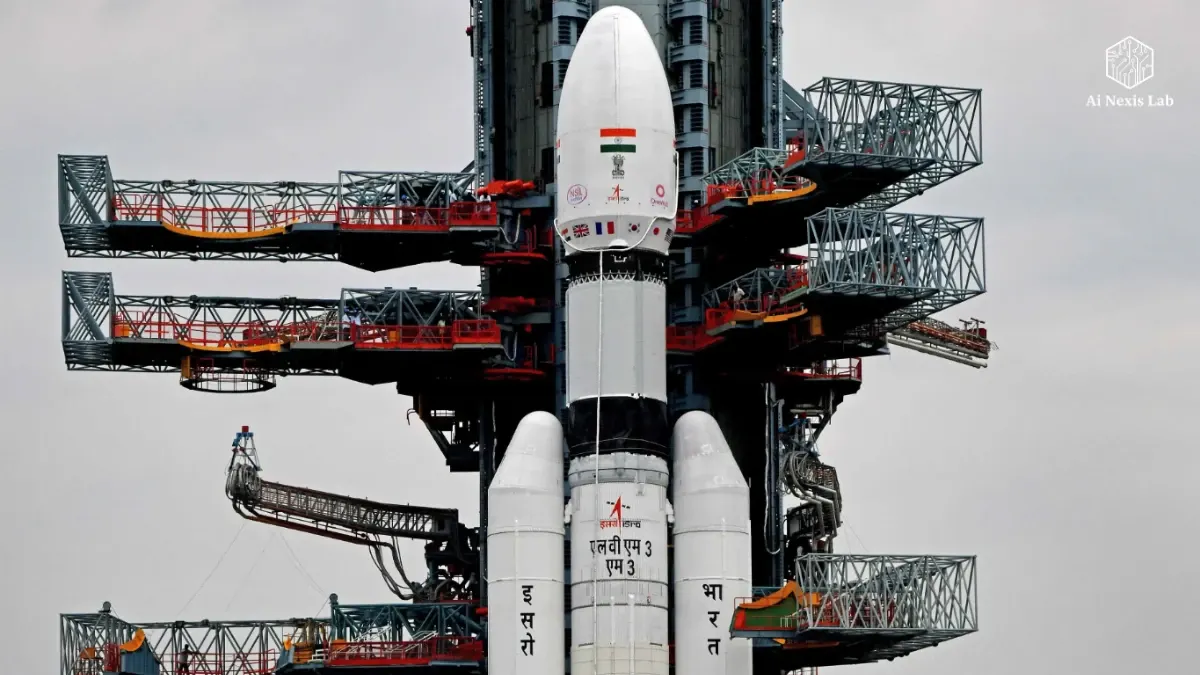
ISRO’s LVM3-M6 successfully launches the heaviest BlueBird Block-2 satellite, marking a major leap in commercial spaceflight and direct-to-cell connectivity.
The modern space race looks nothing like the Cold War era. There are no dramatic moments of flag-waving or symbolic one-on-one use aimed at rival superpowers. Instead, today’s most consequential battles are quieter, more technical – and much more personal.
It’s about whether your phone has a signal in a remote village.
It’s about whether ships at sea can communicate without expensive hardware.
It’s about whether the next billion internet users can come online without laying a single cable.
And on December 24, 2025, that future took a very real step.
From the windswept coast of Andhra Pradesh, India’s most powerful rocket soared into the sky carrying not just a satellite – but a bold new idea about how the world connects. The mission, known as LVM3-M6, combined the engineering prowess of the Indian Space Research Organization (ISRO) and the commercial ambitions of AST SpaceMobile, an American company that has never before fully realized: direct-to-cellular broadband from space using ordinary smartphones.
This was no regular launch.
It was the heaviest satellite ever launched from Indian soil.
It was delayed at the last moment to avoid a potentially catastrophic orbital collision.
And it sent shockwaves through the global space and telecom markets.
What happened that morning wasn’t just another successful mission – it was a sign that India had firmly entered the commercial space age as a heavyweight.
Let’s understand the technology, the drama, the business implications, and why this mission could reshape how we peacefully connect the world.
A New Space Race—Closer Than You Think
When people hear the word “space race“, they still imagine landing on Mars or setting up a base on the moon. But today the real competition is taking place in Low Earth Orbit (LEO), a few hundred kilometers above Earth.
LEO is valuable real estate. The satellites there move quickly, cover large areas, and can deliver low-latency connections. Whoever controls this layer of space controls:
- Global broadband infrastructure
- Emergency and disaster communications
- Military and strategic data links
- Backbone of future digital economies
Companies like SpaceX, Amazon, and OneWeb know this. Governments know it, too. And increasingly, ISRO is positioning itself not just as a scientific agency – but as a global logistics partner in orbit.
The rocket nicknamed “Baahubali”
To understand why this mission was important, you have to start with the rocket.
The LVM3—formerly called Gaganyaan LVM3—is ISRO’s most powerful launch vehicle. In India, it is affectionately named “Baahubali“, named after the legendary cinematic warrior known for his power and scale.
This nickname is not an exaggeration.
What makes LVM3 special
LVM3 is a three-stage heavy-lift rocket, purpose-built to carry large payloads into orbit. It differs from ISRO’s smaller PSLV and GSLV rockets in both raw power and precision.
Here’s how it works:
1. Two S200 solid strap-on boosters
Each booster contains 200 tons of solid propellant. When ignited, they provide the brute force needed to lift the rocket off the pad. The sound alone can be felt from kilometers away.
2. L110 Core Liquid Stage
Once the booster burns out, the core stage takes over. Powered by two Vikas engines, it propels the vehicle with controlled, continuous thrust into the thickest part of the Earth’s atmosphere.
3. C25 Cryogenic Upper Stage
This is where finesse replaces force. The cryogenic stage precisely injects the payload into its target orbit using liquid hydrogen and liquid oxygen. For a mission like LVM3-M6, this phase must be nearly perfect – there is very little margin for error.
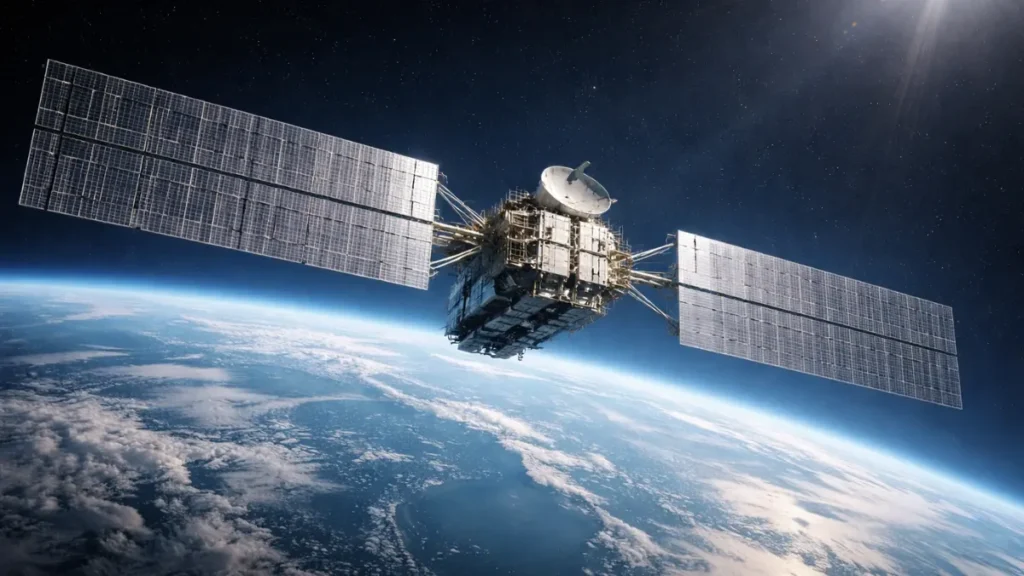
The payload riding atop LVM3-M6 was Bluebird Block-2, a satellite so large and heavy that it took Indian launch capabilities to a new level.
A Payload Like No Other
India launches heaviest satellite ever
- Weight: About 6,000 kg
- Orbit: Low Earth Orbit
- Mission Type: Commercial Communications
- Client: AST Spacemobile
This was not a bunch of small satellites. It was a huge, high-value asset – meaning failure was not an option.
For ISRO, successfully placing this satellite into orbit was not just a technical achievement. It was a statement to the global market: India can handle your largest, most expensive payload.
Bluebird Block-2: A cell tower in space
At the heart of this mission was a deceptively simple question:
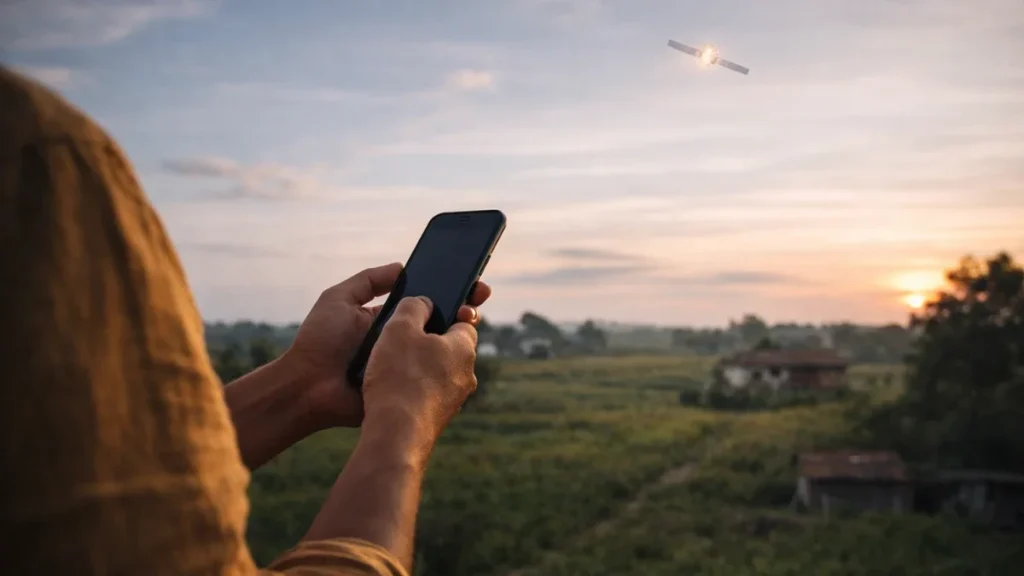
What if satellites could talk directly to your phone – no special hardware required?
AST SpaceMobile is betting on the same thing.
How Bluebird is Different
Most satellite internet systems, including Starlink, require dedicated terminals – dishes, antennas, routers. It works well for homes, ships, and planes, but it’s not ideal for large-scale adoption.
Bluebird takes a different approach.
Its satellites are designed to act as space-based cellular towers, connecting directly to standard 4G and 5G smartphones using existing cellular protocols.
No dishes.
No add-on hardware.
No new phones.
Just the signal — from space.
The Engineering Challenge
To do this, Bluebird satellites deploy gigantic phased-array antenna once in orbit. This antenna is one of the largest ever flown for commercial communications.
They need to:
- Maintain precise alignment with Earth
- Manage thousands of simultaneous connections
- Operate reliably in harsh space conditions
- Integrate seamlessly with Earth telecom networks
The Block-2 satellites are a major upgrade over previous prototypes, offering:
- Higher bandwidth
- Better signal strength
- Larger coverage areas
- Improved redundancy
In short, they are the first version designed not just for testing, but for actual commercial use.
The 24-Hour Delay That Prevented a Disaster
Just when everything seemed ready, the mission ran into trouble.
Originally scheduled to launch a day earlier, LVM3-M6 was delayed 24 hours after mission teams identified a potential orbital collision risk.
This wasn’t a bureaucratic precaution – it was a real threat.
Why are orbital collisions so dangerous?
Objects in LEO travel at speeds in excess of 27,000 km/h. A collision at that velocity doesn’t cause a crash – it causes an explosion.
Thousands of pieces of debris could be scattered in orbit, posing no threat to other satellites and potentially triggering a chain reaction known as Kessler Syndrome, where debris causes further collisions, which in turn causes more debris.
If left unchecked, the entire orbital band could become unusable for decades.
ISRO’s call: Safety over speed
ISRO’s space situational awareness teams recalculated the routes and decided that waiting 24 hours would completely eliminate the risk.
So they waited.
In an era where speed is often more important than caution, this decision was different. It reflects a mature, responsible approach to spaceflight – and reinforces why commercial customers trust ISRO with high-value missions.
Market reaction: Space stocks experience heat
While engineers were inspecting the roads in Sriharikota, investors were looking at something else entirely.
The successful launch of Bluebird Block-2 was a major de-risking event for AST SpaceMobile – and the market reacted immediately.
Why Investors Care
For years, AST SpaceMobile’s vision seemed almost too ambitious. Direct-to-cell connectivity from space is difficult, expensive, and unproven at scale.
This launch changed that narrative.
- The satellite is real
- It’s in orbit
- Infrastructure build-out has begun
As a result:
- AST SpaceMobile shares surged
- Investor confidence improved
- Comparisons with Starlink intensified
This wasn’t just hype – it was belief.
Why ISRO was the launch vehicle of choice
It’s fair to ask: Why didn’t AST SpaceMobile use the Falcon 9?
The answer is strategic.
1. Reliability
LVM3 has built a strong record of success, especially for high-stakes missions. For a company betting its future on a few large satellites, reliability is more important than headline-grabbing cadence.
2. Diversification
No commercial space company wants to rely on a single launch provider. The use of ISRO—through NewSpace India Limited (NSIL)—adds flexibility to AST’s launch strategy.
3. Cost and Customization
ISRO has long been known for delivering precision missions at competitive costs. For heavy, customized payloads, that combination is extremely attractive.
Telecom industry’s quiet moment of disruption
While the spotlight often shines on rockets and satellites, the most profound impact of the LVM3-M6 / Bluebird Block-2 mission may unfold far from the launch pad and trading floor – in the global telecom industry itself.
For decades, mobile connectivity has followed a familiar rule: coverage relies on towers. Dense cities thrive. Rural areas struggle. Oceans, deserts, and mountainous regions are often left behind completely. Even in developed countries, the “dead zone” remains an unresolved frustration.
Direct-to-cell satellite technology challenges that entire model.
Instead of building thousands of expensive ground towers – each requiring land, permits, maintenance, power and backhaul – telecom operators can now extend coverage from above. A single satellite can cover areas that would take years and billions of dollars to reach with terrestrial infrastructure.
This fundamentally changes the economics of connectivity.
For telecom companies, Bluebird-style satellites are not competitors; They are force multipliers. Operators can integrate satellite coverage into their existing networks, providing customers with seamless connectivity without changing devices or plans. Phones behave as normal. The network simply reaches farther.
For emerging markets, the implications are even greater. Many regions never received dense tower networks because the business case didn’t work. The population was very spread out. The revenue per user was very low. Satellite-based cellular reverses that equation. Coverage becomes scalable, predictable, and infrastructure-light.
This is where ISRO’s role becomes particularly important.
By proving that it can reliably launch extremely heavy, high-value commercial satellites, India is positioning itself as a critical enabler of next-generation telecoms, not just a space service provider. Each successful mission like LVM3-M6 reduces risk, attracts more international customers, and accelerates the deployment timeline.
There is also a geopolitical dimension that often goes unnoticed.
Telecom infrastructure is strategic. Countries are very careful about who owns it, who controls it, and who can shut it down. Satellite-based cellular networks introduce a new level of redundancy – one that does not rely on physical borders or sensitive land assets. For disaster response, military communications, and emergency services, this redundancy can be the difference between coordination and chaos.
From a consumer perspective, the disruption will seem almost invisible.
There will be no “satellite mode” button. No new hardware. No learning curve. A phone that loses signal on the highway, at sea, or during a natural disaster will simply keep working. That subtlety is what makes this technology so powerful – and so dangerous to inherited assumptions.
LVM3-M6 didn’t just launch a satellite. It accelerated a transformation where connectivity becomes fundamentally universal, not through infrastructural density. In that future, space is no longer an edge case for telecoms. It is part of the core network.
And India, through ISRO and LVM3, has secured itself a place at the center of that transformation.
India’s Quiet Transformation into a Space Powerhouse
The LVM3-M6 mission marks a major shift in India’s space story.
For decades, ISRO was celebrated primarily for scientific achievements – Mars Orbiter Mission, Chandrayaan, remote sensing satellites.
Now, a new chapter is opening.
What this mission signals
- India can handle the world’s heaviest commercial payloads
- ISRO is a serious player in global launch logistics
- Commercial missions are now central – not secondary
This opens doors to:
- Large communications constellations
- Orbital infrastructure projects
- Space station modules
- Deep-space logistics
India is not just participating in the new space age – it is shaping it.
A more connected world, one launch at a time
As Bluebird Block-2 deploys its antennas above Earth, the impact will not be immediately visible. There will be no fireworks, no viral videos.
But somewhere soon:
- A fisherman will make a phone call far from shore
- A village without a tower will get data
- Emergency responders will connect where networks once failed
And when that happens, the invisible link will go all the way back to a December morning in Sriharikota – and a rocket named Baahubali.
Frequently Asked Questions (FAQ)
Q1: What was special about the LVM3-M6 mission?
It launched the heaviest satellite ever from India, supported a revolutionary direct-to-sell technology, and demonstrated ISRO’s commercial heavy-production capability.
Q2: What is Bluebird Block-2?
Bluebird Block-2 is a large communications satellite designed to provide direct cellular connectivity to standard smartphones without special hardware.
Q3: How is this different from Starlink?
Starlink requires a user terminal or dish. AST SpaceMobile’s system is intended to connect directly to existing smartphones, dramatically expanding its reach.
Q4: Why was the launch delayed by 24 hours?
ISRO identified the risk of a potential orbital collision and delayed the launch to avoid space debris and long-term orbital damage.
Q5: Who benefits the most from this technology?
Rural users, maritime and aviation sectors, emergency services and anyone living in areas with poor terrestrial coverage.
Q6: Does this mean ISRO is becoming commercial-first?
ISRO remains science-driven, but missions like LVM3-M6 show that it is now a major commercial launch provider globally.
The Final Verdict
The LVM3-M6 / Bluebird Block-2 mission wasn’t loud, flashy, or dramatic. It didn’t have to be that way.
It was precise.
It was responsible.
And it quietly moved the world closer to universal connectivity.
In the modern space age, it may be the most powerful achievement.