Can AI really draft binding contracts – or is it just playing the role of a lawyer?
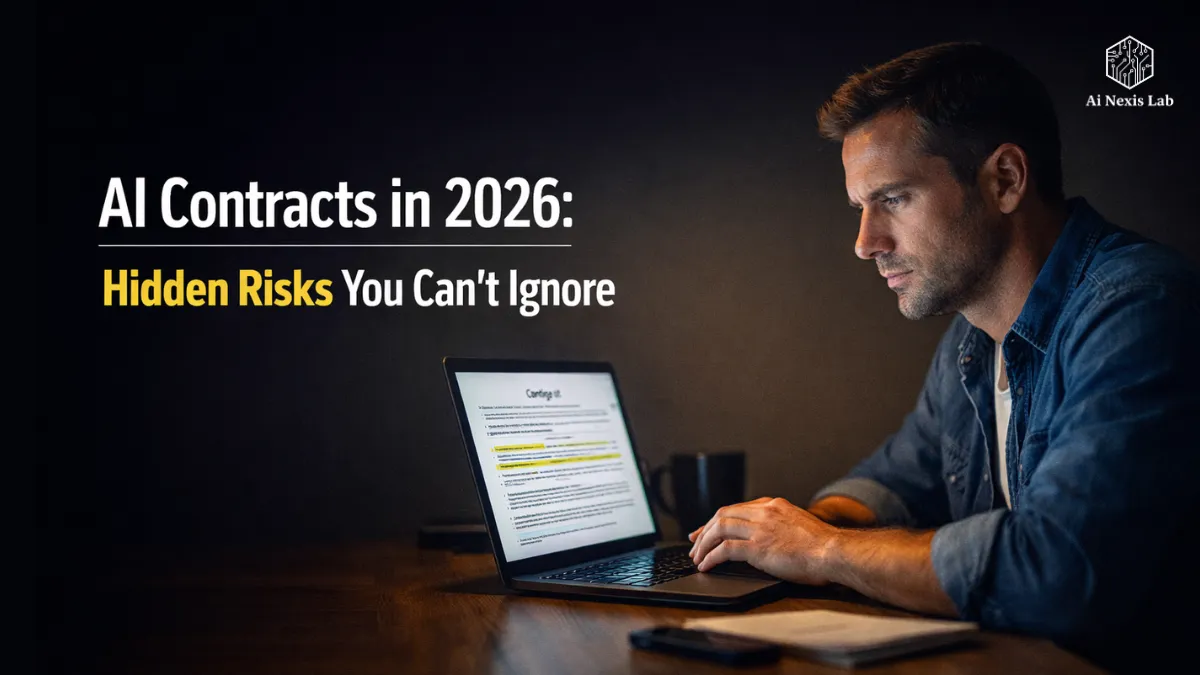
The legal industry isn’t just evolving – it’s being forced to adapt. What used to take billable hours, back-and-forth emails, and expensive retainers can now be done in minutes with AI. It’s not hype. It’s already happening.
Imagine: It’s 9:12 pm. You have a deal to complete tomorrow. Your lawyer is not available. You open the AI tool, write a rough description, and in less than five minutes, a polished, multi-page contract is sitting in front of you.
Here’s the uncomfortable question:
Do you trust him enough to sign it?
This is what we’re going to unpack – honestly, without the fluff. Because the reality is either “AI is amazing” or “AI is dangerous.” It’s both. And if you don’t understand where the line is, you’re gambling with legal risk.
This in-depth study explains exactly where AI contract drafting is in 2026 – what works, what fails, what is changing, and how to actually use it without getting yourself into trouble.
Table of Contents
What “Legally Binding” Really Means (and Why Most People Get It Wrong)
Before talking about AI, you need to understand what makes a contract enforceable in the US. Because if you don’t understand this, you won’t be able to decide whether AI output is useful or garbage.
At its core, a valid contract requires:
1. Mutual Assent
Both parties must agree to the same thing. Sounds obvious – but this is where the agreement breaks down.
Two people can sign the same document and later disagree because the wording was unclear or misleading.
2. Consideration
Something of value must be exchanged. Money, services, rights – it doesn’t matter.
No exchange = no contract.
3. Capacity
Both parties must be legally competent. No minors, no coercion, no mental incapacity.
4. Legality
You cannot contract for something that is illegal. No matter how well written it is.
5. Written Form (Sometimes)
Certain contracts – such as real estate or long-term deals – must be written to be enforceable.
Most People Miss a Catch Here
AI can create a document that seems to satisfy all of these.
But agreements aren’t about looking right – they’re about being right in context.
And that’s where AI begins the struggle.
A contract is not just text. It is:
- Risk allocation tool
- Prediction of future conflicts
- Legal interpretation of a specific situation
AI cannot “understand” your trades. It predicts patterns based on data.
That’s a big difference.
The Current State of AI Legal Tools (2026 Reality Check)
Let’s cut through the vague claim of “AI can draft contracts”. Not all tools are created equal.
1. General AI Tools (ChatGPT, Claude, Gemini)
These are fast, flexible, and surprisingly good at building.
But here’s the problem:
- No built-in jurisdictional awareness
- No real understanding of your deal
- Can confidently produce false clauses
They are powerful – but blind.
2. Legal-Specific AI Platforms
These include tools built for lawyers:
- Contract Lifecycle Systems
- AI-Assisted Drafting Tools
- Legal Research Integration
They are:
- More Accurate
- Trained on Legal Datasets
- Designed for Professional Workflows
But:
- Expensive
- Still Requires Human Review
- Not Foolproof
3. Template-Based Platforms (Best For Most People)
Think:
- Pre-Approved Templates
- AI Customization Levels
These are:
- Secure
- More Predictable
- Limited in Flexibility
Honestly, for small businesses, this is often the smartest option.
Brutal truth:
The biggest risk isn’t bad contracts.
They are trustworthy-looking contracts with hidden flaws.
That’s the thing that burns people out later.
Where AI Contract Drafting Really Works (No Guesswork)
Let’s be practical. AI is already useful – if you stay in the right lane.
1. NDAs (Non-Disclosure Agreements)
This is standard. Predictable. Repeated.
AI handles them well because:
- The structure is consistent
- The clauses are well defined
- The risk is relatively contained
For basic NDAs? AI is fine.
2. Freelance and Service Agreements
Things like:
- Scope of Work
- Payment Terms
- Deliverables
- Ownership Clauses
AI performs well because these patterns are heavily represented in the training data.
3. First Drafts (This Is The Sweet Spot)
This is where professionals really use AI.
Instead of starting from scratch:
- AI creates version 1
- Humans improve it
This greatly reduces drafting time without sacrificing quality.
4. Contract Review (Low-Cost But Powerful)
AI is often better at reviewing than drafting.
It can:
- Find missing clauses
- Highlight unusual words
- Summarize risks
- Compare with standards
Used properly, this is a great advantage.
Where AI Goes Dangerously Wrong
If you rely solely on AI, you stop being smart and start being careless.
1. Employment Contracts (Especially State-Specific)
U.S. employment law is messy.
Example:
- California vs. Texas = Completely Different Rules
AI often:
- Misses mandatory disclosures
- Includes unenforceable clauses
- Ignores state-specific requirements
That’s no small problem – it can invalidate the entire contract.
2. Intellectual Property Ownership
This is where startups get destroyed.
If ownership is not clearly stated in your contract:
- You may not own your own product
- Contractors may retain rights
- Investors may walk away
AI often produces ambiguous language here.
That is unacceptable.
3. Liability Clauses
These determine:
- Who pays when things go wrong
- How much they pay
Courts scrutinize this heavily.
AI:
- Doesn’t know your risk exposure
- Doesn’t know your industry standards
- Can create unenforceable limitations
4. Multi-State or International Deals
Once you cross jurisdictions:
- Conflict of laws
- Rules change
- Enforcement changes
AI is constantly making this easier.
Bottom line:
If money, ownership or legal contact is important – AI alone is not enough.
The Hallucination Problem (This Is Not a Small Issue)
AI doesn’t just make mistakes.
It makes confident mistakes.
It’s worse.
Examples found in real cases:
- Fake legal citations
- False law references
- Non-existent case law
Everything seems legal until it is challenged.
And when it is, you are exposed.
What You Should Do (Non-Negotiable):
If the AI includes:
- Laws
- Rules
- Case references
Verify them manually. Every time.
There are no shortcuts here.
Economics: Where You Save Money (and Where You Lose It)
Let’s talk numbers.
Legal services are expensive. No argument.
AI dramatically reduces costs – but only if used correctly.
Where AI Saves You Money
- Regular contracts
- First drafts
- Contract summaries
- Document review
These are real savings.
Where AI Creates Hidden Costs
- Poorly drafted contracts
- Missing clauses
- Lawsuits due to ambiguity
A bad contract can wipe out years of savings.
Smart Approach:
Use AI to:
- Reduce drafting time
Use humans to:
- Protect against risk
Neither/or both.
Are AI-Generated Contracts Legally Valid?
The short answer: Yes, generally.
Courts don’t care who wrote the contract.
They care about:
- Conditions
- Purpose
- Agreement
If it is valid, the agreement is valid.
But Here’s The Rub:
If the contract is flawed:
- Ambiguous
- Missing key clauses
- Legally inconsistent
Then AI authorship doesn’t save you.
You are still responsible.
How Smart Professionals Really Use AI (Real Workflow)
People who know what they’re doing really do this:
Step 1: Define The Deal First
Write down:
- Who
- What
- Payment
- Timeline
- Risks
AI is not your thinking tool.
Step 2: Generate a Draft With Constraints
Include:
- Jurisdiction
- Contract type
- Key clauses
- Risk concerns
More context = better output.
Step 3: Do the AI Critique Yourself
Ask:
- What’s missing?
- What is weak?
- What is non-standard?
This captures the obvious points.
Step 4: Match The Review To The Risk
Low risk → Self-review
Medium risk → Quick lawyer review
High risk → Full legal involvement
Step 5: Create Your Own Template Library
Once the review is done:
- Save it
- Reuse it
- Improve it
This is how you scale safely.
6 Strategies to Really Sustain AI Contracts
These are not general tips. These are practical filters.
1. Definition Audit
Check each capitalized word.
If it is not clearly defined, it is a liability.
2. Scenario Stress Test
Ask:
- What if they don’t pay?
- What if they disappear?
- What if something breaks?
If the agreement does not respond to this, it is weak.
3. Check The Governing Law
Make sure:
- It is appropriate
- It is enforceable
- It is relevant to your situation
4. Avoid Omissions
Ask AI:
“What is missing from this agreement?”
This is surprisingly effective.
5. Plain Language Translation
If you can’t explain a verse simply – you don’t understand it.
It is dangerous.
6. Counterparty Perspective
Will the other side:
- Push back?
- Reject terms?
- Challenge fairness?
If so, expect friction – or disputes.
The Future of AI Contracts (Next 3-5 Years)
This isn’t slowing down.
1. AI + Smart Contracts
Self-executing contracts are coming.
Triggered by:
- Payments
- Events
- Data
Still early – but real.
2. Regulation Is Catching Up
Governments are starting to:
- Define AI usage
- Regulate high-risk applications
- Set advertising standards
Expect stricter regulations soon.
3. Jurisdiction-Aware AI
Tools of the future:
- Understand local laws
- Automatically adjust clauses
- Significantly reduce errors
4. Lawyers Aren’t Going Away
They’re changing roles.
Less:
- Drafting
More:
- Strategy
- Risk Management
- Negotiations
Frequently Asked Questions
Are AI-generated contracts legally binding?
Yes – if it meets legal requirements such as contract, consideration, and legality.
The source of the draft doesn’t matter. However, if the contract has flaws (flawed clauses, ambiguities, incorrect legal terms), those flaws can still make it unenforceable or dangerous.
You are responsible for what you sign, whether an AI wrote it or not.
Can I securely create business contracts using AI?
Yes, but only to a point. AI works well for standard agreements like NDAs or basic service agreements.
It struggles with complex, high-risk, or jurisdiction-heavy documents.
The safest approach is to use AI for drafting and have a lawyer review anything that has meaningful financial or legal consequences.
What are the biggest risks of AI contract drafting?
Three main risks: illusion (fake or false legal references), lack of context (the AI doesn’t know your specific situation), and overconfidence (it seems right even when it’s wrong).
These risks can be managed if you review carefully and use legal expertise where needed.
How are professionals using AI for contracting today?
They don’t rely on it blindly. They use it to create drafts, review contracts, and speed up routine work.
Human lawyers still handle the final judgment, especially for important contracts.
AI is treated as a tool – not a replacement.
What contracts should never rely solely on AI?
Employment contracts, intellectual property agreements, high-value deals, regulated industry agreements, and anything that is likely to end up in court.
This requires legal expertise because the cost of getting it wrong is very high.
Final Verdict
AI is not your lawyer.
It is a tool – an extremely powerful one – but still a tool.
Use it to:
- Move faster
- Cut costs
- Improve efficiency
But don’t use it to:
- Change judgment
- Ignore risk
- Cut corners on important contracts
If you treat AI as a shortcut, it will ultimately cost you.
If you consider it as leverage, it will give you an edge.
And that is the real difference.
Disclaimer
This article is for general information and educational purposes only. It does not provide legal advice, and reading it does not create an attorney-client relationship. Laws, regulations, and legal standards vary significantly by country, state, and jurisdiction – without independent verification, nothing in this article may be accurate or applicable to your specific situation.
The AI tools and legal technology platforms mentioned in this article are subject to change. Mention of any product or service does not constitute an endorsement.
Always consult a qualified, licensed attorney in your jurisdiction before drafting, signing, or relying on any legal document.
The author and publisher disclaim all responsibility for actions taken or not taken based on the content of this article.