“Are you insane?” – Jensen Huang tells managers at Nvidia to be hesitant about AI
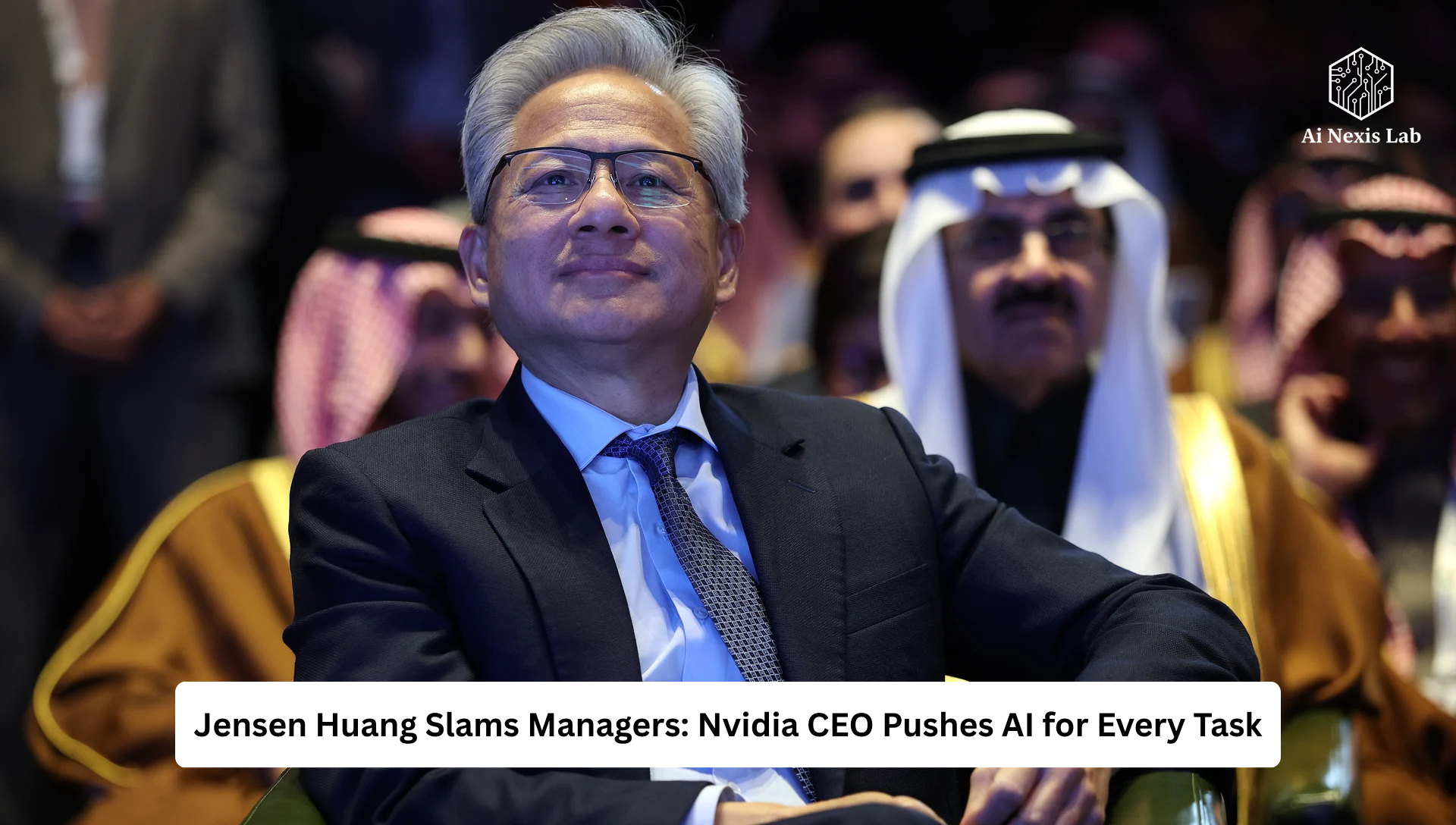
In a fascinating internal all-hands meeting held at Nvidia, CEO Jensen Huang did not mince words. In response to reports that some managers are telling their teams to return to AI use, he said: “Are you insane?” Huang insisted that every conceivable task at Nvidia – from coding to product development – should be powered by AI. And, importantly, he assured employees that adopting AI doesn’t mean job cuts – it means growth, opportunity, and more work for those willing to grow.
This bold move comes at a time when the AI wave is redefining workplaces globally. But it also raises serious questions: Will AI really enhance work – or will it take more control than we expect?
In this article, we’ll unpack what Huang said, why it matters, the benefits and risks, and what it could mean for workers everywhere.
What happened: Huang’s message to Nvidia staff
- AI is not optional – it is mandatory. Huang hit back at managers who told employees to use AI less. He said that any task that can be automated with AI should be automated.
- Use AI until it works – then improve it. He specifically urged engineers to use AI tools like coding assistive cursors, even if they are not perfect. “Use it until it works,” he said — which means keep pushing and refining the tools.
- No layoffs, just expansion. Huang assured staff that this change is not a precursor to job cuts. In fact, Nvidia’s headcount grew from about 29,600 at the end of fiscal 2024 to 36,000 by the end of fiscal 2025 – with room for many more hires.
- The real risk – the AI will be replaced by the person using it. Huang has long maintained the view that “you won’t lose your job to AI, but to the person using AI.” Ignoring AI is – in their opinion – a bigger threat than AI itself.
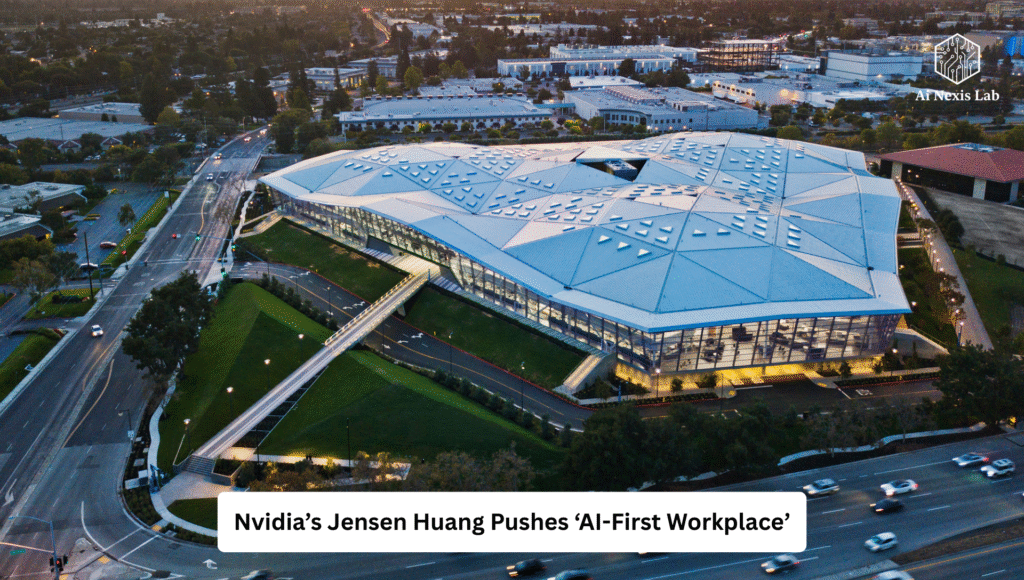
Why this matters: A major shift in tech work culture
This isn’t just about Nvidia. Huang’s directives reflect broader changes in the tech industry:
- Many large companies, including Microsoft and Meta, are said to be evaluating employees based on how effectively they use AI tools.
- This trend signals a shift from seeing AI as a futuristic innovation to treating it as a core, everyday work tool. As Huang said: If it can be automated, it should be.
For employees – especially in the tech sector – this suggests that digital fluency with AI is quickly becoming a key job competency.
Potential Benefits of an “AI-First” Workplace
| Benefits | What it means – and why it matters |
|---|---|
| High efficiency and speed | With AI-powered tools like Cursor, repetitive tasks (e.g., writing boilerplate code) are completed faster, allowing humans to focus on creative and strategic work. |
| Low barrier to innovation | AI tools can speed up prototyping and experimentation, allowing more ideas to be tested in less time. |
| Skill development opportunity | Employees who learn to use AI effectively – and even contribute to improving AI tools – can gain a competitive edge. |
| More job creation (if managed well) | As companies expand (like Nvidia’s hiring spree), new roles may emerge – particularly in AI monitoring, data, testing, and hybrid human-AI workflows. |
| Better scalability for companies | Automating routine tasks allows companies to grow faster with fewer manual hurdles. |
Huang argues that this isn’t just about cutting costs – it’s about building future competitiveness and growth.
What’s the problem? Risks and drawbacks
Despite the optimism, there are also real concerns with this aggressive AI push.
Risks and challenges
1. Overwork and burnout
- Automating routine tasks won’t reduce workload – it can only lead humans to higher-level, more complex tasks. As some critics note, increased efficiency can result in more responsibilities rather than more free time.
2. Disparity between “AI-savvy” and “AI-lagging” workers
- Employees who adapt quickly to AI are likely to succeed. Employees who do not do so due to lack of skills, resistance, or lack of resources may be left behind.
3. Quality and responsibility issues
- If AI-generated code or output is not carefully reviewed, errors and bugs can occur – especially when the AI is “good enough but not perfect”.
4. Job insecurity outside top companies
- While big players like Nvidia can expand, smaller companies or those that are slow to adopt AI may have to cut jobs, especially in roles that rely heavily on routine tasks.
5. Ethical, privacy and structural implications
- More automation raises long-term questions around data governance, transparency, and the future form of work.
What we’ve already seen: Real-world clues
- Industry-wide: At companies like Microsoft and Meta, up to 30% of new code is said to be AI-generated.
- Company-wide: Nvidia’s headcount grew by about 6,400 people in a year (from 29,600 to 36,000) – showing that adopting AI doesn’t always mean layoffs.
- Testimony from Huang: At the 2025 Global Conference, he said, “You will lose your job not because of AI – but because of the person using AI.”
However, not everyone agrees. Critics argue that AI-driven transformations could concentrate power and opportunity in a small, AI-fluent elite.
FAQs — What people are asking
Q1: Will AI really replace human jobs?
A: According to Huang, entire roles won’t disappear – but some parts of jobs can be automated. Those who don’t adapt may be left behind. In their words: The risk is not “AI”, but in the people using AI.
Q2: Does using AI mean more free time?
A: No – maybe the opposite. Automation can speed up tasks, but companies can expect more production. Early indicators suggest that employees are becoming more engaged, not lazier.
Q3: Is this change limited to big tech companies?
A: Big companies with resources like Nvidia, Microsoft, Meta are moving forward. But as the tools become cheaper and more accessible, even smaller companies can follow suit. It can accelerate change across all industries.
Q4: Are layoffs likely at Nvidia or similar companies?
A: At Nvidia, Huang is emphasising expansion — not layoffs — by hiring thousands more employees.
But the broader trend depends on each company’s strategy, business model, and pace of adoption.
Q5: What can I do to stay relevant in this AI-first world?
Adopt relevant AI tools for your work – test them, learn them.
— Focus on the skills that AI struggles with: creativity, strategic thinking, emotional intelligence, domain knowledge.
— Keep updating your education – adapt and grow.
Conclusion — AI: Tool, Accelerator — or New Standard?
Jensen Huang’s clear message – “Use AI for everything” – signals a new reality. For innovators, early adopters, and companies aiming to scale, AI can be an accelerator that turbo-charges creativity, productivity, and growth.
But workers who resist change or lag behind risk being left behind. The change is not just technological; It’s cultural. Jobs won’t disappear – but the definition of value in the workplace is rapidly evolving.
If you’re reading this and wondering how this affects you – perhaps as a developer, designer, manager, or professional in any field – consider this a wake-up call for you.
Want to stay relevant? Start experimenting with AI now. Learn, adapt, and ride the wave – because, Huang thinks, AI is no longer optional.
What do you think? Are you ready to embrace AI in your work? Share your thoughts below or join the conversation.