Death of the App: Why Agentic AI is Becoming the Only Interface You’ll Need in 2026

Table of Contents
Sunday Morning Test (Extended)
Here’s a simple benchmark I use to test whether a technology is transformative or just flashy:
Does it remove friction from real life, or does it just look impressive in a demo?
Let’s rewind.
Sunday Morning, 2023
You want to host a brunch.
You:
- Open the weather app.
- Check your calendar.
- Text a group chat.
- Open a booking app like OpenTable.
- Compare menus.
- Confirm availability.
- Send invites.
- Set reminders.
You are manually orchestrating five disconnected systems.
You are middleware.
We call this productivity.
But let’s be honest – it was cognitive overhead disguised as control.
Sunday Morning, 2026
You say:
“Find a quiet brunch spot for Sarah and Mike next Sunday. Outdoor seating if the weather is nice. Send out invitations.”
You don’t open anything.
Behind the scenes, your agent:
- Checks calendars.
- Pulls Sarah’s gluten intolerance from an old email thread.
- Reviews 10-day forecasts.
- Scans availability in booking systems.
- Confirms table fit.
- Sends calendar invites.
- Sets reminders.
- Adds reservations to your travel timeline.
No interface.
No toggling.
No context switching.
Gets the job done before your coffee gets cold.
It’s not a smarter chatbot.
It’s an agency.
1. What Agentic AI Really Is (and What It Isn’t)
Let’s be specific.
Reactive LLMs (2023–2024 era)
- Waiting for input.
- Predict next tokens.
- Provide output.
- Stop.
It is a linguistic engine.
Dominant? Yes.
Autonomous? No.
Agentic AI (2026 reality)
Agents have four main capabilities:
- Planning
- Tool use
- Memory
- Self-reflection
These are often implemented through architectures such as ReAct (Reason + action) and iterative feedback loops.
Instead of:
“Here’s how you bake a cake.”
It becomes:
- Orders materials.
- Checks pantry inventory.
- Preheats oven.
- Adjusts the recipe for altitude.
- Sets the timer.
- Alerts you only when intervention is needed.
It doesn’t respond.
It’s implementing.
That distinction is important.
2. SaaS → “Service as a result”
For 20 years, we paid for SaaS.
Software as a service.
In 2026, the winning model is:
Service as a result.
Nobody wants:
- Ride-hailing interfaces.
- Travel comparison dashboard.
- Scheduling UI.
They want:
- Ride.
- Booked flight.
- Confirmed meeting.
Apps optimized for:
- Engagement time
- Ad impressions
- In-app cross-sell
Agents optimized for:
- Result speed
- Task completion
- Reduced friction
It is a fundamental economic threat to the app ecosystem.

3. Great App Cannibalization
Let’s not sugarcoat this.
Most utility applications are sensitive.
High-Risk Categories:
- Travel Booking
- Food Delivery
- Calendar Tools
- Note Apps
- Task Managers
- Budget Trackers
- Fitness Logging Apps
If your core value is:
“We provide structured access to information”
You are replaceable.
Because agents can now:
- Query the API directly.
- Collect on platforms.
- Eliminate interface loyalty.
Applications are becoming data pipes, not destinations.
If your business relies on eyeballs inside your app, your pit is shrinking.
Fast.
4. The Architecture of Autonomy: How Agents Avoid Chaos
Skeptics Ask:
“Won’t This Just Make Costly Mistakes?”
Good Question.
Here’s How These Modern Agents Reduce Risk.
Iterative Loop
- Plan
- Execute
- Evaluate
- Improve
- Repeat
Example:
Goal: Book a flight.
- Agent searches flights.
- Gives 4-hour layover notice.
- Cross-checks the selection: “Maximum layover 2 hours.”
- Rejects.
- Searches again.
- Confirms baggage fees.
- Compares travel times.
- Validates against calendar.
Only presents options after internal validation.
This “self-criticism loop” has significantly reduced implementation errors compared to the single-shot prompts of early 2024.
Not perfect.
But dramatically improved.
5. Human-In-The-Loop: The Smart Way to Deploy
If you hand over full financial authority to your agent on day one, you are being reckless.
Use controlled thresholds.
Example:
- Agents can draft emails.
- Agent can do research.
- Agent can compile reports.
- The agent cannot send or purchase without confirmation.
This staged autonomy creates trust.
Call it the principle of least agency.
Earned autonomy defeats blind delegation.
6. Professional Agents: Your Digital Twin
Now let’s talk about work.
The average knowledge worker in the US in 2026 spends:
- ~35% of their time on coordination.
- ~25% on information retrieval.
- ~20% on communication formatting.
- Less than 20% on actual strategic thinking.
That’s absurd.
Enter professional agents.
2026 Sales Agent can:
- Monitor funding announcements.
- Scan 10-K Filings.
- Analyze Hiring Trends.
- Find Product Launches.
- Draft Personalized Outreach.
- Adjust the Tone to Match Your Writing Style.
- Trigger Follow-ups Based on Prospect Behavior.
You’re “Not Using CRM.”
The Agent Becomes the CRM Layer.
It’s Persistent, Contextual, and Adaptive.
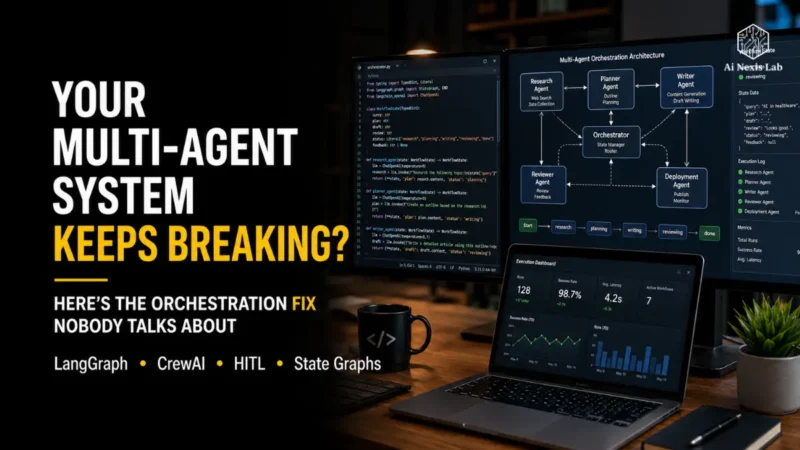
7. Multi-Agent Systems (MAS): Virtual Boardroom
Single agents are powerful.
But the real leap is orchestration.
Imagine this stack:
- Research Agent
- Data Validation Agent
- Analyst Agent
- Writer Agent
- Supervisor Agent
They discuss internally.
The analyst flags inconsistencies.
The researcher finds better sources.
The supervisor resolves conflicts.
This structured “AI disagreement” reduces blind spots.
It simulates a red-team culture without the office politics.
Multi-agent systems are now being used in:
- Financial analysis
- Legal research
- Market forecasting
- Operations management
It’s not a brain.
It’s a coordinated swarm.
8. Privacy Conflict: Who Controls the Context?
Here’s an uncomfortable truth:
For an agent to work well, it needs context.
Calendar.
Email.
Spending habits.
Health data.
Personal preferences.
In 2026, the battlefield is a reference to ownership.
Two dominant philosophies:
On-Device Agency
- Data never leaves the hardware.
- Slow updates.
- High privacy ceiling.
Cloud Agency
- Collective Learning.
- Fast improvement cycles.
- Broad intelligence surface.
Neither is risk-free.
If someone compromises your agent, they don’t steal passwords.
They steal:
- Behavioral patterns.
- Spending authority.
- Conversational style.
- Social graph access.
That’s a different category of breach.
Security models now include:
- Tokenized spending limits.
- Time-bound permissions.
- Context sandboxing.
- Zero-retention enterprise policies.
If your organization doesn’t have an AI governance policy in place by 2026, you’re exposed.
9. Shadow Agency: The Hidden Danger
Employees are already deploying unauthorized agents.
They:
- Connect them to company email.
- Upload internal documents.
- Automated reporting.
This creates a “shadow agency.”
The risk isn’t malicious use.
It’s memory persistence.
If confidential M&A details get embedded in the training loop of an external AI, you’ve just created legal exposure.
Enterprise-grade agents should:
- Offer a zero-retention guarantee.
- Provide audit trails.
- Enable revocable memory layers.
Otherwise, you’re gambling.
10. Hardware Evolution: Beyond Rectangle
If your agent:
- Looks through a camera.
- Hears through spatial audio.
- Responds contextually.
In 2026:
- The pace of adoption of smart glasses is accelerating.
- AI pins are resurfacing.
- Audible devices are embedding contextual cues.
Smartphone adoption has slowed.
Because if the interaction becomes conversational and ambient, the screen becomes secondary.
When your agent:
- Can flag allergens in grocery stores.
- Can translate speech live.
- Can suggest conversational points in the middle of a meeting.
UI becomes spatial.
Not screen-bound.
11. Middle Manager Compression
This makes people uncomfortable.
Agent systems are exceptionally good at:
- Monitoring KPIs.
- Coordinating deliverables.
- Tracking deadlines.
- Sending reminders.
- Ensuring compliance.
Those were classic middle-management tasks.
In 2026, the role changed from:
“Managing people’s time”
to:
“Defining intent and overseeing a swarm of agents.”
If you can articulate clear objectives, you scale.
If you can’t, agents will quickly expose it.
This is not about the hysteria of losing a job.
It’s about skill migration.
Execution monitoring is becoming automated.
Strategic clarity is becoming a premium.
12. Natural Language Programming: Coding Without Coding
You no longer need Python for most automation.
You define the logic in plain English:
“If the client hasn’t responded in 3 days and hasn’t opened the last email, follow up via LinkedIn instead of email.”
The agent translates it as:
- API calls.
- Conditional logic.
- Scheduling triggers.
It writes its own scripts and tests them.
You monitor.
That’s natural language programming.
It’s not magic.
It’s structured abstraction.
Frequently Asked Questions
How is an AI agent different from a chatbot?
A chatbot communicates. It responds when asked and shuts down when the conversation is over.
The agent continues. It plans multi-step actions, implements them through tools, verifies results, and adjusts strategies when needed. It doesn’t just answer questions – it completes tasks.
The difference is autonomy and persistence. One talks. The other does the work.
Will agents replace all apps?
No. Experience-based applications (games, entertainment, social media) still have strong gravity because people enjoy immersive interaction.
But utility applications are at risk.
If the primary function of an application is structured information access or transactional execution, it can be abstracted behind an agent layer.
Most applications won’t disappear. Those will become backend services.
That’s a big economic shift.
Are agents protected from financial information?
More secure than early 2024 systems – but not perfect.
Modern architectures use:
1) Tokenized permissions.
2) Spending limits.
3) Real-time anomaly detection.
4) Human confirmation thresholds.
The most secure implementation is layered:
Agent → Token → Bank API → Limit Implementation.
Never grant unrestricted authority. That is carelessness.
Do I need to learn to code?
Not for most use cases.
If you can:
1) Define the outcomes clearly.
2) Break down goals into logic.
3) Clarify the conditions.
4) You can organize agents.
But don’t confuse ease of use with strategic ability. Poorly defined goals produce poorly configured automation.
Clarity is the new technical skill.
What happens when agents disagree?
Structured conflict resolution is built in.
A supervisor agent can:
1) Evaluate logic chains.
2) Weigh confidence scores.
3) Request human mediation.
In enterprise systems, this mimics the red-team dynamic.
Disagreement is not failure.
It is error correction.
Is this propaganda, or is it sustainable?
The hype cycle is:
Flashy.
Customer-driven.
Interface-centric.
This transformation is infrastructure-level.
When the integration, recovery, and implementation layers are automated, you never go back.
Just like we never went back to dial-up after broadband.
This is architectural, not cosmetic.
Final Verdict: Where Is This Really Going
Sentence:
“There’s an app for that.”
It’s getting very old.
The new reality is:
“My agent handles it.”
But here’s the uncomfortable truth:
Most people won’t build these systems.
They will use it passively.
Leverage will go to:
- Those who understand orchestration.
- Those who clearly define the objective.
- Those who effectively monitor autonomous systems.
You may be:
- A passive user managed by an agent.
Or
- The architect who defines its objectives.
The interface is disappearing.
The question is whether you disappear with it – or what design replaces it.
If you’re serious about moving from prompting to orchestrating, that’s the skill gap that matters in 2026.
Everything else is just clicking quickly in a world that no longer requires clicks.