
This isn’t your parents’ real estate market: The rent vs buy reality of 2026
Rent vs Buy insights for the 2026 housing market. Get real data on rates, costs, equity, and affordability to decide what works best.
We are all trapped in the same belief: “It is always better to buy than to rent.” This was probably true when mortgage rates were below 3% in some parts of the country. But those days are gone.
By early 2026, the U.S. housing market is no longer screaming “seller’s market,” nor is it collapsing – it is finally balancing out. Inventory is rising, rates are still high, and real affordability is still a struggle for most people. This is not a short-term mistake – it is a new paradigm.
I reviewed the latest data from Realtor, Zillow, ICE Mortgage Tech, LendingTree, NAR, and several market trackers. Here’s the truth: Whether it’s “better” to rent or buy in 2026 depends entirely on your situation – not on any general rule.
Table of Contents
1. Mortgage rates have stabilized – but expect to stick at 6%+
Let’s tear off the band-aid first:
Ten-year trends? Gone.
3% mortgages in the age of the pandemic? History.
In February 2026, the average 30-year fixed mortgage rate was about 6.2% – down from the nearly 7% rate of 2023-2024, but still materially higher than what many buyers remember.
To break it down:
- A $400,000 home at 6.2% means a big monthly payment.
- In many markets, even typical property taxes and insurance put the buyer north of typical rental costs.
- Some homebuilders are offering mortgage rate buydowns to sweeten the deal – but that’s strategic, not universal.
What this means: Rates have cooled since the panic years, but they’re still high enough that the math of buying versus renting changes dramatically depending on how long you live and how much you can afford upfront.
2. Inventories are improving – but still below pre-pandemic standards
One of the biggest structural changes in 2026 is that supply is finally loosening:
- Inventories nationwide are up about 10% year-over-year.
- Homes are staying on the market a little longer than they did at the height of the post-pandemic crisis – giving buyers a slight advantage.
- Listings are increasing, but total supply in most regions is still below what it was before 2020.
Translation: You can still compete in the hottest markets, but in many places you are no longer fighting 10+ offers as a baseline.
That’s huge – that’s what makes 2026 a “great rebalancing” rather than the chaos of previous years.
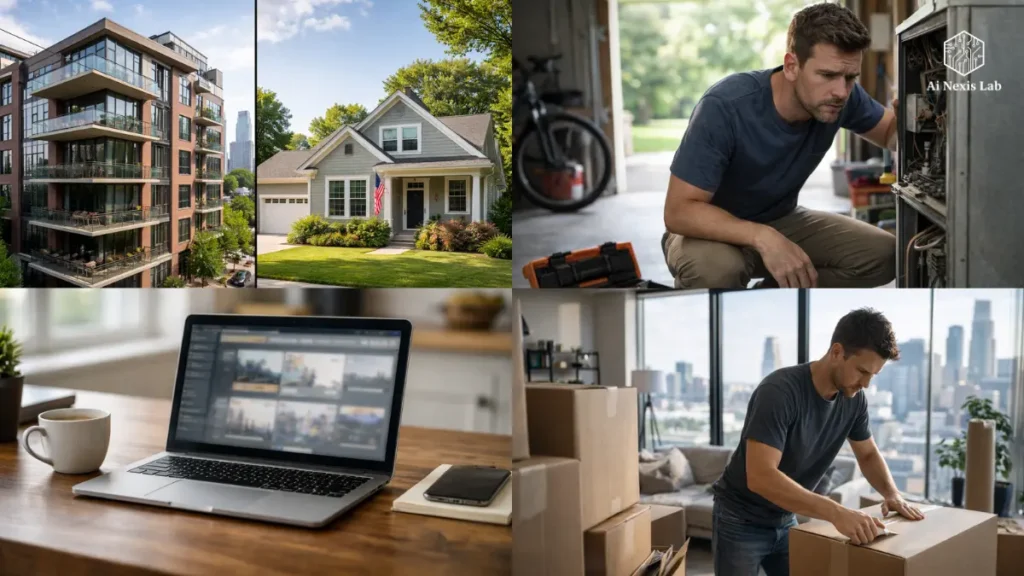
3. Home prices are almost flat – rising slowly
Forget the double-digit annual price increases of the pandemic years. According to forecasts from Zillow and Redfin, the national median home price is only seeing modest increases in 2026, often less than 2% year-over-year.
For reference:
- Zillow predicts an average national growth of ~1-2%.
- Some regions (Midwest, parts of the Northeast) are remaining stable or seeing slow but positive growth.
- Others (Sun Belt and parts of the West) already have flat to slightly negative price pressures due to supply.
Bottom line: This isn’t a crash, but it’s not rapid growth either. It’s a common market, which significantly changes the math of buying versus renting.
4. Renting is still more expensive than owning in many major metro areas
This isn’t just my opinion – multiple studies show it.
- A LendingTree analysis found that in 2026, renting is cheaper than owning in every major U.S. metro based on monthly costs.
- Average ownership costs (mortgage + taxes + insurance) in large cities are often 30-40% higher than rent.
That doesn’t mean buying is always bad – it just means that the short-term cost math favors renting today.
5. The break-even horizon is longer than it used to be
Classic real-estate wisdom used to hold that if you planned to live in a home for 3-5 years, buying would almost always win out.
In 2026, that break-even point has moved to the right place:
- Because closing costs, insurance, and taxes remain high,
- and because price increases are normal,
- you are now often looking at 5-8 years before buying financially than renting.
In some cases, especially in high-cost metropolitan areas, renters save even more money after accounting for the equity they gain as buyers.
6. Nobody talks about opportunity costs
Most rent-vs-buy articles stop at comparing monthly payments. That’s lazy math.
The real question in 2026 is: What could your down payment do instead?
Let’s say you’re putting $80,000 down on a $400,000 house. That money is now locked up in a property that is gaining perhaps 1-3% annual appreciation in a flat market. Meanwhile, diversified index funds have historically returned close to 7-10% annually over long periods of time. High-yield savings and CDs are also paying around 4% as of early 2026.
That difference is important.
If you rent and invest that $80,000 instead – plus the monthly savings if rent is affordable – you can build liquidity and compound growth without tying yourself to one asset in one zip code.
Now, this cuts both ways. Leverage increases profits in real estate. A 3% price increase on a $400,000 home is $12,000 – not bad. But leverage also increases stability. If prices remain stable for three years, your opportunity cost quietly grows in the background.
Most buyers ignore this because homeownership feels emotionally safer than investing.
Emotions do not create wealth. Allocation strategies do.
7. Repairs and maintenance still hit hard
One of the biggest traps first-time buyers fall into is underestimating non-mortgage costs.
On average:
- Expect to spend about 1% of the home’s value annually on maintenance.
- Material and labor costs remain high – sometimes rising faster than general inflation.
That’s no small number – that’s real cash out the door that tenants simply aren’t dealing with.
8. Regional differences are more important than ever
This is no longer a uniform national market.
Buyers may be ahead in:
- Affordable Midwest and Rust Belt markets
- Places where wages keep pace with costs
- Small towns and secondary cities
Rentors may be ahead in:
- Coastal supercities
- Hot Sun Belt metros with excess supply
- Urban cores where multifamily inventory has grown rapidly
There is no longer a one-size-fits-all answer – it is truly local.
9. Lifestyle and convenience matter more
Reality: Owning a home feels like another job.
If you like:
- Fixing things
- Long-term basics
- Predicting living expenses
Ownership can work.
If you value:
- Flexibility
- Quick relocation
- Investing elsewhere
- Zero maintenance
Rent often looks good on paper and in real life.
2026 Rent vs Buy Complete Split
If you’re keeping an eye on Zillow or that renewal notice, here’s a hard, real truth you need to know:
When Buying Makes Sense
Buy if:
- You plan to stay put for at least 6-8 years.
- You can afford the monthly payment without exceeding ~30-35% of your income.
- You are in a market where prices are flat or rising slightly.
- You are buying a property with value drivers (location, redevelopment potential, rental income if cash flow).
- You get a solid rate buydown or negotiate effectively.
In such cases, ownership can create equity that ultimately outperforms the rental option – especially over the long term.
When renting makes sense
Rent if:
- You may move in the next 1-4 years.
- You want maximum flexibility without the friction of sales.
- The rental cost is reduced and you can invest the difference.
- You are in a city where rent << cost of ownership.
In 2026, renting isn’t a waste of money – it’s often a rational financial decision.
Frequently Asked Questions
Q: Is 2026 a buyer’s market or a seller’s?
A: It’s a hybrid. Inventory is rising and prices are flattening, but many regions are still picking up sellers due to limited supply relative to demand.
Q: Will mortgage rates drop to 5% this year?
A: Most forecasts expect mortgage rates to stabilize near 6%, perhaps falling slightly – but a dramatic drop to 5% is not widely predicted by major analysts.
Q: Should I wait until the price drops before buying?
A: Price increases are common but not damaging. Waiting for a big decline could mean you could miss your best chance if affordability improves without a recession.
Q: What is the biggest mistake home buyers make today?
A: Underestimating total costs – taxes, insurance, maintenance, and the opportunity cost of building capital.
Q: Does renting increase wealth?
A: Not directly – but if you consistently invest the difference between rental and ownership costs in markets or growing assets, you can come out ahead.
Q: How does inflation affect renting versus buying?
A: Rents still tend to increase over time (recent data shows that rental prices increase by ~3% annually), which means that rents could become relatively more expensive in a decade.
Q: What if Gen Z and Millennials will shop again?
A: Homeownership among young buyers is increasing but is still well below pre-pandemic levels due to affordability challenges.
The Bottom Line
2026 is not a single answer. It’s a decision based on math, life plans, and markets.
- If you plan to stay for the long term, with a stable income and strong savings, then buying could work.
- If you need flexibility, low initial costs, and short- to medium-term plans, renting is often smarter.
Stop looking for a clickbait headline that tells you what to do – calculate it based on your actual statistics.