Beyond the Blank Screen: Why Your Professional Emails Need an AI Upgrade in 2026
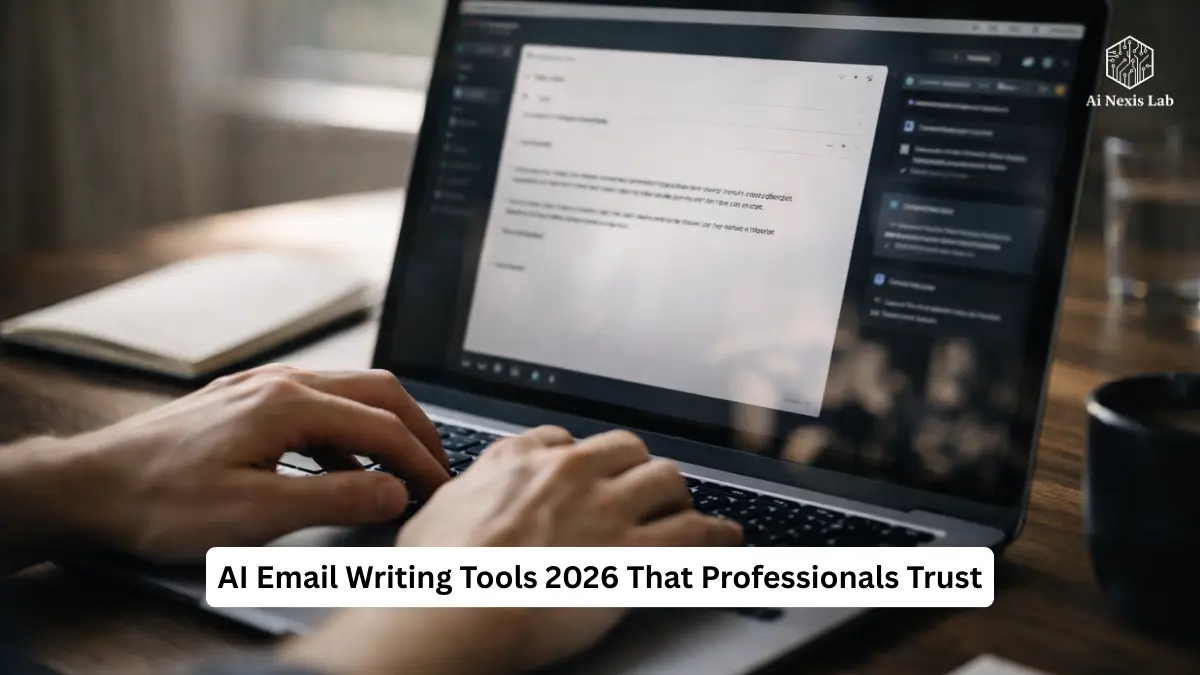
Discover the top AI email tools for 2026. Compare features, use cases, pricing, and effectiveness for professional writing workflows and productivity.
Do you know how inferiority complex creeps into your mind when you’re staring at a blinking cursor, trying to write an email that shouldn’t be difficult?
You are not writing a novel. You are asking for late payment. Or are you moving forward on a proposal. Or you are explaining without hesitation, feeling incompetent. Or saying “no” without feeling like a jerk.
And yet, 20 minutes later, you’re still deciding between:
- “Best,”
- “Thank you,”
- “Best wishes,”
- or the nuclear option: no sign-off.
This was normal. In 2016, no one cared. In 2020, people tolerated it. In 2026, this is losing your credibility every day.
Because email is no longer just a conversation.
It’s a signal.
A signal of clarity.
A signal of competence.
A sign of authority.
A sign of respect for the reader’s time.
And here’s the uncomfortable truth: most professionals still write emails like they’re typing in a group chat. Rambling. Soft. Indirect. Over-explained. Emotionally cautious. Structurally weak.
It’s not a writing problem.
It’s a thinking problem.
And this is where AI writing tools stop being “nice to have” and start becoming a professional advantage.
Not because they write for you.
But because they force you to think, compose, and communicate with purpose.
In 2026, two tools dominate the space for very different reasons:
People lump them together as “AI writing tools.”
That’s wrong.
They solve two completely different problems.
One revises your thinking after you write.
The second helps you think before you write.
And if you understand how to use both properly, your email communication becomes faster, sharper, and more persuasive than 95% of the professionals you deal with.
The real problem isn’t grammar. It’s cognitive friction.
Most people believe they struggle with emails because they are “not good writers.”
That’s not the case.
They struggle because:
- They don’t know how to start.
- They don’t know how to structure the message.
- They overthink.
- They ramble.
- They bury the real question.
- They rewrite the same sentence five times.
You are not fighting against English. You are battling decision fatigue and unclear intentions.
And that’s where these tools shine – at different stages of the same process.
The Editor vs. The Architect
If you don’t understand this difference, you’ll buy the wrong tool, use it incorrectly, and conclude that “AI isn’t that helpful.”
Grammarly: The Editor
Grammarly’s modern AI (now integrated into a broader superhuman ecosystem) is reactive.
It waits for you to write something – then it helpfully breaks it down.
It catches:
- Vocabulary
- Passive voice
- Weak sentences
- Confusing structure
- Aggressive, uncertain, or slurred reading tone
- Clarity issues you didn’t see
It doesn’t want to write for you. He wants to sharpen what you have written.
Think of Grammarly as a relentless companion that says:
“This sentence is a mess. Here’s how to fix it.”
Jasper: The Architect
Jasper is proactive.
It doesn’t wait for you to write. He asks:
- What is this email about?
- What outcome do you want?
- What tone do you need?
- What facts should be included?
Then it creates a first draft for you – structured, coherent, and persuasive.
Think of Jasper as a colleague who says:
“You don’t know how to start? Give me the bullet points. I’ll build the skeleton.”
Why most people abuse AI writing tools
They do one of two things:
- Use Jasper, copy-paste the output, and send it without editing.
- Use Grammarly to “fix” poorly structured emails that were initially poorly thought out.
Both are lazy.
Both lead to common results.
The real power comes from using them together in sequence.

Architect-Editor Workflow (The Pro Move)
How high-leverage professionals actually use these tools.
Step 1 — Jasper for Drafting
You give Jasper the raw truth:
“The client needs to be told that the project is delayed by two weeks due to a bug. They need to be kept quiet. Offer a 5% discount. Maintain trust.”
In 20 seconds, you get a well-organized, diplomatic, clear draft.
Step 2 — Grammarly for refinement
You paste it into Gmail.
Grammarly Flags:
- Passive Phrases
- Phrase Definitions
- Slightly Avoidant Tone
- Areas Where Clarity Could Be Tightened
You accept 5-10 smart suggestions.
Now the email reads as if it were written by someone calm, competent, and in control.
Total time: less than 3 minutes.
The old way: 25 minutes of worry and rewriting.
Real-world use cases (where this really changes your day)
1. Late payment email
This is where most people either push or turn into debt collectors.
With Jasper:
- Create three tone variations: firm, neutral, associative.
With Grammarly:
- Make sure the chosen version is concise, respectful, and clear.
Result: Ask clearly, no emotional weirdness, no over-apology.
2. Cold Outreach That Doesn’t Feel Robotic
Typical cold emails fail because they waste time before they get attention.
Jasper can:
- Use a LinkedIn profile or company description
- Create a personalized outreach with context
Grammarly ensures:
- It doesn’t sound spammy
- The tone is professional, not overly eager
3. Difficult internal communication
Telling your team:
- Deadline moved
- Budget cut
- Expectations raised
Jasper makes it happen.
Grammarly makes sure you don’t sound like a tyrant or a coward.
4. Saying “no” without damaging relationships
This is shockingly difficult for people.
AI handles it beautifully because it removes the emotion from the words and maintains respect.
Pricing vs ROI (No Promotion)
Here’s an honest analysis.
| Tool | Typical Cost | What You’re Paying For |
|---|---|---|
| Grammarly | ~$12–$15/month | Daily editing, tone control, clarity |
| Jasper | ~$59–$69/month | Structured content creation, brand voice, templates |
If you write 20-50 emails a day, Grammarly pays for itself in a week.
If your work involves outreach, proposals, campaigns, or structured communications at scale, Jasper quickly pays for itself.
If you only choose one, you are limiting yourself.
Brand Voice: Making AI sound like you
This is where AI has matured to a great extent.
Jasper allows you to upload examples of your writing and train it to mimic your tone, phrasing, and rhythm.
Enforces grammatical consistency and marks deviations from that style.
The result: emails that don’t sound like “AI wrote this.”
It sounds like a more intense version of you.
The Hidden Shift in 2026: AI is Reading Your Emails Too
This is the part most people are missing.
Your recipient’s inbox now uses AI to summarize emails into bullet points.
If your real “ask” is buried in paragraph four, their AI summary may miss it.
This means your email needs:
- A clear structure
- Visible questions
- Short paragraphs
- Optional TL;DR sections
You’re not just writing for humans anymore. You are writing for inbox agents.
Most professionals still don’t understand that AI isn’t just changing how you write emails – it’s changing how your emails are evaluated.
Modern inbox assistants now prioritize messages based on clarity, structure, and directness. Long, rambling emails with unclear intent are often left unaddressed, poorly summarized, or ignored altogether.
In contrast, emails with a clear purpose, visible requests, and a tight structure surface, are marked as important, and are read sooner.
This means that your writing style directly affects whether your message grabs attention or gets buried.
You are no longer competing with other people’s emails. You are competing with how well their emails perform in AI-powered inbox filters.
Common AI Failures (and How to Avoid Them)
Misleading Details
Always verify dates, numbers, and specifications.
Vocal Flow
AI can start professionally and end casually. Proofread the entire message.
Over-editing
Don’t accept every grammar suggestion. Maintain some human rhythm.
What this really changes: Your mental load
The biggest wins aren’t better sentences.
It’s removing mental friction:
- Beginning
- Structure
- Rewriting
- Overthinking tone
You think about what you want to say.
AI takes care of how it’s said.
It’s a huge cognitive upgrade.
Frequently Asked Questions (AI email tools)
Q: Is AI replacing assistants or communication experts?
A: No. AI handles drafts, structure, and clarity – but strategic decision-making is still human. Machines can give you stuff, but you decide when and how it lands.
Q: Is my data being used to train AI models?
A: Enterprise or business tiers typically offer stronger data privacy and training-free guarantees. Always check current conditions – this landscape changes quickly.
Q: Can these tools handle non-native English?
A: Yes. Superhuman/Superhuman AI editing shines here – it explains corrections and teaches you patterns over time.
Q: Will clients think I’m lazy?
A: No. They will think you are clear, concise, and respectful of their time.
Q: Can I use these tools on mobile?
A: Superhuman offers mobile workflow and keyboard extensions; Jasper has responsive web tools and limited mobile capabilities. Integrations are constantly evolving.
Q: Can this replace a human assistant?
A: For drafting and editing? Mostly yes.
For decision-making and reference? No.
Q: Is my data safe?
A: Business tiers typically offer stronger privacy controls. Always verify settings.
Q: Can this work on mobile?
A: Yes. Grammarly’s mobile keyboard is robust. Jasper works through web access.
Most reviews won’t tell you the ultimate truth
These tools don’t make you a better writer.
They make you a clearer thinker.
Because when you stop wasting energy on words, you focus on purpose.
And in business, purpose is everything.
Final Verdict
If you send emails every day and care about how you are perceived, Grammarly is a non-negotiable.
If you struggle with blank screens, proposals, outreach, or structured communication, Jasper is transformative.
If you really want an advantage?
Use Jasper to build.
Use Grammarly to sharpen.
And stop sending emails that make you sound like you’re thinking out loud rather than communicating with purpose.
This is the difference between typing… and leading.