Architecture of Influence: How Dina Powell McCormick’s Meta Appointment Redefins Tech Power in 2026
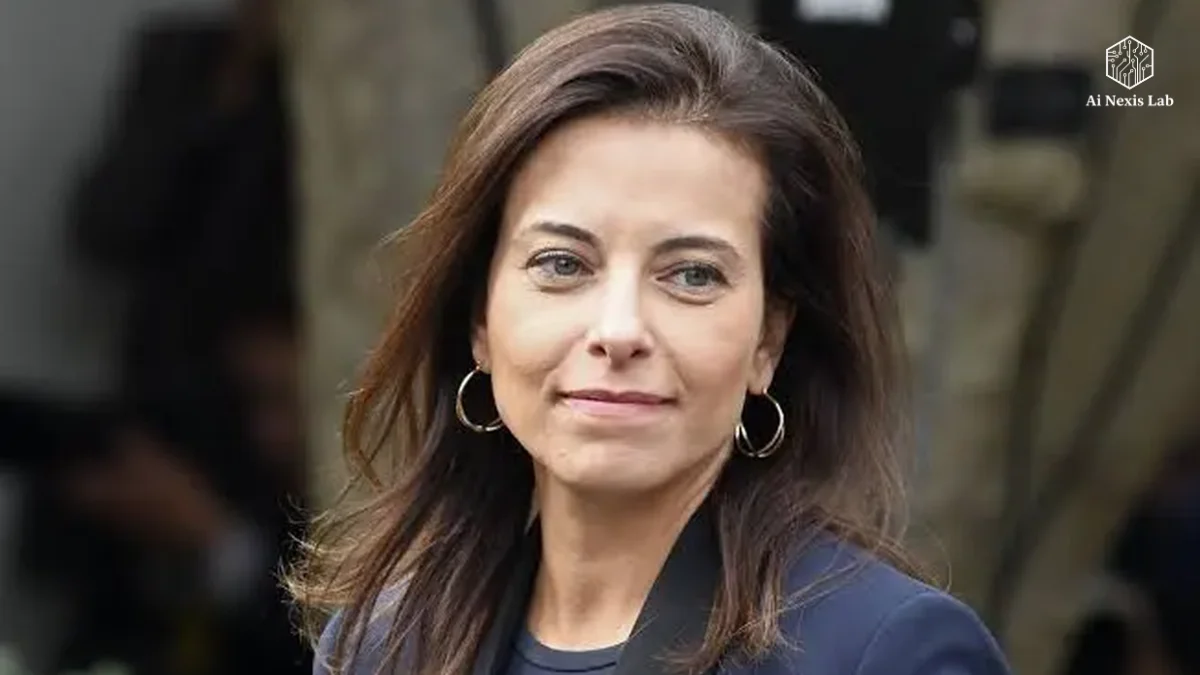
On January 12, 2026, Meta, the parent company of Facebook, Instagram, WhatsApp, and Threads, announced one of the most significant executive moves in recent Silicon Valley history: Dina Powell McCormick has been named president and vice chairman of the company.
This is not just another corporate shakeup. It’s a signal – and a bold one – that Meta sees its future not primarily in consumer products or social features, but in global influence, AI infrastructure, and political navigation. Whether you think this is a smart recalibration or a dangerous mix of corporate and political power, the consequences are vast.
Let’s look at what’s happening, why it matters broadly and on a personal level, and what this really says about the tech-politics axis in the mid-2020s.
1. Who is Dina Powell McCormick – really?
Dina Powell McCormick is not a traditional tech executive.
Career Snapshot
- She spent 16 years in senior leadership at Goldman Sachs – including leading its management committee and global sovereign banking efforts.
- She served as Deputy National Security Advisor for Strategy in two U.S. presidential administrations – under George W. Bush and Donald Trump.
- She sat on Meta’s board of directors in 2025 before resigning in December.
- Most recently, she was Vice Chair, President and Head of Global Client Services at BDT & MSD Partners, a merchant and advisory bank.
- She is married to U.S. Senator David McCormick, a former Commerce and Treasury official — a proximity to political power that complicates and strengthens her role.
That resume is not built into the product roadmap or software release. It is built in finance, diplomacy, government strategy, and cross-border negotiations.
This background – Wall Street + Washington – is precisely why Meta has tapped her for this role at this moment.
2. This is a strategic appointment, not a symbolic title
Meta’s press release and reports from Reuters, AP, and others make something very clear: Dina Powell McCormick will be deeply involved in Meta’s strategic expansion and infrastructure investments.
Let’s move beyond the buzzwords:
Actual Responsibilities
- Guide Meta’s overall corporate strategy and implementation – not just advising, but helping to make decisions.
- Working on AI and infrastructure investments – particularly data centers, energy systems, and global connectivity builds that are key to Meta’s future.
- Building strategic partnerships with governments, sovereign wealth funds and large institutional investors – relationships that Powell McCormick has spent decades building.
- Helping Meta manage multi-billion dollar investments and regulatory navigation where government permits and strategic alignment are critical.
This is not about floral corporate titles. This is about power, access and leverage.
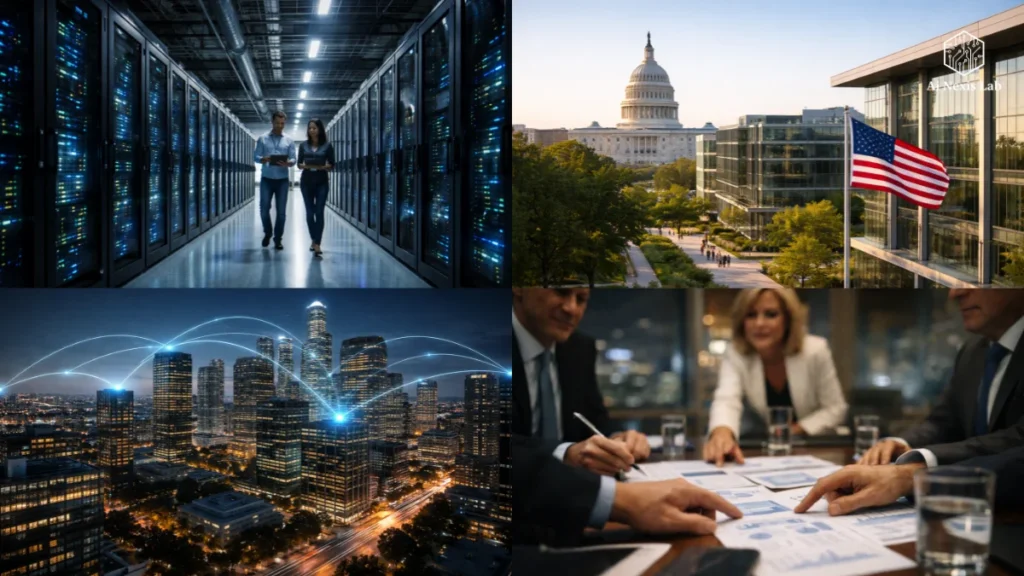
3. Why now? AI and Infrastructure Indispensable
Talking about meta without talking about AI these days is missing the forest for the trees.
AI is a strategic core of the company
Meta CEO Mark Zuckerberg has publicly described frontier AI and infrastructure buildout – including large data centers and energy systems – as priorities that will define the next decade.
Under initiatives like Meta Compute, the company is:
- Investing heavily in AI systems and data center capacity.
- Committed to systems that rival the cloud infrastructure of AWS, Google Cloud, and Azure – although Meta doesn’t sell cloud services in the same way.
- Building infrastructure that requires collaboration with local and national governments for land, energy access, policy alignment, and regulatory approval.
This is where Powell McCormick’s profile is important: she is not a technologist – she’s is a navigator of political and financial complexity, which is what Meta needs now.
Meta’s Recent Stock and Strategic Pressures
Meta’s large capital expenditures have raised investor skepticism in recent quarters. Bloomberg, Wall Street Journal – Recent reporting and market reactions show caution about short-term returns on AI spending.
This appointment signals Meta’s acknowledgement that winning isn’t just about chips and data centers — it’s about policy and capital partnerships.
4. The Political Dimension: A Clear Approach to Washington
This is the part that gets complicated and controversial.
Meta’s Political Alignment
Dina Powell McCormick’s political resume and connections are a big part of why this recruitment is garnering headlines:
- She served under President Donald Trump – a polarizing figure in U.S. politics.
- Trump publicly praised the appointment on social media, calling him “an excellent choice.”
- Meta has recently hired or elevated other individuals with ties to conservative or Republican political circles.
This is important because Meta is no longer just a tech platform; It is a global political actor by virtue of its size, influence, and scope.
For context: Meta has faced intense scrutiny from regulators on both sides of the political spectrum:
- Progressives have criticized Meta for its content moderation policies and alleged influence over public debate.
- Conservatives have accused anti-conservative bias and censorship.
Hiring someone with strong ties to Republican circles can be seen as:
- Protection against political risk.
- An attempt to reach out to lawmakers.
- Rebalancing Meta’s image as politically fair or neutral (even if such neutrality is mostly perception management).
This will be seen from a political perspective – there is no doubt about it – intentionally or not.
5. Meta’s leadership vacuum after Sheryl Sandberg
Meta’s longtime COO and one of its most visible executives, Sheryl Sandberg, left in 2022. Since then, the role of second-in-command has remained somewhat undefined.
Meta has not appointed a clear successor who:
- Commands internal authority.
- Bridging the external political and financial ecosystem.
- Represents the company in high-stakes negotiations with governments or investors.
Dina Powell McCormick embodies that broad “everything” mandate:
She’s not just a strategist – she’s a broker of influence, capital, and access.
In that sense, his role is more profound than the COO position; It is effectively a major strategy + global affairs + political bridge.
6. What this means for the AI era – real consequences
Let’s be clear: this appointment will not magically solve every challenge facing Meta. But it reshapes the company’s operating logic.
A. AI Development and Deployment
Expectations:
- Deeper partnerships with governments on AI safety, regulation, and tech standards.
- More programs aligned with regional compliance regimes – especially where AI regulation is tightening (EU, U.S., India, China).
- Lobbying and policy pressure that influences how AI laws are written and implemented.
This isn’t speculation – companies with huge AI commitments are already investing heavily in policy teams and advocacy. Meta is formalizing that strategy at a high level.
B. Data Center and Energy Projects
Meta’s AI models require massive computation – and the power to run them.
This means:
- Negotiating with states and countries for land, energy access, and permits.
- Strategic planning with governments on power grids, possibly including nuclear or renewables (as reported by the WSJ).
- Managing geopolitical challenges such as supply chain disruptions.
This is not a “product leadership” role. It is a global technological infrastructure leadership role with geopolitical stakes.
C. Content Moderation and Political Signaling
This is where the controversy begins.
With a person connected to Republican power circles:
- Expect sharp scrutiny of content policies.
- Meta is likely to double down on “neutrality” positions, even if implementation still requires subtle moderation across languages and regions.
- Opposing political groups may see Meta more as a political force than a platform.
This is already happening in public debate. Some progressive critics would see this as a right-wing tilt; Others will see it as necessary realpolitik.
7. The broader corporate-government fusion debate
Let’s be honest here:
This move is a corporate-political fusion – that’s the point
Meta’s ambitions aren’t just technological; they’re national and global.
If you are building infrastructure that:
- Competes with big cloud players,
- Intersects with national data and security laws,
- Affects billions of users worldwide…
Then corporate strategy intersects with state power.
This appointment formalizes what has already been revealed: Tech platforms now act like geopolitical actors.
You could argue that this is:
- Practical reality: a necessary evolution in a regulated world.
- Concern: Corporate power is too closely aligned with government interests.
- Neutral: Meta is hedging its risk.
There is merit in all three opinions.
The only thing you can’t claim is that this is a purely technological move – it’s not.
8. Real-world impact on users – that’s important
On a surface level, your Instagram feed or WhatsApp messages can’t change overnight.
But here’s what will change – subtly and cumulatively:
A. AI Everywhere
Meta’s AI integrations across its ecosystem – from personal assistants to predictive content delivery – could become more aggressive and widespread.
Expect:
- Deep AI features across all platforms, not just one main chatbot.
- Enterprise and consumer features connected to core AI models.
- Policy frameworks that attempt to balance personalization with security – with pressure from state actors in multiple countries.
B. Content Policy Signals
It will be telling to see how Meta calibrates political speech moderation, misinformation enforcement, and civic engagement policies.
Powell McCormick’s presence doesn’t guarantee a specific political outcome – content implementation is still largely algorithmic + team decisions – but policy communications could change to appeal to broader political constituencies.
C. Data Governance and National Security
Governments and national regulators will increasingly be involved in the infrastructure work of Meta.
This could mean new privacy frameworks, data localization agreements, and collaboration on national security standards – especially in regions wary of foreign tech influence.
9. Risks and Criticisms: Let’s Be Honest
A balanced assessment means acknowledging the disadvantages.
1. Political backlash
This recruitment could:
- Instill distrust among progressive users.
- Intensify political narratives about the political influence of meta.
- Invite pressure from lawmakers who prefer stricter regulation.
Given Meta’s history of public scrutiny, this is no small feat.
2. Ethical Concerns
Powell McCormick’s marriage to a current U.S. Senator raises real questions about potential conflicts of interest – even if none occur in practice. Ethics watchdogs and the press will investigate it.
Not irrelevant – important. This is about public trust.
3. Investor sentiment
Meta is investing in AI infrastructure with a long-term return horizon.
Investors are wary of returns that can take years to realize – and hiring politically prominent executives doesn’t solve key ROI questions.
10. What this means for the tech industry more broadly
Meta’s move tells every major tech company something like this:
The future of tech leadership is no longer just about engineering excellence – it’s about political and financial strategy on a global scale.
Companies like:
- Microsoft
- Amazon
- Apple
- OpenAI
…all operating in the same chessboard.
Meta’s appointment suggests that engineering may be necessary but not sufficient – it requires power infrastructure.
And the people who make it aren’t coders – they’re political and financial strategists.
Conclusion: Balanced Verdict
So, was this the right move?
Yes — strategically: Meta needed executive talent capable of marrying political influence, money, and strategic execution. Powell McCormick fits that description.
But it is not without risk: greater proximity to political power carries reputational challenges and ethical scrutiny. It also signals that Meta sees governance, not products, as the frontier battleground for AI dominance.
In other words: This is a strategic pivot rather than a tactical hire — one that acknowledges the reality that, in 2026, big tech isn’t just about innovation.
It’s about influence.
Frequently Asked Questions (FAQ)
Q: When did Meta appoint Dina Powell McCormick?
A: Meta announced his appointment as President and Vice President on January 12, 2026.
Q: What will she do at Meta?
A: She will guide corporate strategy, execute multi-billion-dollar investments, and help steer partnerships with governments and major institutional investors — especially as Meta expands AI and global infrastructure.
Q: Does she have a tech background?
A: Not in product engineering or software. Their expertise lies in finance, government strategy, and diplomacy – which Meta believes are critical to building AI infrastructure and managing regulatory landscapes.
Q: Is this appointment political?
A: Yes – she served in a Republican administration and her appointment has received public praise from former President Trump. This adds a political dimension to Meta’s leadership.
Q: Does this affect everyday Meta users?
A: Direct manufacturing features will not change overnight. But expect deeper AI integration, evolving content policy interpretations, and more global regulatory engagement, which could indirectly shape the user experience.
Q: What is the risk of conflict of interest?
A: Her marriage to U.S. Senator David McCormick presents potential optics issues; Watchdogs and the media are likely to closely scrutinize any policy overlap.
Q: What does this signal for other tech companies?
A: It shows that political and financial strategy is becoming as important as engineering talent in big tech leadership. Silicon Valley is no longer detached from Washington – it is part of the same power game.