
The Great Thaw: What the Real Mortgage Market Really Looks Like in 2026
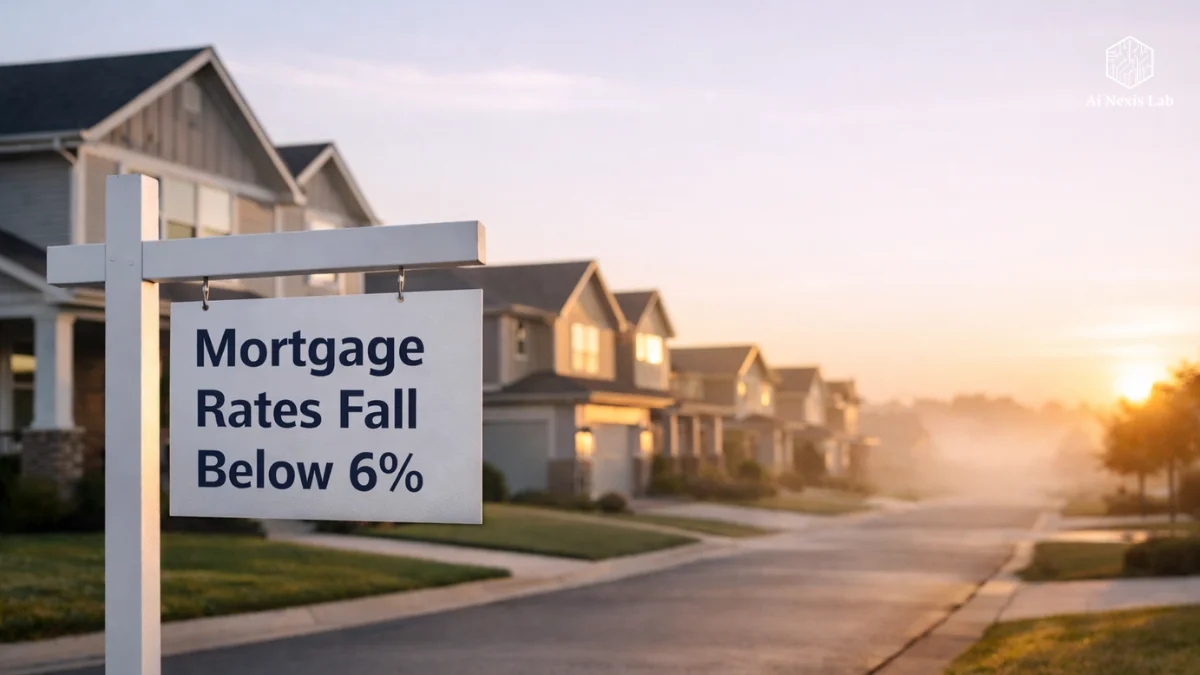
See recent changes in mortgage rates 2026, the drop below 6%, policy implications, refinancing insights, and housing market trends affecting homebuyers and refinancers.
For years, potential homebuyers seemed to have exited the U.S. housing market. Interest rates rose above 7% and stayed there long enough to reshape affordability, buyer psychology, and household financial planning. But as we move into January 2026, we are seeing a meaningful change – and not just a rounding error.
That change is being talked about as mortgage rates are stabilizing below 6%. But here’s what you need to be clear about: The average reported rate isn’t stabilizing below 6% – it keeps going down the pocket depending on the type of loan and the lender.
Let’s cut through the headlines and give you a ground-truth snapshot of what’s really happening and what it means.
Current Mortgage Rate Reality (January 2026)
Data from Freddie Mac’s weekly Primary Mortgage Market Survey (one of the most reliable broad gauges) shows:
- 30-year fixed mortgage: ~6.16% average.
- 15-year fixed mortgage: ~5.46% average.
Various trackers (like Zillow or other daily rate feeds) sometimes report slightly lower retail figures – even around 5.99% on some 30-year offers.
Here’s the plain truth:
- The rates are significantly lower than last year. Seen averaging closer to 6.9%–7% by the end of 2025.
- Rates are not yet consistently below 6% across the board – but some parts of the market and certain borrower profiles are getting offers in the high-5% to low-6%.
- Forecasts estimate a gradual decline until 2026, although the flash crash will not return until 3-4%.
So if you’re seeing headlines screaming “mortgage rates under 6%,” that’s not wrong – but it’s also not the everyday reality of the average borrower.
Why this change is real – and why it matters
Mortgage rates don’t exist in a vacuum. The main driver of long-term mortgage prices is the yield on the 10-year U.S. Treasury – and it is becoming more stable after a period of volatility. That stability is starting to reduce the long tail of rate volatility that kept mortgages stuck at high levels.
In other words:
- Inflation has eased compared to the 2022-2024 peak.
- Labor markets are cooling but still stable.
- Bond markets are less worrisome than during the worst period of 2023-2025.
Rates don’t come in isolation – they follow economic reality, not willpower. And right now, economic signals point to more modest, structural downward pressure, rather than a resurgence of the ultra-low rates we saw during the pandemic.
No, 2.5-3% rates are not coming back in any realistic scenario in the next 3-5 years.

Policy Factor: Why Government Action Matters in 2026
One reason mortgage headlines are suddenly changing in early 2026 isn’t just a drop in inflation – it’s policy intervention. Last month, the U.S. Treasury and housing agencies signaled plans to increase purchases of mortgage-backed securities to stabilize borrowing costs. This is important because mortgage rates are not set directly by the Federal Reserve. Their price is determined by bond investors who buy mortgage-backed assets. When government demand for these bonds increases, yields fall – and mortgage rates follow.
This is the same mechanism that pushed rates to record lows during 2020-2021. Now the difference is one of scale. Policymakers are not trying to create a crisis stimulus. They are trying to ease volatility and prevent housing affordability from collapsing under higher rates.
Here’s the reality:
The government can lower support rates.
It cannot bring rates back to 3% in a sustainable way.
If inflation expectations rise again or bond investors demand higher returns, mortgage rates will rise regardless of political promises. That’s why the current moments below 6% should be seen as windows of opportunity, not permanent situations.
This policy-driven influence is also likely to cause rate movements in 2026 to remain volatile from week to week. Anyone waiting for a complete bottom risks missing out on efficient conditions entirely.
What a “good” rate really means in 2026
Forget comparing to the pandemic era. We need a change in expectations.
Here’s the honest frame:
- Today’s “good” traditional 30-year fixed rates are around 6% or a little less – and that’s something only well-qualified borrowers will see without gimmicks, buydown points, or discount strategies.
- For strong credit (740+), clean finances, and excellent documentation, lenders may offer rates slightly lower than the national average – especially if you are a VA or USDA borrower.
- FHA loans can come in at a slightly lower price for qualified buyers, but often with insurance premiums backed in, which means your effective price isn’t always a dramatic difference.
Compare that to history: The 30-year average over the past 50 years is well above current levels – meaning that today’s climate is actually on the historically good side, even if it seems expensive compared to the lows of the pandemic.
The Math of Affordability: What a 1% Rate Cut Really Changes
Most buyers react emotionally to rate headlines without understanding the math of the payment. Let’s put the numbers on the table.
On a $400,000 loan:
- At 7.0%, monthly principal and interest ≈ $2,661
- At 6.0%, monthly ≈$2,398
- Difference: $263/month
- Annual savings: $3,156
- Over 5 years: $15,780
That’s real money. But here’s the catch:
If bidding wars increase the price of the home by $25,000, your rate savings disappear.
This is the paradox of 2026:
- Lower rates help with monthly affordability.
- High competition increases purchase prices.
- Improvements in net affordability are often less than expected.
That’s why serious buyers should keep track of not only rate movements, but also the total transaction costs.
Refinancers face a clear equation. If you already own a home, you don’t have to face bidding wars. Your only question is whether the rate savings can beat the closing costs before your break-even horizon.
So should you buy or wait? (Real-world decision reasoning)
This is where many blogs go awry. I’ll be direct:
If you’re planning to buy in the next 6-12 months:
You shouldn’t just sit idly by and wait for a miraculous rate cut.
- Rates could fall a bit more – but they could easily fluctuate around current levels.
- Inventory constraints (limited homes for sale) still drive competition.
Waiting could mean you get a slightly lower rate but pay more for the home.
If you are refinancing:
There is more to your individual rate versus the current offer than these trends.
A general rule of thumb used by lenders has always been:
- Try to get at least 1%–1.5% less than your current rate to justify the refinancing costs – but that’s starting to look more like a baseline than a strict rule due to closing cost inflation and tighter lending standards.
If you have a mortgage at a rate of 7.0% or above – refinancing to the mid-6% range right now may be right for many people. If you’re already around 6.2%, the math gets tougher.
Regional Reality: Not All Housing Markets Will Respond the Same
National Averages Hide Local Truths. In 2026, housing markets will behave in three different ways:
1. High-demand urban suburbs
(Examples: Phoenix, Austin, Tampa, Raleigh)
- Inventory remains tight
- Rate declines trigger bidding immediately
- Price pressure quickly returns
2. Stable mid-market cities
(Examples: Columbus, Kansas City, Indianapolis)
- Balanced inventory
- Reductions in pressure improve affordability without serious bidding wars
- Best conditions for first-time buyers
3. High-priced coastal markets
(Examples: San Diego, Seattle, Boston)
- Prices remain high
- Even rates below 6% do not restore full affordability
- Many buyers are priced out
This means that advice that works nationally will work locally Can fail. Smart shoppers keep an eye on months of supplies in their particular city – not national news headlines.
Market realities that your realtor won’t sugarcoat
Lower rates are no magic bullet:
1. Inventory is still tight
The supply and demand curves didn’t change overnight. Low inventory still the same:
- Bidding battles in desirable areas.
- Homes selling at or above list price.
- Fast decision timeline (more than losing a bid than asking $30K).
In other words: lower rates improve your credit, but don’t fix the supply problem.
2. Sellers know the story too
Low headline rates give buyers courage. This means that:
- More buyers are entering the market.
- Competition in desirable price levels.
- Homes may spend less time on the market.
A lower rate isn’t a guaranteed discount – it just means more people think they can buy.
The Reality of the First-Time Buyer: Opportunity with Guardrails
First-time buyers are the group most affected by this rate cut – and are most at risk of making emotional decisions.
Opportunity:
- Lower rates lower required income threshold
- More lenders are now approving marginal borrowers again
- FHA and VA programs are increasing availability
Risk:
- Expanding budgets to chase lower rates
- Ignoring inspection contingencies in bidding wars
- Underestimating maintenance costs in older homes
In 2026, the smartest first-time buyers will:
- Limit housing costs to 28-30% of gross income
- Have an emergency reserve after closing
- Avoid bidding above appraised value
Lower rates do not justify paying more for a depreciating property. Discipline is more important than optimism.
How to Navigate This Market Like a Pro
You need to treat this as a battlefield strategy, not a motivational quote.
Lock with discipline
It fluctuates from week to week. If you see a rate that fits your budget – lock it in. Waiting for a small reduction is speculation, not planning.
Fully Underwrite
“Underwrite approval” is stronger than a pre-approval letter. It tells sellers that you don’t just promise – you’ve been verified.
Shop Lenders Widely
Different lenders take on price risk differently. Even a 0.25% difference can save you thousands over 30 years.
Run a full cost analysis
Don’t just look at monthly payments. Calculate the total cost of the loan over time – especially if you plan to relocate again in 5-7 years.
What could cause rates to rise
Anyone who tells you rates will fall is just speculating. Several factors could reverse the trend:
- Inflation picks up again
- Oil price shocks return
- Federal deficit increases borrowing demand
- Foreign bond buyers reduce purchases of U.S. debt
Mortgage rates remain in the bond market. If bond yields rise, mortgage rates rise. That is why 2026 should not be considered as a straight-line decline, but as a range-bound market.
This means:
- Timing is important
- Locking is important
- Waiting for completion is dangerous
Frequently Asked Questions
Q: Is a 5% mortgage rate realistic for early 2026?
A: Not according to the national average. Some lenders may offer deals as low as 6% to top-tier borrowers, but the true average is above 6%.
Q: Should I refinance if my current rate is 6.5%?
A: Probably yes – if you can get into the low-6s and the savings exceed the closing costs within the time frame, you are actually planning to stay in the home. Use an amortization calculator and don’t ignore fees.
Q: Will rates continue to fall in 2026?
A: They can usually come down, but don’t expect a dramatic drop. Economic fundamentals, inflation expectations and changes in Fed policy all depend on how quickly and how far rates move.
Q: Do I need a 740+ credit score to get a good rate?
A: Higher scores give you the best chance, but good rates can be available even with scores in the high 600s if you compensate with strong reserves, low debt, and clean income documentation.
Q: Are government loans really cheap?
A: It can be especially for VA and USDA borrowers – but it sometimes comes with fees or insurance that offsets a portion of the benefit. Always rely on net costs.