
$200 Billion Mortgage Gambit: Can Trump’s Bond Buying Really Save the American Dream?
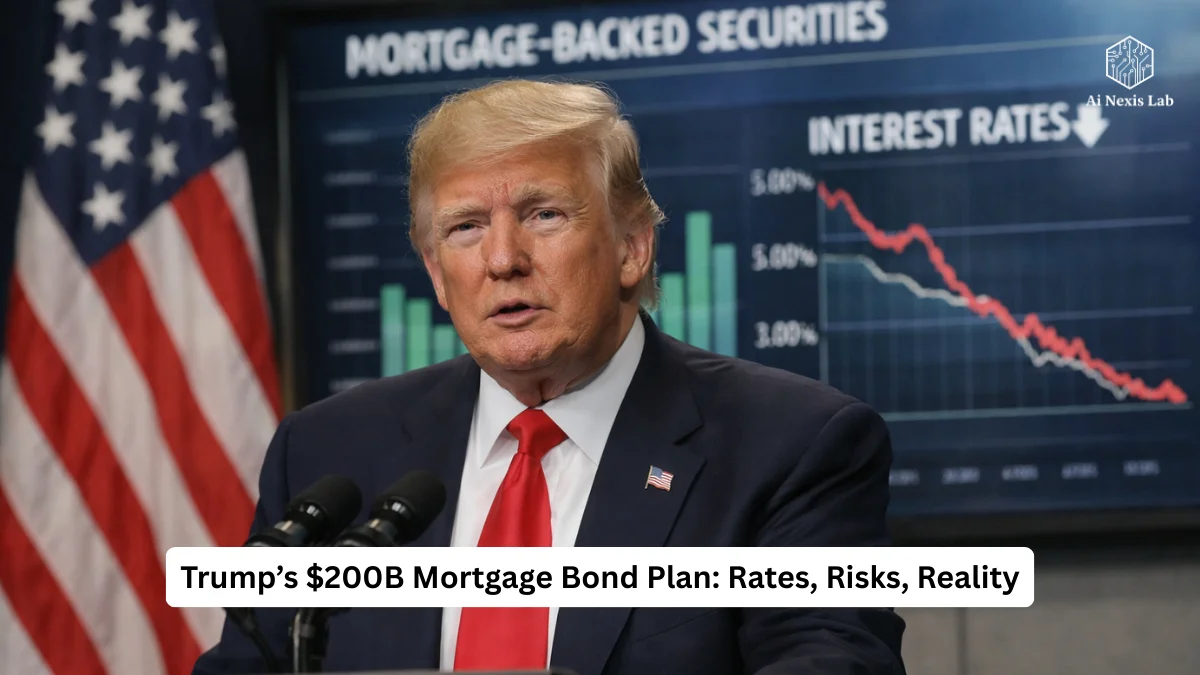
On January 8-9, 2026, President Donald Trump unveiled one of the boldest housing-market interventions in decades: a directive to buy up to $200 billion in mortgage-backed-securities by Fannie Mae and Freddie Mac — two government-sponsored enterprises (GSEs) that dominate the U.S. mortgage system — with the express goal of lowering mortgage rates and reviving homeownership affordability.
This move is not a theory – it is widely reported and unfolding in real time. But whether it truly “saved the American dream” depends on a brutal reality check about how housing markets, bond markets, and credit prices really work.
In plain English:
This is a political-economic experiment with huge short-term impact but major unanswered questions about long-term effectiveness and unintended consequences.
There are big promises – and real risks that are important for every potential home buyer, seller or investor.
Below, I break down the strategy in human terms, check it against current 2026 data and forecasts, and explain exactly what it does, what it doesn’t, where it helps, where it can hurt, and what you should really be thinking about if you’re involved in the housing market today.
What the Administration Announced – In Plain Words
The headline is straightforward:
Trump has ordered his representatives to instruct Fannie Mae and Freddie Mac to buy up to $200 billion in mortgage-backed securities (MBS).
The goal: to lower yields on those securities, which in theory lowers mortgage interest rates for homebuyers.
Some things to know in advance:
- Trump framed this as a direct intervention to lower mortgage rates and make homeownership affordable.
- The purchases are being organized by the GSEs – not the Federal Reserve – although the idea is similar in broad terms to the Fed’s own mortgage purchases during past quantitative easing cycles.
- FHFA Director Bill Pulte has publicly confirmed the seriousness of the plan, though detailed mechanics are still being worked out.
This is political theater and economic policy – clearly designed to be seen as a solution to housing affordability.
Why this matters: The mechanics that drive your mortgage rate
To understand whether this plan can actually change your monthly payment, you need to understand how mortgage rates work. It’s not your local bank that sets your rates – it’s the bond market and investor expectations.
Here is the chain in simple steps:
- Origination — You take out a mortgage from a bank or lender.
- Packaging — That lender sells your loan to a GSE like Fannie or Freddie.
- Securitization — Fannie/Freddie bundles thousands of loans into mortgage-backed securities (MBS).
- Selling — Those MBS are sold to investors (pension funds, foreign governments, hedge funds).
- Yield pricing — Investors demand a certain yield/return. Your mortgage rate is tied to that yield and spread.
- Rate to Buyer – Higher Yield = Higher Mortgage Rate; Low yields = low rates.
The political logic here is:
- If Fannie and Freddie buy a lot of MBS themselves, it increases the demand for those securities.
- Higher demand will drive up prices, lower yields, and thus lower mortgage rates.
In theory, that’s obvious. But in real financial markets, the devil is in the details.
Today’s mortgage markets are not acting alone – they are responding to inflation data, Treasury yields, Federal Reserve expectations, credit risk and broader economic signals. Those factors often dominate an agency’s asset purchases.
Where does the market really stand in early 2026
Before evaluating Trump’s plan, you need a baseline – what is the housing market currently facing?
Mortgage rates are still high by historical standards
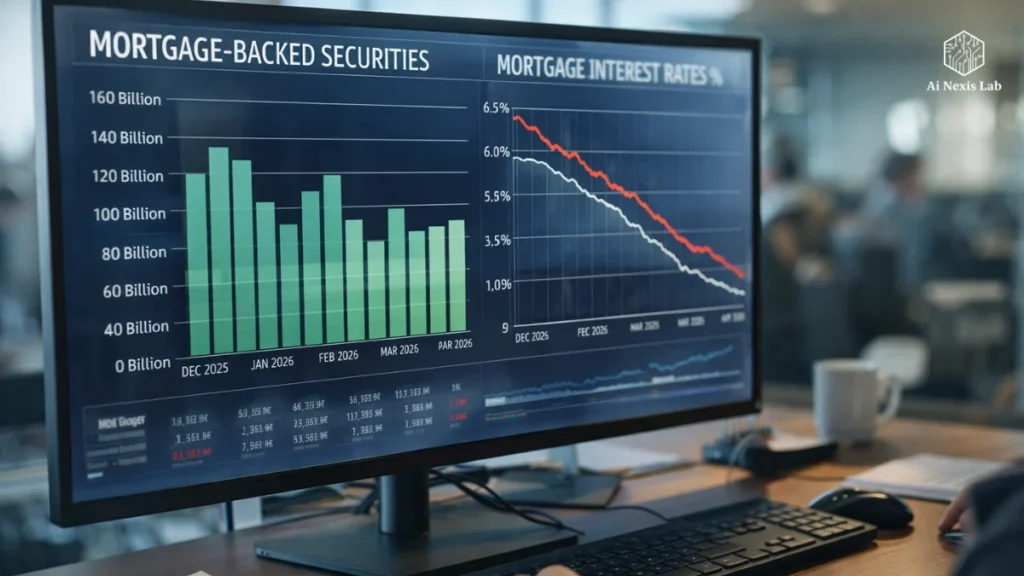
The average 30-year fixed mortgage rate in early 2026 is about 6.16%, down from previous peaks but still high compared to the ultra-low rates of the pandemic years.
Forecasts from multiple industry sources indicate that rates are likely to remain in the low-mid 6% range for most of 2026, even as broader economic conditions evolve.
Key takeaway:
Mortgage rates are nowhere near historic lows of 3-4%, and even with the Fed rate cut, investors are not pricing in dramatic declines to ultra-low levels.
Inventory is starting to improve – but shortages persist
The housing market has eased compared to the most severe inventory crunch in recent years, with more listings year-over-year and a less intense bidding environment.
But most economists still estimate that the US lacks the roughly 3-4 million homes needed to balance, meaning supply is still limited.
Why it matters:
Even if rates fall, persistent inventory shortages can still drive up prices – which can offset any rate savings.
The “lock-in” effect is diminishing, but not gone
During the pandemic, many homeowners locked in mortgage rates at 2.5-3.5%. Historically, this discouraged them from selling because relocating meant charging a much higher rate.
There is evidence that as 30-year rates have moved into the 6%+ zone, more homeowners are finally abandoning their low rates and listing homes – contributing to inventory growth.
That’s real progress, but it’s not the same in all markets.
How much impact can $200 billion in bond purchases really have?
Let’s be brutally honest:
The short answer is that it will lower mortgage rates modestly, but not drastically.
Analysts from multiple markets have already emphasized these points:
- Reuters reported that similar bond purchases could only reduce effective mortgage rates by 10-15 basis points, not a dramatic reduction.
- Current forecasts for 2026 mortgage rates show the average range will remain above 6%, with some estimates narrowing towards the low-mid 5% zone by the end of the year.
Even A 0.25%-0.50% reduction in mortgage rates could also help with monthly payments – but it’s not a “game-changer” like the pandemic-era cuts.
Why?
Because mortgage rates are linked to long-term Treasury yields, inflation expectations, and global capital flows – factors that only partially influence bond purchases by GSEs.
Real Risks – This is where people get hurt
Let’s cut through the spin and get to the real risks of harm that experts are warning about right now.
1. It could worsen housing affordability in the long run
Economists widely warn that artificially lowering yields could drive up house prices – because buyers pay what they think they can afford. Lower financing costs don’t eliminate the lack of supply, they just make buyers willing to offer more.
If prices rise faster than incomes, affordability can worsen, even if nominal rates are low.
2. You are using the GSE balance sheet – not free money
Fannie Mae and Freddie Mac are still technically under a form of government conservatorship. They are not flush with unlimited cash, and large balance sheet expansions carry risk.
If the housing market weakens – if home prices fall, or default rates rise – it could lose the value of $200 billion in securities. Guess who’s on the hook?
Taxpayers.
That’s not ideological — it’s a real risk.
3. You can’t fight bond market economics with a mandate
The Federal Reserve is the institution that has macro control over interest rates. GSEs buying bonds does not change inflation expectations, Treasury yields, or global demand for U.S. credit.
If investors think inflation is strong or the fiscal deficit is large, they may sell Treasuries and other bonds, causing yields to rise – which pulls mortgage rates with them.
Politically, Trump’s move seems bold. Economically, it doesn’t override the main market drivers.
How does this compare to past housing interventions?
During the 2008-2014 period, the Federal Reserve used large-scale quantitative easing, including MBS purchases, to lower mortgage rates and stabilize markets. This supported the housing recovery.
But today there are key differences:
- The Fed’s purchases were broad and coordinated with overall monetary policy.
- Today’s housing market is not collapsing – it is limited by supply and a complex economic backdrop.
- We are not in a systemic credit crisis where liquidity is stagnant.
In other words, this is not crisis intervention – it is policy activism. It is a different animal.
The reality homebuyers should focus on in 2026
If you’re thinking about buying a home now, here’s some brutally honest advice based on current data:
1. Don’t base your decision solely on federal policy
Mortgage rates are influenced by many markets outside of Washington. It can go up, down, reverse or stall – and a move today does not guarantee direction tomorrow.
2. Look at inventory, not just rates
Low rates mean nothing if homes are scarce, prices keep rising, or bidding wars return. The increase in inventories is good news – but the national imbalance has not been fully corrected.
3. If you’re ready to buy, be ready now
Just waiting for the “perfect moment” usually backfires. If you find a home you can afford and the rates are in a reasonable range, waiting may mean paying more later.
Where could this lead politically and economically
This move is inherently political:
- If mortgage rates are reduced and affordability improves modestly, the administration gets credit.
- If rates rarely fall and home prices continue to rise, critics will call it a gimmick.
- If it triggers market volatility, the Federal Reserve, investors, and markets could react unexpectedly.
In short: This is a high-stakes experiment in using policy to influence markets that have historically not responded clearly to executive directives alone.
Frequently Asked Questions
Q: Will this plan reduce mortgage rates?
A: Yes – but modestly. If bond purchases are made smoothly, the average rate is expected to fall by 0.1% to 0.5%. It’s not guaranteed, and it won’t lead to ultra-low rates like in the pandemic era.
Q: Should I wait to buy until rates drop further?
A: If you are financially ready now and can find a home you can afford, waiting for lower rates is a gamble. Rates may fall slowly or not enough to keep up with price inflation.
Q: Will this solve the housing supply shortage?
A: No. Mortgage-rate changes don’t build homes. The increase in supply is linked to construction, zoning policy, labor costs, and investor behavior. Inventory has improved from its worst levels, but the shortage has not gone away.
Q: Is this the same as Federal Reserve Quantitative Easing?
A: Mechanically it is the same (buying bonds for low yields), but it is limited in scale and scope. The Fed operates with broad powers and balance sheet tools that have a major market influence. This move is narrowed by the GSEs.
Q: Could this increase inflation?
A: Maybe – if the rate cut increases demand without increasing supply. But the Fed’s inflation outcomes depend not only on mortgage rates, but on broader macro policy and price pressures.
Q: Does this make buying a home cheaper for everyone?
A: Not automatically. Lower rates help with financial costs – but if prices rise faster than financial savings, affordability will not improve. Buyers should consider the total cost, not just interest rates.
Bottom Line
Trump’s $200 billion mortgage bond initiative is real, it will have an impact, but it’s not a significant benefit. It is a policy lever that can lower rates, moderate demand and shape market sentiment – but it cannot fix fundamental supply problems or control global bond markets.
If you are a buyer – approach this with reality. Don’t bet your life savings on the perfect timing.
If you are keeping an eye on housing policy – this is worth monitoring closely as it could change the landscape, but only modestly and with real risk.
The American dream of home ownership isn’t dying out — it’s just too expensive — and one executive move won’t suddenly rewrite the economics. Success in homeownership is still based on timing, metrics, and personal financial stability, not headlines.