GEO is the new SEO: How to Rank Your Code and Content in AI Search Engines (2026 Edition)
Discover 10 proven GEO SEO strategy tips to boost AI visibility, improve SERP CTR, and get more clicks with structured content optimized for search in 2026!
Let’s leave the humble anecdotes aside for now: if your digital strategy in 2026 still revolves around “ranking blue links,” you’re already behind. Don’t “fall behind.” The game has moved on. Most people didn’t notice because the traffic graph didn’t crash overnight – but the impact was there.
For two decades, SEO gaming was about recovery. In 2026, visibility is about being absorbed. Your content is no longer determined by whether a human clicks or not. It is determined by whether the AI model trusts it enough to reuse it as part of its answer.
That’s not a change. It’s a structural shift.
Users are no longer searching. They’re asking. And they are asking systems like Perplexity, Gemini, and SearchGPT to do the thinking for them. Those systems don’t scroll. They don’t browse. They synthesize.
If you’re not built to synthesize, you’re invisible – no matter how good your writing is.
This is where Generative Engine Optimization (GEO) comes in. And no, this isn’t another buzzword layered on top of SEO. It replaces big parts of it.
Below is a complete, current, no-BS rewrite of GEO for 2026 – what it really is, what really works, what people are doing wrong, and how to adapt without wasting months chasing myths.
1. What GEO Really Is (Not the Twitter Version)
Generative Engine Optimization (GEO) is the practice of structuring your content, data, and code so that LLMs can extract, verify, and reuse it in confidently generated answers.
Consider what’s missing: rankings, impressions, and clicks.
GEO isn’t about being found. It’s about being trusted.
The Mental Model You Need to Adopt
Old SEO Metaphor:
“How do I get my book to the front shelf of the library?”
GEO metaphor:
“How can I become the expert that the librarian quotes when answering a question?”
If the AI can answer without you, you lose.
If he responds using yours – even without a click – you win.
This is uncomfortable for marketers because it breaks the dopamine loop of traffic charts. But comfort is irrelevant. The distribution has changed.
2. Ranking vs. Context: The Real Breakdown
Traditional SEO optimized for position. GEO optimizes for inclusion.
Here’s a blunt comparison:
| Dimension | Traditional SEO | GEO (2026 Reality) |
|---|---|---|
| Goal | Rank pages | Be cited in answers |
| Primary User | Human searcher | AI reasoning engine |
| Success Signal | CTR, sessions | Mentions, attribution, reuse |
| Content Bias | Keyword relevance | Factual clarity + structure |
| Failure Mode | Page 2 | Not ingested at all |
If your page ranks #1 but the AI doesn’t use it, you are functionally irrelevant in an AI-first interface.
That’s not hypothetical. It’s already happening.
3. Why Keywords Lost Power (and Entities Gained Control)
Let’s be clear: Keyword Optimization Did Not “Evolve”. It got outclassed.
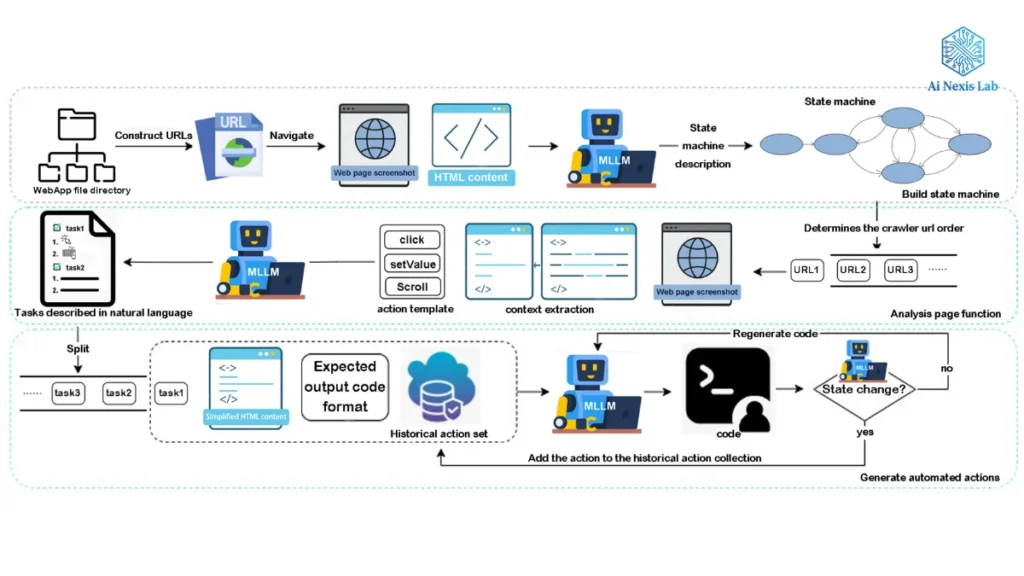
LLMs don’t think in strings. They think in entities and relationships.
What AI Sees (That You Don’t)
When Someone Asks:
“How Can I Optimize a Next.js App for AI Crawlers?”
The model doesn’t match the words. It is assembling a graph:
- Next.js → Framework → React Ecosystem
- AI Crawlers → GPTBot, PerplexityBot, ClaudeBot
- Optimization → Rendering Strategy, Crawlability, Latency
- Context → 2026 Web Standards, JS Execution Limits
If your content doesn’t clearly define and connect those entities, the AI will have to guess. And guessing introduces risk.
Risk = exclusion.
The Hard Rule of GEO
If you don’t define your entities in a machine-readable form, you can’t control how they are understood.
That’s why schema, linked data, and clean semantics are no longer “technical SEO extras.” Those are table stakes.
4. Technical GEO: Where Most Sites Fail Quietly
Here I’m going to be brutal: Most modern websites are actively hostile to AI agents – and their owners don’t even realize it.
4.1 llms.txt is no longer optional
By 2026, llms.txt has become what robots.txt was in 2005: ignored by amateurs, used by professionals.
What it really does
It gives LLMs a prioritized map of what’s important on your site—without forcing them to crawl everything.
What it should contain
- Standard explanations of your main topics
- Defined documentation links
- Authoritative “source of truth” pages
- API references (if relevant)
If your site is large and you don’t have an llms.txt, you’re betting that AI crawlers will correctly guess your best content from the noise.
That’s not a strategy. That’s laziness.
4.2 Client-Side Rendering is a Silent Killer
Here’s a fact that people don’t like to hear:
If your main content requires heavy JavaScript execution, many AI crawlers will skip it.
Not because they can’t render JS – but because they don’t want to spend the tokens and time doing so.
Best Practices in 2026:
- Server-side rendering for primary content
- Static generation where possible
- Minimal hydration
- No content locked behind interactions
If your “understanding” only appears after the user clicks, scrolls, or toggles – assume the AI never saw it.
4.3 Semantic HTML is back (whether you like it or not)
This is not nostalgia. It’s functionality.
AI models rely on HTML structure to quickly extract meaning:
<articale>signals “this is the thing”<section>implies topical grouping- Tables with
<thead>and<tbody>are gold - Proper heading hierarchy matters again
Div soup doesn’t just hurt accessibility – it hurts extractability.
4.4 JSON-LD: Speak the Language of the Model
In 2026, JSON-LD is not about “rich results”. It’s about disambiguation and trust.
High-impact schemes right now:
FAQPage– feeds direct answer systemsHowTo– procedural extractionSoftwareSourceCode– dev credibilityPerson+Author– E-E-A-T signalingCitation/ScholarlyArticle– evidence linking
If you make claims without structured evidence, AI systems downgrade your credibility score – silently.
5. Writing for AI, not like AI
This is where most people make mistakes.
They hear “write for AI” and start producing sterile, robotic sludge. That’s right behind.
You need human insight in a machine-friendly form.
GEO Writing Stack
Level 1: Immediate Response
The first 2-3 sentences should provide a direct answer to the implied question. No storytelling. No throat clearing.
Level 2: Structured support
Bullets, tables, steps. This is where AI pulls in facts.
Level 3: Evidence
Original experience, data, code, screenshots, or real-world constraints.
Level 4: Subtlety
Edge cases, tradeoffs, what doesn’t work. This is where humans – and advanced models – separate you from the content farm.
If your introduction is 300 words long and doesn’t say anything specific, you’ve already lost.
6. Relevance Engineering: The 2026 Advantage
Here’s a truth that will sting:
Most content fails not because it’s wrong – but because it’s redundant.
LLMs already know the general explanations. What they need is context specificity.
Relevance engineering means asking:
- What does the model already know?
- Where does it falter?
- What’s missing from the current answers?
If everyone explains what something is, you explain:
- How it behaves on scale
- Where it breaks down
- What changed in 2026
- Why common advice is outdated
That’s how you become a reference.
7. E-E-A-T after the AI content flood
Let’s stop pretending: the web is flooded with AI-generated garbage. Models know this. They actively ignore it.
What signals still work
- First-person experience (“We tested this in production…”)
- Original visuals (real screenshots, real photos, real diagrams)
- Specific failure modes (what didn’t work and why)
- Reputable authors with a history (not faceless brands)
If your content reads like it could be generated by any model, it will be treated as if it were.
8. Measurement in a Zero-Click World
Traffic is no longer the primary KPI. Influence is.
GEO Metrics That Really Matter
- Citation Frequency in AI Responses
- Attribution consistency (Is That Your Name?)
- Brand Sentiment in a summaries
- Agent Crawl Logs (GPTBot, PerplexityBot, ClaudeBot)
- Assisted Conversions (People Heard About You Through AI)
If your analytics stack can’t track these, your reporting is lying to you—by mistake.
9. 2026 GEO Reality Check (No Excuses)
Ask yourself honestly:
- Can AI extract my key insights in under 10 seconds?
- Is My Authority Clear Without Context?
- Am I Providing Something That Models Can’t Obfuscate?
- Am I Contextual—Or Just Indexable?
If the answer to most of these is “no,” your SEO playbook is outdated.
10. The final verdict: Adapt or be abstract
SEO didn’t die. He was absorbed into something harsher and more honest.
In 2026:
- You can’t win by fooling algorithms
- You can win by teaching machines something worth repeating
- You are either the source—or the raw material
Platforms have changed. Incentives have changed. The only thing that hasn’t changed is:
The value is reused. Noise is ignored.
Choose accordingly.
Frequently Asked Questions (FAQ): (GEO SEO Strategy)
Q: What is the biggest difference between SEO and GEO?
A: SEO optimizes for human clicks. GEO optimizes for AI reuse. If an AI can answer without linking to you, SEO fails but if you are cited, GEO still wins.
Q: Is traditional SEO still relevant?
A: Yes – but as an infrastructure. Technical SEO, performance, and crawlability are more important than keyword targeting.
Q: Does GEO mean traffic will disappear?
A: No. It means that traffic becomes downstream of authority instead of upstream. Fewer clicks, higher intent.
Q: Are backlinks still important?
A: Only insofar as they build trust. Links alone no longer guarantee inclusion in AI answers.
Q: Can small sites compete with big brands in GEO?
A: Yes – if they provide unique, verifiable insights. Models care more about clarity and evidence than brand size.
Q: How long does it take for GEO optimization to show results?
A: Faster than classic SEO. Weeks, not months—because the models are constantly updated.
Q: Is AI-generated content useless for GEO?
A: Mostly, yes—unless it’s heavily edited, based on real experience, and structurally sound.
Q: What’s the quickest GEO win for most sites?
A: Clean up the content structure, add schema, tighten up the introductions, and publish a truly original, experience-backed piece.
If you want comfort, stick to the old SEO advice.
If you want relevance in 2026, build for answers, not rankings.